A World Blocked by the Veto: 5 Reasons the UN Security Council Emergency Session Failed to Stop the 'Iran War Crimes' Condemnation
Following the US-Israel strikes on Iran on February 28, Russia and China demanded an immediate halt at the UN Security Council emergency session, but the US effectively wielded its veto. Secretary-General Guterres warned of a 'serious threat to international peace and security,' yet the resolution failed to pass, and the Middle East escalation crisis continues.
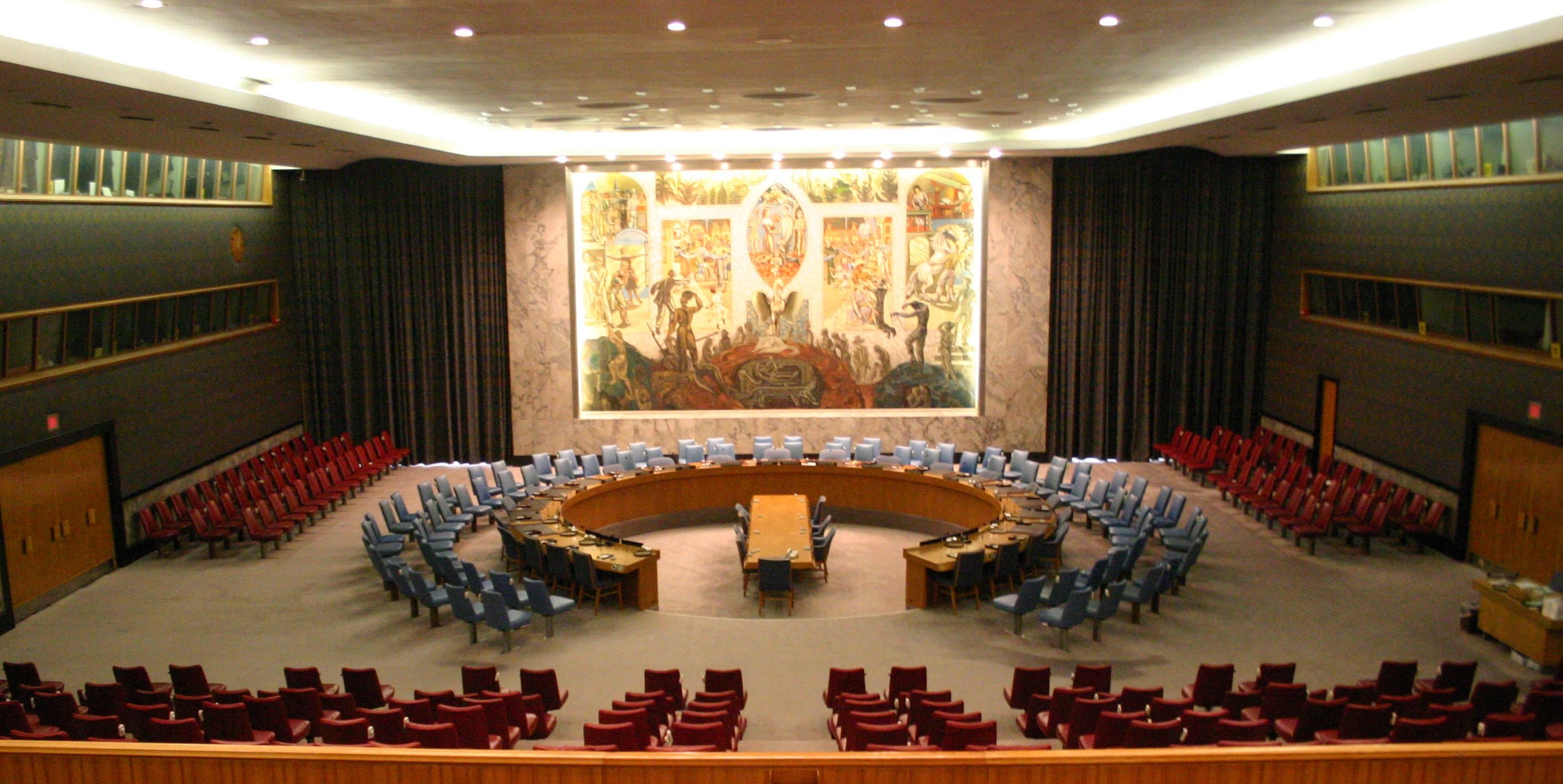
Why You Should Be Watching Now: As US-Israeli airstrikes on Iran entered their second consecutive day, the UN Security Council convened an emergency session — but was powerless to stop anything. Here's what this 'toothless international body' means for South Korea's foreign policy, energy security, and supply chain strategy.
TL;DR
- On February 28, 2026, the US and Israel launched preemptive strikes on Iran ('Operation Roaring Lion'); Supreme Leader Khamenei confirmed dead
- Emergency Security Council session convened at the request of Russia, China, France, Bahrain, and Colombia
- Iran labeled the strikes 'war crimes'; Secretary-General Guterres warned of a 'serious threat'
- The US invoked 'moral clarity' to justify the operation; binding resolution effectively blocked
- UK, France, and Germany called for diplomatic resolution, but the front has already expanded to the Hormuz blockade and Iranian retaliatory strikes
1. What Happened: The Facts
On February 28, 2026, the United States and Israel conducted joint airstrikes across Iran — including Tehran — with the stated aims of halting Iran's nuclear weapons development and supporting anti-government forces. Israel named the operation 'Operation Roaring Lion.' Supreme Leader Ayatollah Ali Khamenei was confirmed killed in the strikes, along with multiple senior commanders of the Islamic Revolutionary Guard Corps.
Iran immediately retaliated, firing ballistic missiles and drones at US military bases in Bahrain, Kuwait, Qatar, and the UAE, as well as at Israeli territory, and declared a blockade of the Strait of Hormuz. As Israeli strikes continued into March 1 — the second consecutive day — the entire Middle East entered a state of de facto war.
2. The Escalation Mechanism: Why the Security Council Couldn't Stop It
Reason ①: The 'Structural Limitation' of the US Veto
The UN Security Council convened an emergency session on the afternoon of February 28 (local time), at the request of Russia, France, China, Bahrain, and Colombia. Russian Ambassador Nebenzya strongly demanded "an immediate halt to the attacks and a return to diplomatic resolution," while Chinese Ambassador Fu Cong criticized the strikes, expressing "deep concern over the developments." However, with the US holding an effective veto as a permanent member, adopting a binding resolution was impossible from the outset.
Reason ②: The US 'Moral Clarity' Argument
US UN Representative Mike Waltz recited a list of threats posed by the Iranian regime over decades, declaring "This is a historic moment that demands moral clarity." While acknowledging the operation had been planned in advance, he invoked the right of pre-emptive self-defense under international law.
Reason ③: The 'Double Message' from the UK, France, and Germany
The UK, France, and Germany issued a joint statement calling for a diplomatic solution while simultaneously expressing concern about Iran's nuclear development. It was a 'hedged' message reflecting the difficulty of directly condemning the US and Israel as NATO allies.
Reason ④: Guterres Warns, But Has No Means to Act
UN Secretary-General António Guterres condemned the US-Israel strikes at the emergency session as "a serious threat to international peace and security" and urged an "immediate return to negotiations to pull the region and the world back from the brink." However, the Secretary-General holds no authority to take independent military or sanctions measures.
Reason ⑤: China and Russia's 'Iranian Sovereignty Card'
Russia and China confronted the US over Iran's sovereignty and territorial integrity, but each faces its own pressing issues — the Ukraine war and the Taiwan question — making direct military intervention in the Iran conflict difficult. This 'limit of solidarity' means Iran must bear the Middle East front largely alone.
3. Context and Background: The Largest Escalation Since the 1973 Yom Kippur War
In June 2025, Israel had already struck Iran and the US bombed nuclear facilities, but the 2026 operation is assessed as one where "the scale of weapons deployed and its global impact rivals the sum of all conflicts that erupted in the 21st century combined." In particular, the Hormuz blockade threatening over 20% of global oil supply places this in the category of the most dangerous full-scale war since the 1973 Yom Kippur War.
4. Outlook: Escalation vs. Early Ceasefire Scenarios
| Scenario | Conditions | Impact on South Korea |
|---|---|---|
| Short-term Ceasefire (2–4 weeks) | Formation of an Iranian interim government + US-European mediation | Short-term oil price spike followed by stabilization; KOSPI rebound expected |
| Mid-term Escalation (1–3 months) | Continued Iranian retaliation + partial Hormuz blockade | Oil prices sustained at $100–120/barrel; export disruptions |
| Long-term Regional War (6+ months) | Hezbollah and Houthi involvement; indirect China-Russia support | Energy security emergency; global supply chain collapse risk |
South Korea imports approximately 70% of its crude oil from the Middle East, much of which passes through the Strait of Hormuz. The Financial Services Commission has already activated a '₩100 trillion+ alpha' market stabilization package, and KOSPI is set to open on Tuesday, March 3.
5. Checklist: Key Points to Watch Now
Reference Links
- UN Security Council Emergency Session – Guterres Speech (UN News)
- US, Israel defend strikes on Iran as lawful at UN Security Council meeting (Times of Israel)
- UN Security Council falls short of condemning US-Israeli attack on Iran (PassBlue)
- UN Security Council Emergency Session, Iran claims 'war crimes' (KBS News)
- Israel-US strikes on Iran (Namu Wiki)
Image Credit
- UN Security Council chamber image: Wikimedia Commons (public domain)