Khamenei's Death & Iran Power Transfer: 5 Reasons the Second Day of the Israel-U.S. 'Operation Roaring Lion' Is Rewriting the Middle East Order
On the second day (March 1) of the joint Israel-U.S. 'Operation Roaring Lion' launched on February 28, 2026, Iranian Supreme Leader Ali Khamenei was killed and the transfer of power began. With 3 U.S. troops killed, 8 Israelis dead, and 3 UAE nationals dead, the largest reshaping of Middle Eastern power since the 1979 Islamic Revolution is becoming reality.
Why you need to watch this now: Iranian Supreme Leader Ali Khamenei has been killed in a joint Israeli-U.S. airstrike, and the transfer of power has begun. The Iranian theocratic regime that has dominated the Middle East for 47 years since the 1979 Islamic Revolution has been shaken to its core within 48 hours, with complex shockwaves now forecast across oil, supply chains, and global security.
TL;DR
- February 28, 2026 — Israel-U.S. joint 'Operation Roaring Lion' launched
- March 1 — Second day of strikes — Supreme Leader Khamenei's death confirmed (CNN)
- Iran's retaliation: counterattack within 1 hour → at least 8 dead in Israel, 3 dead in UAE, drone debris at Dubai landmark hotel
- 3 U.S. troops killed, 5 wounded — 'first American casualties' confirmed
- Trump: "Pursued diplomacy and war in parallel for two months" — Purim (3/2) timing
- Iran's power transfer underway → fundamental reshaping of the Middle East order
1. The Facts: What Happened
On February 28, 2026 (local time), Israeli and U.S. forces launched a joint airstrike simultaneously targeting multiple sites across Iran. The operation was named 'Operation Roaring Lion'. CNN reported that the timing of the attack came just before the Jewish holiday Purim (March 2).
The following day, March 1 (local time), Israeli forces continued with a second day of strikes. CNN reported that "the targets included Supreme Leader Khamenei and President Pezeshkian." Subsequently, South Korean outlets including YTN and MBC confirmed the death of Ali Khamenei, and Iranian authorities initiated the power transfer process.
Iran retaliated within one hour of the strikes. At least 8 people were killed in Israel, 3 people died in the UAE, and drone debris fell on a landmark hotel in Dubai. U.S. Central Command officially confirmed 3 U.S. troops killed and 5 wounded.
2. Why This Event Is Spreading So Explosively Right Now
- Death of the Supreme Leader — Khamenei was Iran's de facto supreme leader for 36 years since 1989. His death is not simply a 'high-value elimination' — it shakes the very foundations of Iran's theocratic system.
- Purim timing — The day in scripture when the Jewish people reversed the Persian threat. Analysis is emerging that the Israeli government deliberately chose the eve of this date, maximizing the symbolic impact.
- U.S. casualties confirmed — The first instance of direct American combat deaths, igniting domestic controversy over a military operation conducted without congressional authorization.
- Iranian retaliation realized — With immediate counterstrikes against Israel and the UAE, the possibility of a full-scale Middle East war has entered the realm of reality.
3. Stakeholders: Who Is Involved
| Party | Interests at Stake |
|---|---|
| Israel | Blocking Iran's nuclear development; severing Hezbollah and Hamas support lines |
| United States (Trump Administration) | Eliminating Iran's nuclear threat; reasserting Middle East hegemony |
| Iran (new leadership) | Stabilizing the power transfer; domestic cohesion; determining the scale of retaliation |
| Saudi Arabia, UAE & Gulf States | Directly exposed to energy route and security risks |
| Korea & Asia | ~90% of oil imports dependent on the Strait of Hormuz |
| Global Financial Markets | Upward pressure on oil, dollar, and gold; rising supply chain costs |
4. Longevity: How Long Will This Last?
Khamenei's death is not a one-off issue. Stabilizing Iran's power transfer could take months, and in the process, the following variables will continue to shake the Middle East:
- Succession struggle: Factional conflict between hardliners and moderates
- Nuclear program trajectory: Whether new leadership opts to restart nuclear negotiations or takes a hardline stance
- Continued support for Hezbollah & Hamas: Possible severance of funding and command lines
- Trump's next move: Maintaining "parallel diplomacy and military" posture vs. escalation
Estimated duration: Long-term (months to years) — Not a simple news cycle, but the starting point of a Middle East power realignment
5. Korea Economy & Supply Chain Checklist
Watch Points
- 🔴 Speed of Iran's power transfer — Whether stable or fractured will determine the intensity of retaliation
- 🟡 Trump-Iran negotiations restart — "Two months of parallel diplomacy" cited; negotiation remains possible
- 🟠 UAE and Saudi Arabia's position — Diplomatic mediation role of nations near the Strait of Hormuz
- 🔵 U.S. Congressional reaction — War Powers debate expected to intensify after U.S. casualties confirmed
- ⚪ Global oil prices — Immediate barrel-level reaction; directly tied to Korea's trade balance and inflation
Reference Links
- Iran retaliates within 1 hour — at least 8 dead in Israel, 3 in UAE (Chosun Ilbo)
- Israel-Iran second day of airstrikes — power transfer begins (YTN)
- 2026 Israel-U.S. strikes on Iran (Wikipedia KO)
Image Credits
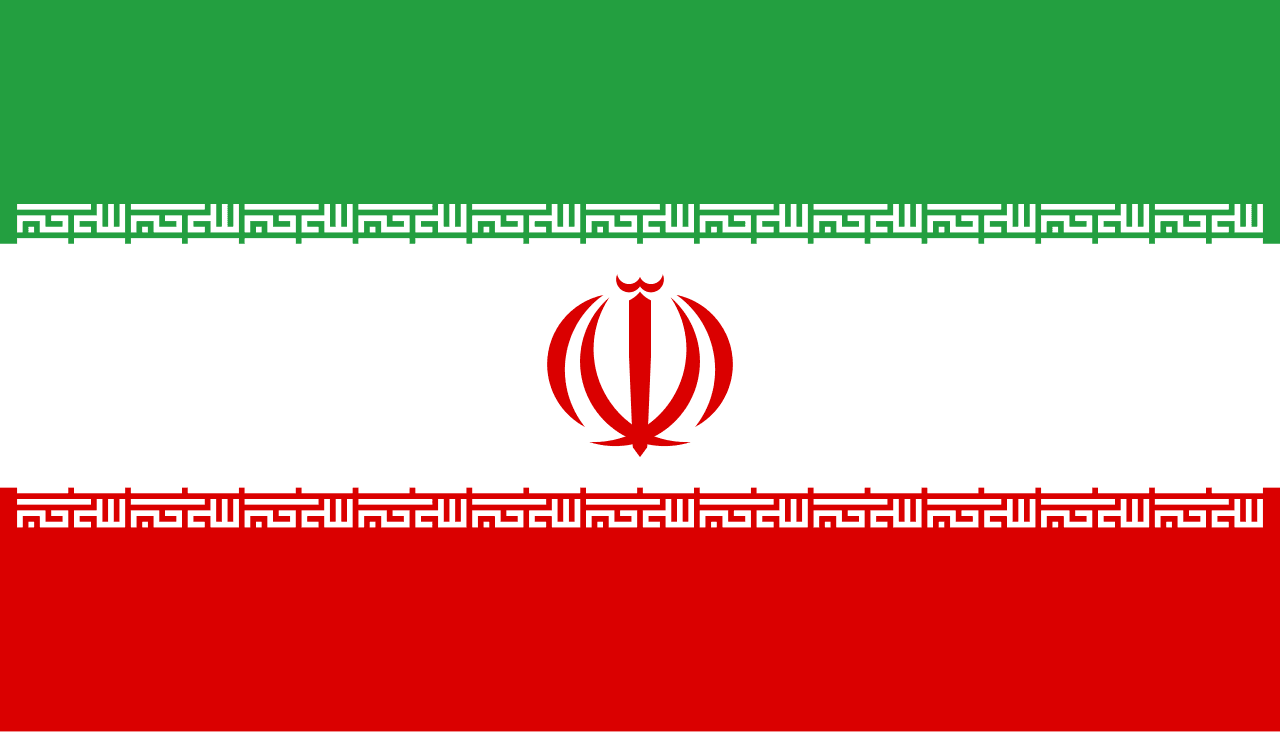
- Flag of Iran: Wikimedia Commons — Public Domain