Out of the Strike, Into the Defense: 5 Meanings the UK RAF's Middle East Deployment and the E3 Joint Statement Pose to the US–Iran War
Following the US–Israel strike on Iran (2026-02-28), UK RAF jets were deployed to the Middle East for 'defensive purposes,' separate from the US–Israel offensive operation. The UK, France, and Germany (E3) issued a joint statement strongly condemning Iran's retaliatory strikes while urging a return to negotiations.
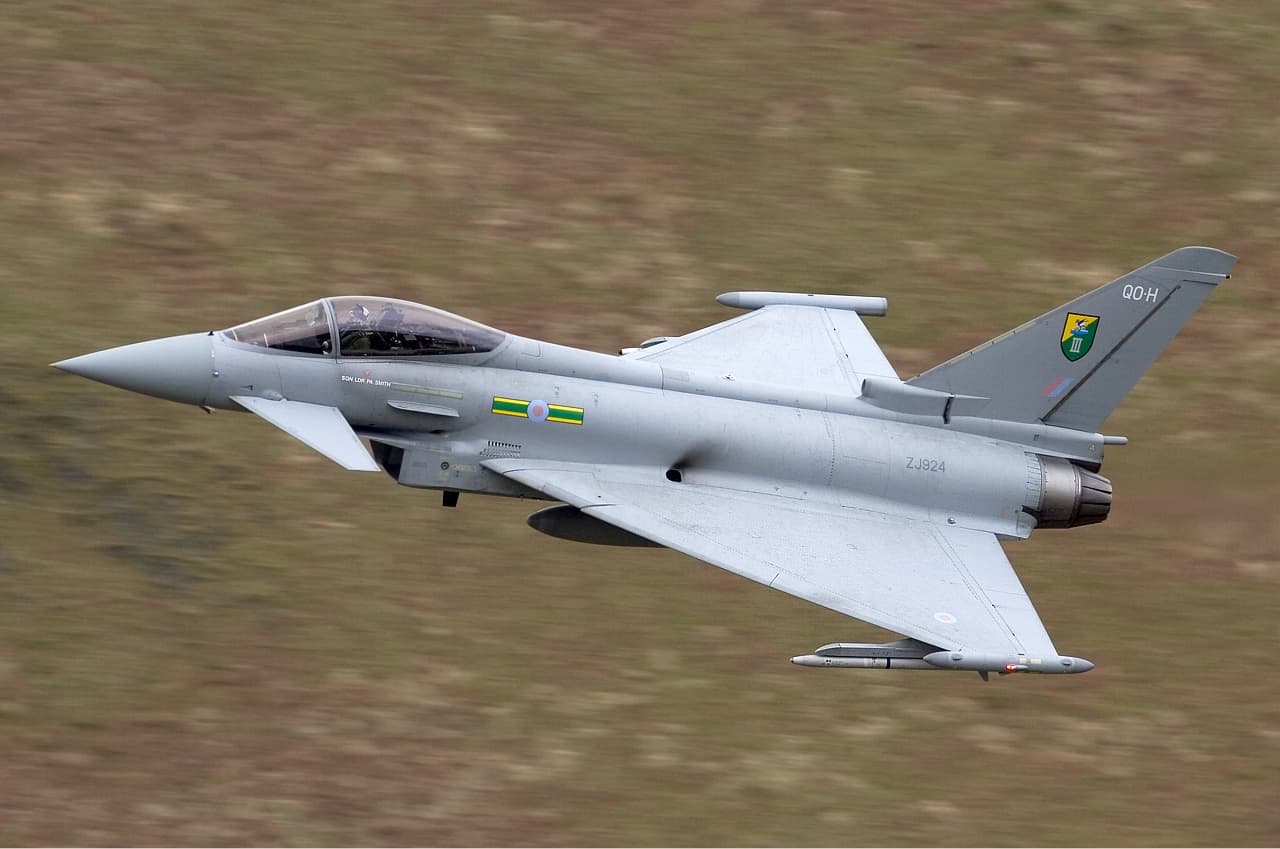
One-line hook: While the US and Israel struck Iran, the UK simultaneously chose both 'non-participation' and 'defensive involvement' — this delicate balancing act is reshaping the landscape of European diplomacy.
TL;DR
- 2026-02-28 (local time) — UK Prime Minister Keir Starmer confirmed in a televised address that RAF jets conducted 'defensive operations' over the Middle East following the US–Israel strike on Iran (Operation Epic Fury).
- The UK refused US requests to use RAF Fairford and Diego Garcia bases, and did not participate in the US–Israel offensive operation.
- Six F-35s plus enhanced air defence, radar, and counter-drone systems were additionally deployed to RAF Akrotiri in Cyprus.
- The leaders of the UK, France, and Germany (E3) issued a joint statement condemning Iran's retaliatory strikes across the Middle East and calling for a return to negotiations.
- Europe as a whole has clearly adopted a stance of 'defensive multilateralism' — maintaining a post-Trump independent line while jointly responding to Iranian threats.
The Facts: What Happened
In the early hours of 28 February 2026 (local time), the United States and Israel launched a major joint strike — 'Operation Epic Fury' — targeting Iran's nuclear and missile facilities. President Trump declared in a Truth Social video address: "Iran must never be allowed to have nuclear weapons."
Iran's IRGC (Islamic Revolutionary Guard Corps) retaliated within approximately one hour, simultaneously attacking four US military facilities in the Gulf region: Al Udeid Air Base in Qatar, Al Salem Air Base in Kuwait, Al Dhafra Air Base in the UAE, and the US Navy's 5th Fleet headquarters in Bahrain.
In this context, Britain's role emerged as a matter of intense interest.
The UK's 'Dual Position'
| Action | Details |
|---|---|
| Non-participation | Refused US requests to use RAF Fairford (mainland UK) and Diego Garcia (Indian Ocean) |
| Defensive involvement | Deployed RAF jets over the Middle East for 'defensive operation' purposes |
| Base reinforcement | Deployed 6 additional F-35s plus enhanced air defence systems to RAF Akrotiri, Cyprus |
| Diplomatic action | Convened COBRA emergency security meeting, then issued UK–France–Germany joint statement |
Prime Minister Starmer explained in his televised address: "Part of a coordinated regional defensive operation to protect our people, our interests, and our allies," emphasising that the UK's involvement was in accordance with international law.
The Spread Mechanism: Why This Story Is Breaking Now
- A signal of fracture in the US–UK 'Special Relationship': The Trump administration's request to use British bases — the cornerstone of the alliance — was refused. This in itself is unprecedented.
- The blurred line between 'defence' and 'offence': The fact that RAF jets participated in intercepting Iranian threats has ignited an international legal debate over where the boundary between 'defence' and 'offensive cooperation' lies.
- The political weight of the E3 joint statement: The UK, France, and Germany commenting on Iran's retaliation while remaining silent on the US–Israel strike is a strategic balancing act — maintaining ties with Washington while securing an independent diplomatic line.
Stakeholders: Who Is Involved
- Keir Starmer (UK Prime Minister): The central figure behind convening COBRA, delivering the TV address, and refusing base access. Navigating between domestic public opinion (opposition to war involvement) and US demands.
- Emmanuel Macron (French President): Characterised the strikes as "the outbreak of a war with serious consequences for international peace." Requested an emergency UN Security Council session.
- Friedrich Merz (German Chancellor): Signed the E3 joint statement. Maintains Germany cannot participate militarily due to domestic constitutional constraints.
- Ursula von der Leyen (European Commission President): Described the situation as "deeply concerning"; pursuing diplomatic channels with Arab nations.
- Kaja Kallas (EU High Representative for Foreign Affairs and Security Policy): Urged all parties to exercise "maximum restraint."
- Iran's IRGC: Declared "no red lines" before simultaneously attacking four US military bases in the Gulf.
Outlook: How Long Will This Last?
Short-term (1–7 days)
- Whether Iran carries out further retaliation is the biggest variable. The IRGC described the attack as a "first response," suggesting additional strikes are possible.
- The effectiveness of the RAF's defensive operations and growing political controversy within the UK are expected.
- Results of the emergency UN Security Council session (requested by Macron).
Medium-term (1–4 weeks)
- The E3's diplomatic mediation role could expand, but its effectiveness remains uncertain.
- Any disruption to Iranian oil and energy supplies would directly impact global oil prices.
- If US casualties result from the Gulf base attacks, the possibility of a US decision to escalate increases.
Long-term (1–3 months)
- If the conflict spreads to a wider Middle East war, structural shocks to global supply chains and energy infrastructure would follow.
- Discussions on redefining the US–UK relationship will accelerate. Attention will turn to the UK's pursuit of 'European security autonomy.'
5 Key Meanings: A Checklist
Risks
- Possibility of misinformation: Given the information confusion of early hostilities, early reports may have exaggerated casualty figures and the scale of damage.
- Escalation narratives: Some social media is spreading exaggerated '3rd World War' framing — careful cross-verification is required.
- Energy investment overheating: As oil price surges are anticipated, short-term overheating in oil stocks and defence stocks is a concern.
Reference Links
- Yonhap News — UK: 'British military aircraft deployed in Middle East defensive operation'
- Chosun Biz — UK: 'Military aircraft deployed in Middle East defensive operation… did not participate in strikes'
- The Guardian — France, Germany and UK urge Iran to 'negotiate solution'
- The Independent — UK and Israeli strikes against Iran
- NBC News — Live updates: U.S. and Israel launch major attack on Iran
- Fortune — European leaders call for resumption of U.S.–Iran talks
Image Source
- RAF Eurofighter Typhoon — Wikimedia Commons (https://upload.wikimedia.org/wikipedia/commons/3/3c/RAF_Eurofighter_EF-2000_Typhoon_F2_Lofting-1.jpg)