The Diplomatic Signal Fired on Day 3: 5 Reasons the US-Israel 'Willingness to Talk' with Iran Could Change the Game in the Middle East War
On March 2, 2026, as the US-Israel airstrikes on Iran entered their third day and collateral damage spread across the region, the United States signaled a willingness to engage in dialogue with Iran. With the Hormuz blockade, soaring oil prices, and an Iranian leadership vacuum all unfolding simultaneously, this analysis examines whether a 'diplomatic pivot' could become reality — and what conditions it would require.
One-line hook: On the third day of a burning war, the United States said it was willing to 'talk with Iran' — whether that signal is sincere or tactical will determine the fate of global oil prices and the Korean economy.
TL;DR
- On February 28, 2026, the US and Israel struck Iran's nuclear facilities and leadership; Supreme Leader Khamenei was killed.
- Iran declared a full blockade of the Strait of Hormuz and launched ballistic missiles at nearby US military bases and Israeli territory.
- At the Asia market open on March 2, Brent crude surged to $79/barrel (+8.9%), with forecasts of $100+ emerging.
- The US signaled for the first time that it is "willing to talk with Iran" — the first diplomatic message since the strikes began.
- More than 70% of Korea's imported oil transits the Hormuz, making it one of the biggest potential victims of the Middle East conflict.
1. The Facts: What Happened in 3 Days
On February 28, 2026 (local time), the United States and Israel launched preemptive airstrikes on Iranian nuclear and military facilities as well as its leadership, citing the need to permanently halt Iran's nuclear development program and support for anti-government forces. Beginning with explosions in central Tehran, the strikes expanded to major cities including Isfahan, Tabriz, and Ilam — and Iranian Supreme Leader Ali Khamenei was killed.
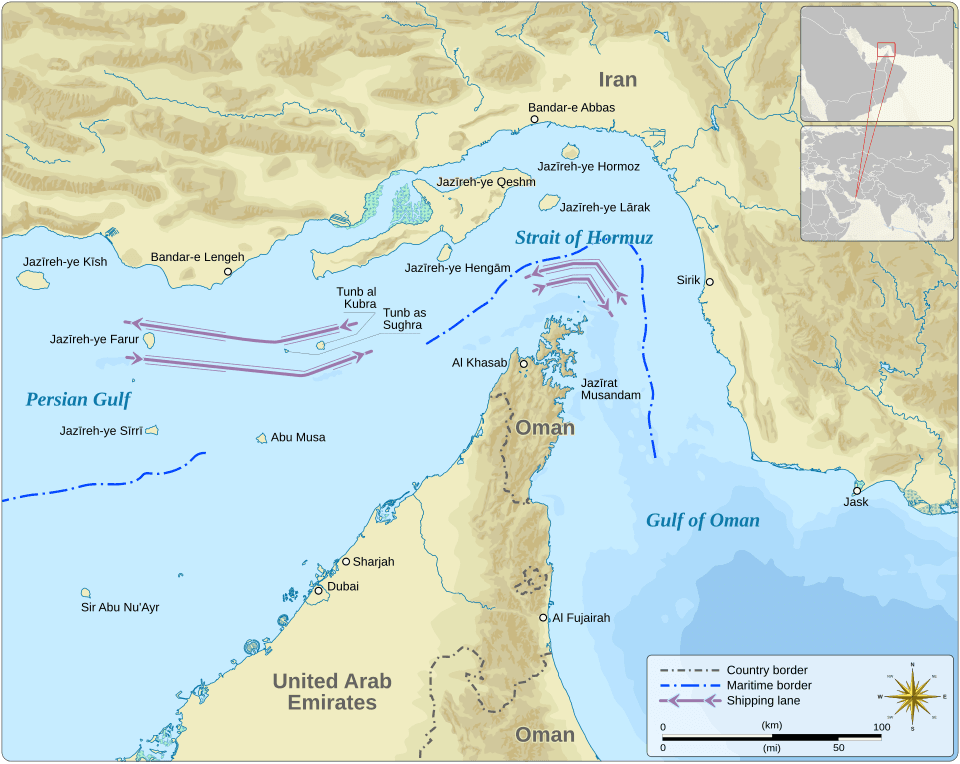
Iran retaliated immediately. The Islamic Revolutionary Guard Corps (IRGC) fired ballistic missiles at US military bases in Bahrain, the UAE, and Kuwait, as well as at Israeli territory, and declared a complete blockade of the Strait of Hormuz. On March 1, Iran struck three oil tankers with missiles, prompting international shipping companies to suspend navigation through the strait one after another.
As of March 2, three US troops have been confirmed killed, and Israel continues its second day of strikes against Iran. However, on that same day, US officials began sending the message — for the first time — that they are "willing to talk with Iran."
2. Why the 'Dialogue Signal' Became a Top Search Term
Keywords related to the Iran war have dominated real-time search rankings at home and abroad for the past three days. There are three reasons why 'willingness to talk' is drawing special attention of its own:
- The oil price variable: With Brent crude breaking the $80 mark and $100–$150 scenarios being floated, the possibility of a diplomatic resolution is immediately read as a signal of oil price stabilization.
- Iran's power vacuum: Since Khamenei's death, the murky path of Iran's internal power transition has sparked surging interest in the question of 'who will be the negotiating counterpart.'
- Korea's direct exposure: Korean media is running the economic impact of the Hormuz blockade on the front page every day, and a dialogue signal is received as the most direct piece of 'crisis-resolution' news.
3. Context and Background: Is the 'Willingness to Talk' Real, or Tactical?
The US 'willingness to talk' statement carries multiple competing interpretations:
- Optimistic scenario: Having judged that the military objective of neutralizing nuclear facilities has been achieved, the US activates diplomatic channels to reduce the burden of escalation.
- Realist scenario: With US troop casualties, soaring oil prices, and pressure from allies converging, there is a need for an 'exit strategy.' The message is likely tactical.
- Iran's internal variable: If hardliners seize power after Khamenei, negotiations become virtually impossible. Conversely, if pragmatists rise, a negotiating table could open quickly.
Historical precedent is instructive: in the 1991 Gulf War, Iraq negotiated withdrawal conditions via Soviet mediation just before the ground offensive was launched. There is similar speculation that neutral states such as Turkey, Qatar, and Oman could play a mediating role this time.
4. Outlook: 5 Conditions for a Diplomatic Pivot
| Condition | Current Status | Likelihood |
|---|---|---|
| Iran's new leadership willingness to negotiate | Power vacuum in progress — unclear | Low–Medium |
| US desire to avoid escalation | Rising due to troop casualties and Congressional pressure | Medium–High |
| Conditional lifting of the Hormuz blockade | IRGC maintaining hardline position | Low |
| UN Security Council mediation | Resolution blocked by US/Israeli veto | Low |
| Neutral-state (Oman, Turkey) mediation | Oman operating informal channels | Medium |
Most experts assess that the likelihood of a ceasefire within the short term (within one week) is low, but that preliminary contacts via mediating states such as Oman could begin within 2–4 weeks. The composition of Iran's new leadership is the key variable determining the timeline for any negotiations.
5. Impact on Korea: A Checklist
Reference Links
- Iran-driven oil price $100 fear… Korea's exports shrink and production costs rise (Hankyoreh, 2026.3.1)
- Oil jumps as US-Iran conflict escalates, disrupts shipping (Reuters, 2026.3.2)
- Experts weigh potential scenarios for oil if Strait of Hormuz closes (CNBC, 2026.3.1)
- South Korea calls for resuming dialogue with North (CNA, 2026.3.1)
- Iran Strike D+1, FSC Emergency Activation (Yonhap, 2026.3.2)
Image Credit
- Persian Gulf and Strait of Hormuz location map — Wikimedia Commons (Public Domain)