The President Who Said Nothing About 'History' on March 1st: 5 Meanings of Lee Jae-myung's Korea-Japan 'Future-Oriented' Declaration for Korean Diplomacy
President Lee Jae-myung's 107th March 1st commemorative address made no direct mention of specific historical issues such as comfort women or forced labor, instead foregrounding a stance of 'facing the past, cooperating for the future.' Four Japanese media outlets gave positive assessments, while comfort women victim groups strongly condemned the speech.
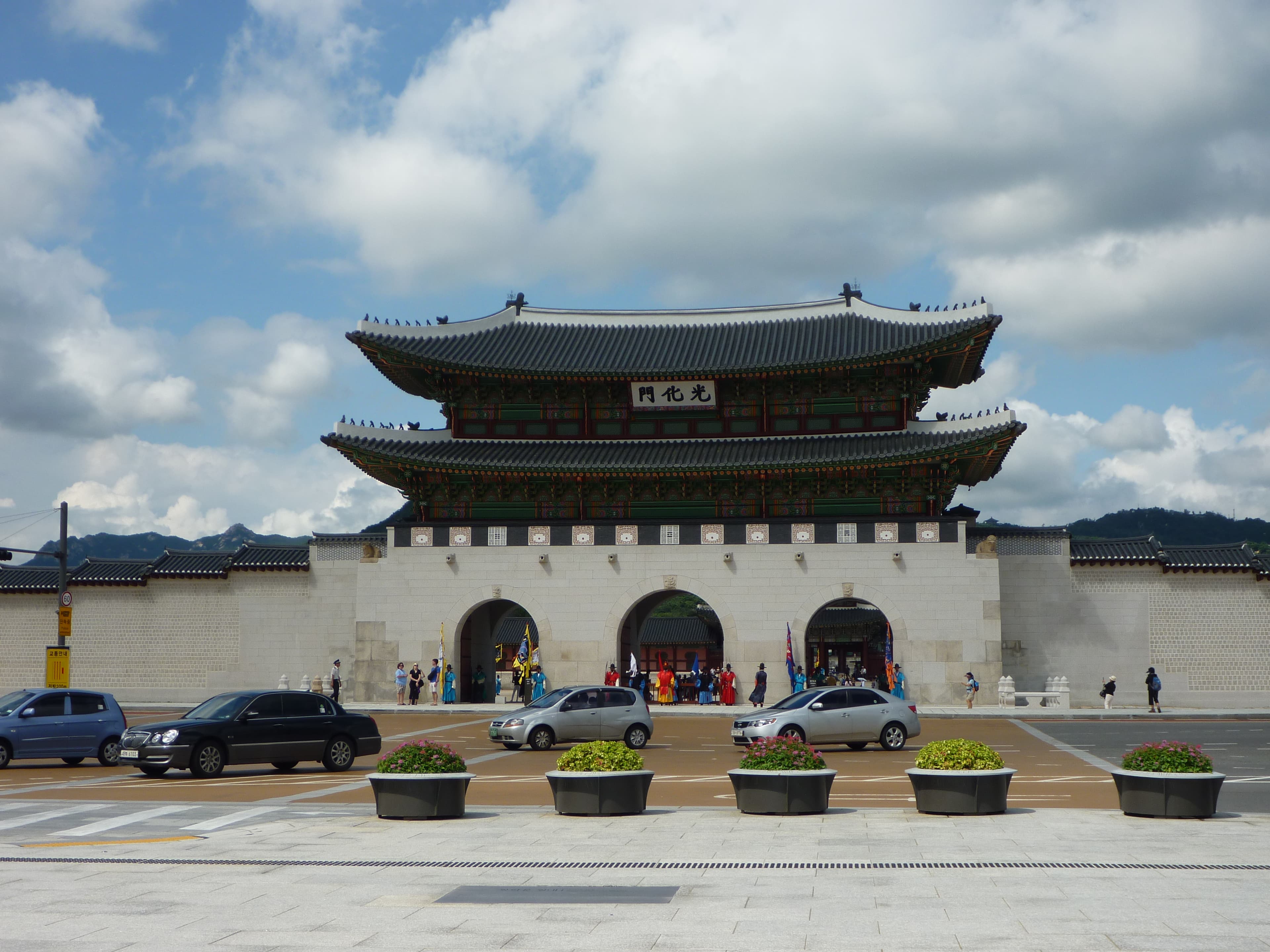
Why does this commemorative address matter right now? March 1st is a day to honor the independence movement that stood against Japanese colonial rule. Yet President Lee Jae-myung did not once directly mention comfort women or forced labor. Instead, he proposed "a friendly new world." Four Japanese media outlets praised the speech, while victim groups condemned it immediately. This piece examines what this choice changes about Korean diplomacy.
TL;DR
- President Lee Jae-myung's 107th anniversary address on March 1, 2026, made no direct mention of historical issues (comfort women, forced labor), emphasizing a stance of 'facing the past, cooperating for the future.'
- He pledged to continue shuttle diplomacy, stating "it is time for Korea and Japan to respond to reality and open the future together."
- All four major Japanese outlets — Kyodo, Asahi, Nikkei, and Sankei — gave positive coverage, an exceptionally rare reaction in the history of March 1st addresses.
- Jeongdaehyup and other comfort women victim groups immediately condemned the speech, saying "Japan is not a cooperation partner."
- He also cited Ahn Jung-geun's 'Theory of Eastern Peace' to call for trilateral Korea-China-Japan cooperation.
1. The Facts: What Was Left Out of the Address
President Lee's address touched on the spirit of the March 1st Movement, recognition of independence merit awardees, peace on the Korean Peninsula, and Korea-Japan relations. However, expressions related to historical grievances with Japan — 'comfort women,' 'forced labor,' 'apology,' 'reflection' — were absent entirely.
The phrases he used instead were as follows:
*"In every corner of our society, there remain the painful traces of history and victims who continue to suffer."
*"While facing the past squarely, we will work together to solve today's challenges and move toward the future."
*"I ask the Japanese government to respond in kind, so that we may open a friendly new world built on genuine understanding and empathy."
While the word 'victims' did appear, the specific terms 'comfort women' and 'forced labor' were not explicitly named — a highly unusual approach among presidential March 1st addresses in Korean history.
2. Why the Debate Exploded
| Respondent | Assessment | Core Argument |
|---|---|---|
| Japanese media (4 outlets) | Positive | Forward-looking tone signals improved bilateral ties |
| Comfort women victim groups | Strongly critical | Historical accountability cannot be bypassed for cooperation |
| Domestic progressive bloc | Mixed to critical | Omitting specific terms risks losing accountability |
| Diplomatic community | Cautiously positive | Pragmatic framing is consistent with current geopolitical pressures |
The fact that all four major Japanese outlets simultaneously gave positive coverage is extraordinarily rare in the history of Korean presidential March 1st addresses. This fanned the flames of the controversy.
3. Context and Background: Why Now?
International pressure: The Northeast Asian security and economic environment has reached peak uncertainty — from airstrikes on Iran and the Hormuz blockade, to escalating US-China tensions, to Trump's trade war. President Lee diagnosed in his address that "the international norms established over the 80-plus years since World War II are being threatened by the logic of power." In this environment, Korea-Japan cooperation is elevated from optional to a survival strategy.
Travel schedule: President Lee departed on the afternoon of March 1st for state visits to Singapore and the Philippines. Analysts suggest a calculation was at play to avoid leaving any discord in Korea-Japan relations before his ASEAN diplomacy.
The significance of citing Ahn Jung-geun: The 'Theory of Eastern Peace' is not merely a historical reference. It reads as an attempt to find diplomatic legitimacy for trilateral Korea-China-Japan cooperation in history itself.
4. Outlook: Where Is the Korea-Japan Relationship Headed?
The Lee Jae-myung government's direction on Japan diplomacy is converging on a 'pragmatism + dual-track' strategy.
- Restoring shuttle diplomacy: There is a high likelihood of pursuing mutual visits between the Korean and Japanese heads of state within the year.
- Parallel handling of historical issues: Given the structural impossibility of ignoring victim group pushback, historical issues are expected to continue through separate channels.
- Korea-China-Japan trilateral summit: The citation of Ahn Jung-geun's 'Theory of Eastern Peace' may be a groundwork for an early convening of the trilateral summit.
- Risk: Domestic public sentiment toward Japan, and sustained pushback from victim groups, will remain variables that moderate the pace of cooperation.
5. Checklist: What to Watch Now
Reference Links
- Full text of President Lee Jae-myung's March 1st address — Korea Policy Briefing
- Japanese media spotlight President's March 1st address — Yonhap News TV
- 'Japan is a cooperation partner' — March 1st address condemned — Mindlenews
- S. Korea's Lee hopes to improve ties with Japan — Kyodo News
Image Source
- Gwanghwamun Gate, Seoul — Kwanghwamun.JPG / Public Domain / Pulgasari / Wikimedia Commons