After an 11-Year Gap, Near-Passage in the National Assembly: 5 Meanings of the National Referendum Act Amendment Opening the Path to a Constitutional Referendum
Eleven years and seven months after the Constitutional Court's 2014 ruling of unconstitutionality, the National Referendum Act amendment is on the verge of passing the National Assembly plenary session. This revision, centered on guaranteeing voting rights for overseas Koreans, has opened the possibility of a simultaneous constitutional referendum alongside the June 3 local elections.
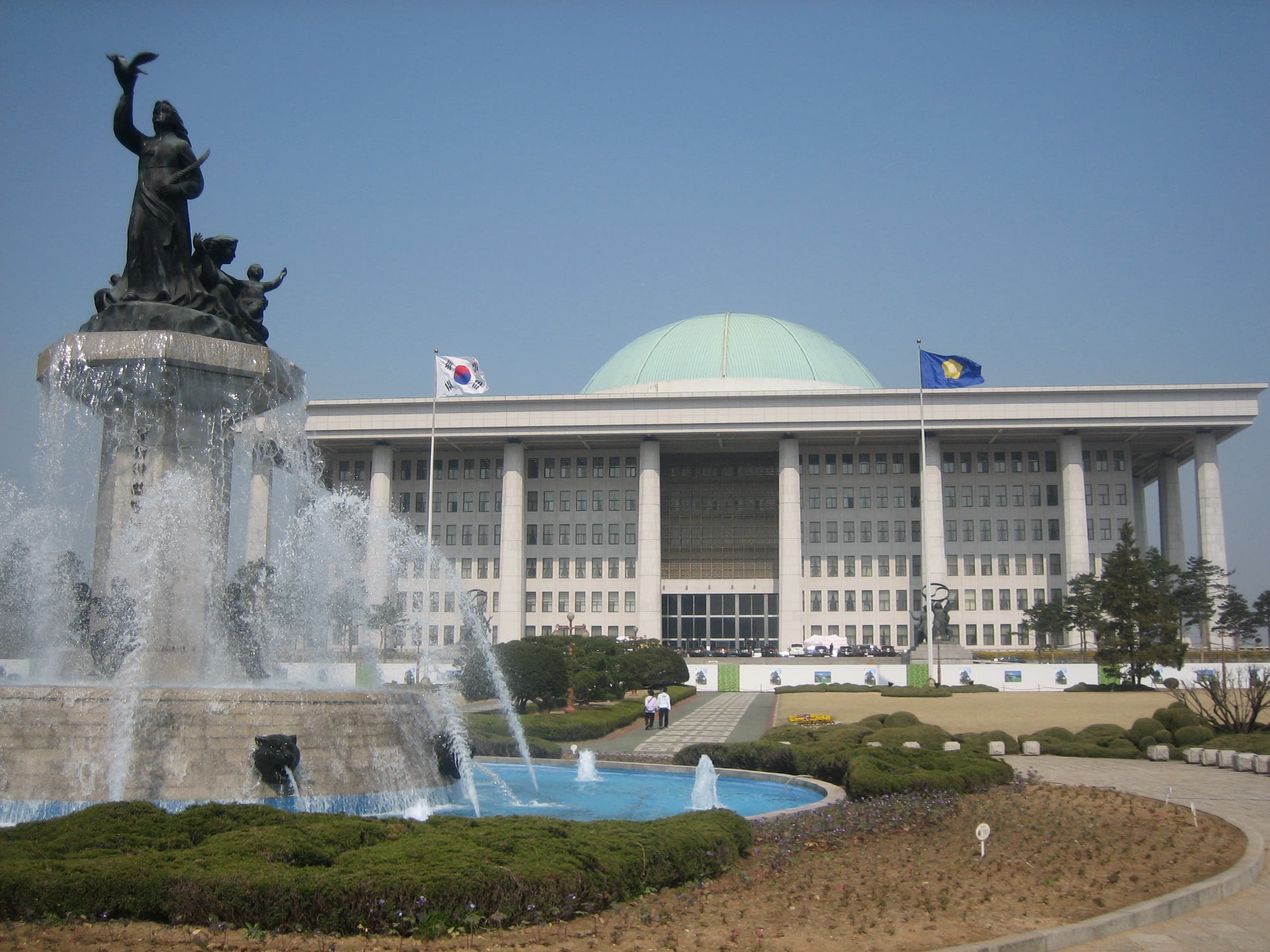
Why you need to pay attention to this bill right now: On this March 1st Independence Movement Day — the day Korea holds its independence memorial ceremony — the National Assembly is clearing the first hurdle of constitutional revision. If the National Referendum Act amendment passes the plenary session, the constitutional amendment procedure in South Korea will finally be able to operate for the first time in 11 years.
TL;DR
- The Constitutional Court issued a constitutional incompatibility ruling in 2014 on the current law that restricted the referendum voting rights of overseas Koreans, but the National Assembly delayed legislation for 11 years and 7 months.
- The amendment centers on guaranteeing voting rights for overseas Koreans, lowering the voting age to 18, and introducing early, absentee, and at-sea voting.
- Led by the Democratic Party of Korea, it was brought to the plenary session on February 28; the People Power Party launched a filibuster, but it ended on the afternoon of March 1.
- If passed, the procedural foundation for a simultaneous June 3 local election and constitutional referendum will be established.
- This is the 4th key piece of legislation following the Lee Jae-myung government's 'Judicial Reform 3 Laws,' and is expected to further intensify the ruling-opposition confrontation.
The Facts: What Happened
On the night of February 28, 2026, the Democratic Party of Korea led the submission of the full revision bill of the National Referendum Act to the National Assembly plenary session. The People Power Party immediately launched its fifth filibuster (unlimited debate). However, on the afternoon of March 1, the vote to end the filibuster — requiring consent of three-fifths or more of all registered members — was passed, halting the unlimited debate. A vote is expected to follow.
The key points of the amendment are as follows:
- Overseas voters registered on the overseas voter registry to be included in the scope of national referendum voters (previously: only domestic address registrants were eligible)
- Voting age lowered from 19 to 18 years old
- Introduction of early voting, absentee voting, and at-sea voting
- Deletion of the clause punishing the spread of false information (Article 96, Paragraph 1, Item 4) — submitted by the Democratic Party as an amendment just before the vote
The current National Referendum Act has been revised several times since its enactment in 1962, but the overseas Korean provision that the Constitutional Court ruled unconstitutional in 2014 had been left unaddressed for 11 years and 7 months.
Why This Law Is Drawing Attention Now
① It is a prerequisite for constitutional revision.
For a constitutional amendment to be finalized, it must go through a national referendum after passing the National Assembly. However, since the current National Referendum Act is in a state of constitutional incompatibility, the constitutional referendum itself is impossible without first amending this law. The timeline for the 'single-point constitutional revision' — reflecting the spirit of May 18 in the constitutional preamble — promoted by the Lee Jae-myung government and the Democratic Party depends entirely on this law.
② The possibility of a simultaneous national referendum on June 3.
National Assembly Speaker Woo Won-shik stated that a constitutional referendum can be pursued simultaneously with the June 3 local elections this year. Once the National Referendum Act is promulgated, a minimum preparation period is required — if promulgated in early March, a simultaneous June vote is physically feasible.
③ An extension of the 'Judicial Reform 3 Laws.'
In February this year, the Democratic Party consecutively passed bills creating a new crime of judicial distortion (Criminal Code revision), introducing appellate petitions to the Constitutional Court (Constitutional Court Act revision), and increasing the number of Supreme Court Justices (14→26). The National Referendum Act revision is the fourth link. The opposition party (People Power Party) has characterized this as 'an attempt to seize the judiciary and the constitution' and is strongly resisting.
Context and Background: Why It Was Left Unaddressed for 11 Years
In July 2014, the Constitutional Court issued a constitutional incompatibility ruling on the provision that allowed only overseas Koreans with domestic address registration to participate in national referendums. The Court ordered the National Assembly to revise it by December 31, 2015, but the National Assembly failed to follow up with legislation for over 10 years.
The reasons for the neglect are complex. Since national referendums are linked to the 'constitutional revision card,' neither party wanted to hand the initiative for constitutional revision to the opposing side. Through the administrations of Park Geun-hye, Moon Jae-in, and Yoon Suk-yeol, constitutional revision discussions repeatedly drifted, and the National Referendum Act revision was postponed along with them.
The Democratic Party's push to force the bill through this time is the result of President Lee Jae-myung's first year in office — solid ruling party seats and political momentum converging.
Outlook: Scenarios After the Law Passes
| Scenario | Content | Likelihood |
|---|---|---|
| June 3 Local Election + Simultaneous Constitutional Referendum | National Election Commission begins preparations immediately upon promulgation; single-point constitutional referendum vote on May 18 spirit | Moderate |
| Independent Constitutional Referendum | Separate from local elections; independent vote in the second half of the year | Low |
| People Power Party Constitutional Petition / Suspension of Effect | Delay via application for injunction to suspend effect at court / Constitutional Court | High |
| Re-controversy over False Information Clause Deletion | Debate over the deleted punishment clause — press freedom vs. national referendum credibility | Moderate |
Checklist: What to Watch Right Now
Reference Links
- Supreme Court Justice expansion from 14 to 26, Judicial 3 Laws concluded (Yonhap News)
- National Referendum Act amendment filibuster ends… plenary session recessed (Yonhap News)
- Constitutional revision gateway 'National Referendum Act' only needs to pass plenary session (Seoul Shinmun)
- 'Constitutionally incompatible' National Referendum Act amendment passes Interior Committee (Hankyoreh)
Image source: Wikimedia Commons — Korean National Assembly in Seoul