A Bomb Fell 100 Meters Away: 5 Reasons the Hormuz Blockade Threatens the Lives of Korean Sailors
Following a joint US-Israel airstrike on Iran, the Strait of Hormuz has been blockaded, seriously threatening the safety of Korean vessels and sailors in the Persian Gulf. The Ministry of Oceans and Fisheries has activated a 24-hour emergency response system, but on the ground, bombs are reportedly falling just 100 meters from ships.
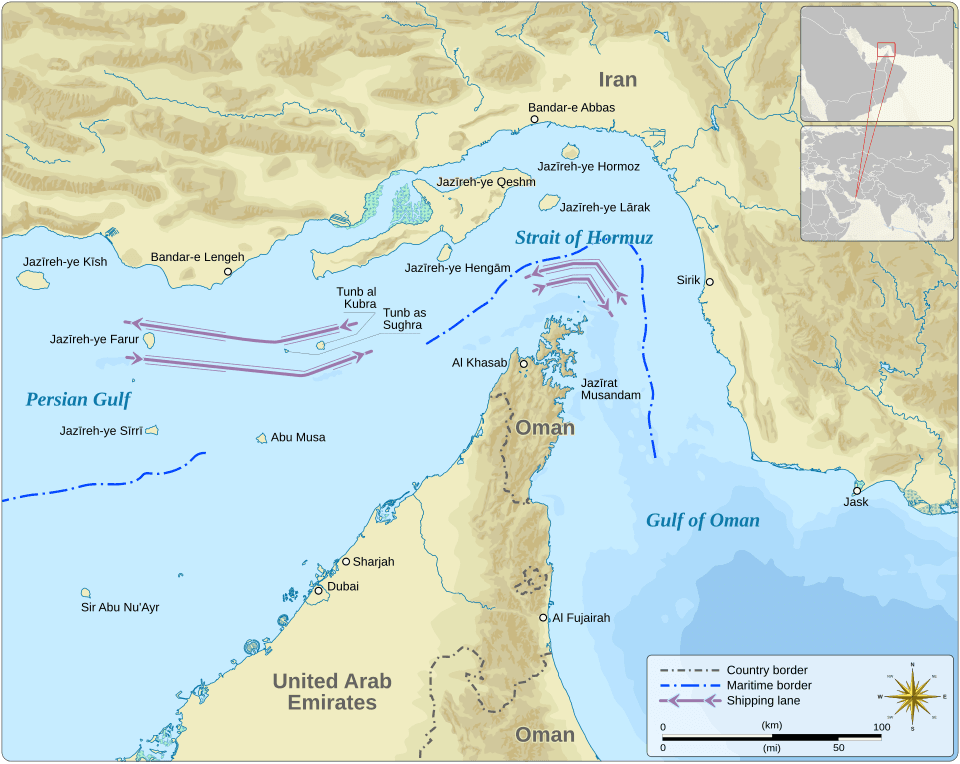
Right now, Korean sailors are navigating their ships through a hail of bombs in the Persian Gulf.
TL;DR
- US-Israel joint airstrike on Iran (Feb 28) → Iran's IRGC immediately blockades the Strait of Hormuz
- Multiple Korean vessels currently in the Persian Gulf and Sea of Oman — "bombs landing 100 meters from the ship"
- FKTU and Korean Seafarers' Union demand the government immediately halt navigation through war-risk waters
- Ministry of Oceans and Fisheries activates 24-hour emergency response unit — no direct damage to Korean vessels so far
- But the situation is ongoing: mobilizing all diplomatic, military, and maritime channels is the only answer
The Facts: What Is Happening?
On February 28, 2026, the United States and Israel launched a joint airstrike on Iran, killing Supreme Leader Khamenei. Iran's Islamic Revolutionary Guard Corps (IRGC) immediately blockaded the Strait of Hormuz — a critical waterway through which approximately 20% of the world's crude oil passes and a major international shipping route.
The problem is that simultaneously with the blockade, this stretch of sea became an active combat zone. According to a March 1 report by the Kyunghyang Shinmun, a Korean sailor navigating the Persian Gulf testified that "a bomb fell just 100 meters from the ship." Mine deployment, missile and drone attacks, and the threat of seizure are all very real scenarios.
Reason 1: Korea Is Heavily Dependent on the Strait of Hormuz
Korea sources approximately 70% of its crude oil imports from the Middle East, and most of that oil passes through the Strait of Hormuz. If the blockade is prolonged, the blow to energy security will be severe — and Korean tankers and cargo ships operating in those waters face direct danger. This is not merely a diplomatic issue; it is a problem where energy supply chains and the right to life of maritime workers are both at stake.
Reason 2: 'Bombs 100 Meters Away' — Already at the Level of Active Combat
The Korean Seafarers' Union stated in a March 1 press release: "The situation in the Strait of Hormuz goes beyond mere tension — it directly and immediately threatens the lives of our sailors." The on-the-ground testimony of "bombs landing 100 meters from the ship" makes clear that this is not an abstract risk. Mine deployment, drone attacks, and seizure are all realistic scenarios.
Reason 3: Is the Government's Response Sufficient?
The Ministry of Oceans and Fisheries immediately formed an emergency response unit on February 28, and as of 3 PM on March 1, reported no direct damage to Korean vessels. However, the Federation of Korean Trade Unions (FKTU) issued three demands to the government:
- Immediate protective measures — mobilize all diplomatic, military, and maritime safety channels
- Immediate halt to navigation through war-risk waters — ban all voyages carried out without the consent of seafarers
- Build a real safety net — support seafarers' return home and secure alternative routes
Labor groups are demanding concrete action beyond simple monitoring.
Reason 4: A Structural Shock to the Entire Shipping Industry
The Hormuz blockade is not merely a short-term risk. It affects Korea's overall shipping and logistics costs through surging voyage insurance premiums, skyrocketing freight rates, and increased costs of alternative routing (e.g., via Cape Town). It is not just oil tankers that are exposed — LNG carriers, container ships, and other vessel types operated by Korean shipping companies all transit this waterway.
Reason 5: 'Seafarer Safety' Is a State Responsibility
The FKTU's statement is unequivocal: "This is not simply a diplomatic matter — it is a question of the right to life of Korean workers." The state has a duty to protect the lives of its citizens, and compelling continued navigation through war-risk waters is a violation of workers' safety rights. Should the situation worsen, both the government and shipping companies will bear responsibility for any failure to act in time.
Outlook: How Long Will This Last?
Reports from March 1 indicate "significant progress" in US-Iran negotiations, but actual lifting of the Hormuz blockade is expected to take time. Given the power vacuum inside Iran, the likelihood of the IRGC immediately standing down the blockade is low. For the foreseeable future, Persian Gulf waters will remain at the highest danger classification.
Checklist: What Is Needed Right Now
Reference Links
- Kyunghyang Shinmun — "Bombs fell 100 meters from the ship"
- Korean Seafarers' Union Statement — Escalating Hormuz Tension, Calling for a Real Safety Net
- FKTU Statement — Immediate Measures to Protect the Lives of Seafarers in the Middle East
- Ministry of Oceans and Fisheries — 24-Hour Emergency Response; No Damage to Korean Vessels So Far
- KBS — FKTU Calls for Protection Measures for Korean Seafarers Near the Persian Gulf
Image Credit
- Map of the Strait of Hormuz: Wikimedia Commons, Public Domain (link)