Perverting Justice, Appealing Verdicts, 26 Justices: 5 Shockwaves the Democratic Party's Completed 'Judicial Reform Trilogy' Sends Through Korea's Legal Landscape
The legislative process for the 'Judicial Reform 3 Laws' — centered on the Judicial Perversion Crime, the Trial Constitutional Complaint System, and the expansion of Supreme Court justices — was completed under the Democratic Party's leadership on March 1. Amid fierce constitutional controversy and backlash from the legal community, additional prosecutorial reform legislation is expected in the March extraordinary session of the National Assembly, signaling a major transformation of Korea's judicial landscape.
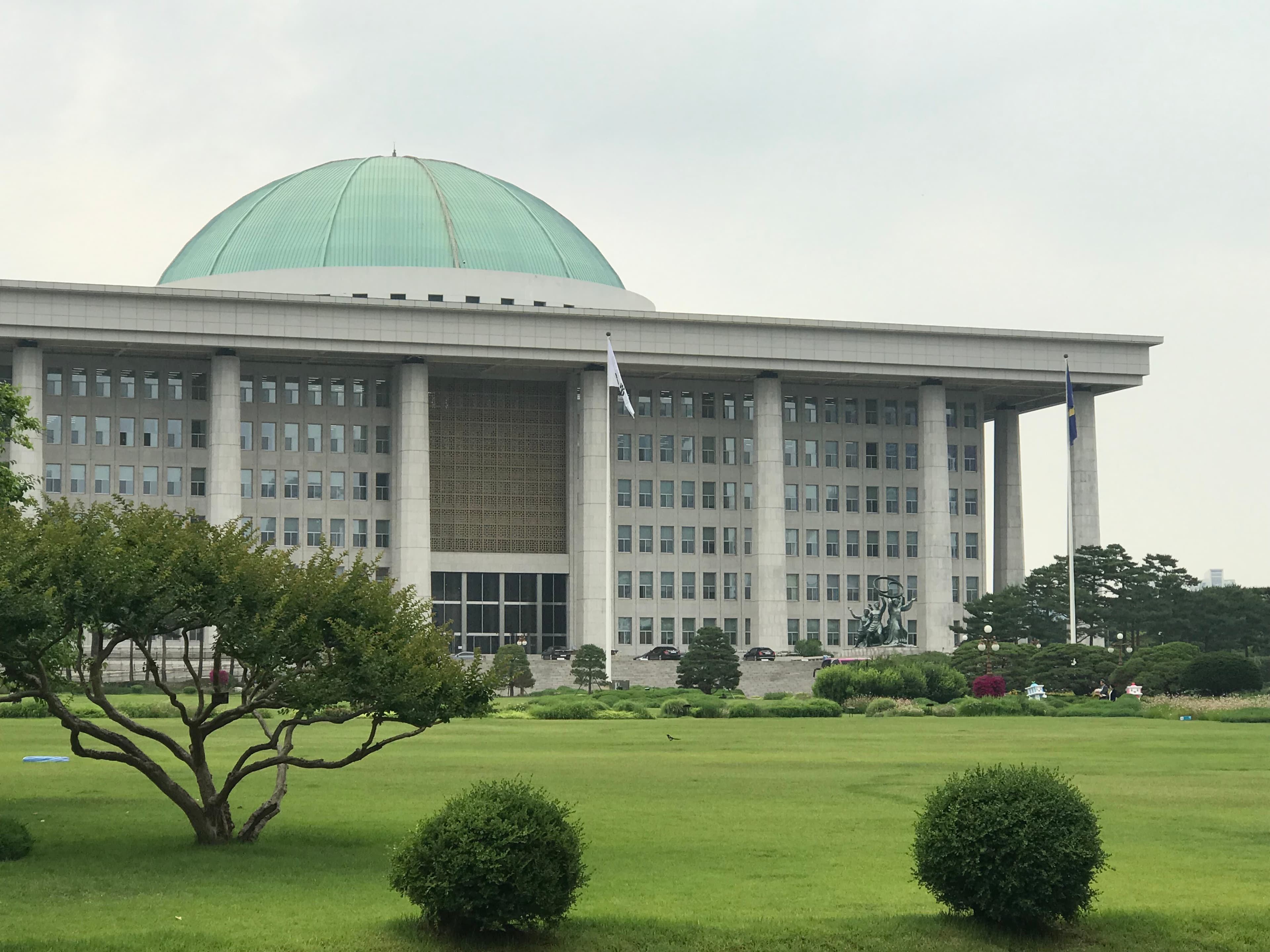
Why you need to know this now: The biggest structural change in South Korea's judicial history was completed in just 3 days. Supporters call it 'democratization of justice'; opponents call it 'destruction of the judiciary.'
TL;DR
- Led by the Democratic Party of Korea, the Judicial Perversion Crime (2/26), Trial Constitutional Complaint System (2/27), and Supreme Court Justice Expansion (2/28) passed in three consecutive plenary sessions, completing the Judicial Reform 3 Laws
- The number of Supreme Court justices expanded from 14 → 26, a net addition of 12, effectively restructuring the judiciary
- Warnings of unconstitutionality came from chief justices nationwide, the legal community, and even some progressive organizations
- The Democratic Party announced it will push for the establishment of a Serious Crime Investigation Agency (SCIA) and a Prosecution Service in the March extraordinary session
- Constitutional review petitions and the Constitutional Court's ruling have emerged as the biggest variables
1. The Facts: A Judicial Overhaul Completed in 3 Days
From February 26 to 28, 2026, the National Assembly, led by the Democratic Party, held three consecutive plenary sessions and passed the 'Judicial Reform 3 Laws' one by one.
| Bill | Date Passed | Key Content | Votes in Favor |
|---|---|---|---|
| Judicial Perversion Crime (Criminal Code Amendment) | Feb. 26, 2026 | Criminal punishment for judges or prosecutors who intentionally misapply the law | Majority |
| Trial Constitutional Complaint System (Constitutional Court Act Amendment) | Feb. 27, 2026 | Allows constitutional complaints against court rulings | Majority |
| Supreme Court Justice Expansion (Court Organization Act Amendment) | Feb. 28, 2026 | Expands the number of Supreme Court justices from 14 to 26 | Majority |
These three laws are the core of the judicial reform package the Democratic Party has pursued since the inauguration of the Lee Jae-myung administration. The Democratic Party argues the legislation represents 'democratization of the judiciary' and 'decentralization of judicial power,' while the opposition and legal community are strongly pushing back, calling it 'a violation of the separation of powers,' 'an infringement on judicial independence,' and 'unconstitutional.'
2. Why This Story Is Exploding Now
① The Link to the Insurrection Trial
The Judicial Perversion Crime and Trial Constitutional Complaint System are closely tied to dissatisfaction within the Democratic Party over court rulings following the December 3rd emergency martial law declaration. The timing overlap between the special prosecutor's criticism of the first-instance insurrection verdict as 'mechanical sentencing' and the push for the Judicial Reform 3 Laws amplified political interpretations.
② Three Consecutive Days of 'Shock Legislation'
The method of holding plenary sessions on three consecutive days to pass three bills sequentially drew criticism for denying the public time for deliberation. Once the legislative schedule became known, search volume for related terms spiked on portals and social media.
③ An Unprecedented Public Statement from Chief Justices Nationwide
The fact that chief justices from across the country issued a public statement expressing regret before the Judicial Perversion Crime passed is an extremely rare event in the history of the judiciary. This drew intense media scrutiny.
3. Context and Background: What Is at Stake?
Judicial Perversion Crime
This law imposes criminal punishment when a judge or prosecutor intentionally misapplies the law. Supporters call it 'strengthening judicial accountability,' but the legal community is concerned that it could chill judges from ruling according to their convictions, thereby infringing on judicial independence. While Germany's 'Rechtsbeugung' was cited as a reference, critics point out that the German provision has a far narrower scope of application.
Trial Constitutional Complaint System
Until now, constitutional complaints explicitly excluded 'court rulings' as a valid target (Article 68, Paragraph 1 of the Constitutional Court Act). The Trial Constitutional Complaint System deletes this exception, making court rulings subject to constitutional complaints. This raises the possibility of constitutional interpretation conflicts between the courts and the Constitutional Court, and there are concerns about judicial delays caused by an explosion of litigation.
Supreme Court Justice Expansion
From 14 to 26 justices. The Democratic Party frames this as 'distributing the monopoly on legal interpretation held by a small number of individuals,' but critics view it as an attempt to control the composition of the Supreme Court through appointment power during the current administration and ruling party's term.
4. Outlook: Will These Laws Actually Work?
5. Risk Check
Points to Watch
- Whether the opposition actually files constitutional complaints, and what position the Constitutional Court takes
- Whether the SCIA and Prosecution Service establishment bills pass in the March extraordinary session
- When the first investigation or indictment under the Judicial Perversion Crime occurs
- The level of confrontation between the ruling and opposition parties during Supreme Court justice appointment schedules and confirmation hearings
- Changes in South Korea's rule of law assessments by international organizations such as the OECD and Freedom House
Reference Links
- Hankyoreh: Pro-ruling party leads 'Judicial 3 Laws' to completion… eyeing additional legislation to abolish the Court Administration Office
- Kookje Ilbo editorial: The ruling party that passed the 'Judicial 3 Laws' — do they have a plan to address concerns like unconstitutionality?
- Kyunghyang Shinmun: Can the prosecutor who filed charges and the judge who issued the ruling both be investigated? The Judicial Perversion Crime's unconstitutionality debate
- Herald Business: 'Insurrection-dedicated court division' begins operation… 'Insurrection appeal' to begin in earnest from March
- Gyeonggi Ilbo: Bill expanding 'Supreme Court justices from 14 to 26' passes National Assembly… Judicial Reform 3 Laws complete