Burn It Within a Year: The Reality of the 'Shareholder Revolution' Created by Korea's 3rd Commercial Act Amendment Passing Alongside KOSPI 6,000
The 3rd Commercial Act Amendment mandating the cancellation of treasury shares within one year passed the National Assembly plenary session with 175 votes in favor on February 25, 2026. Coinciding with KOSPI breaking 6,000 for the first time in history, this landmark legislation is expected to serve as the catalyst for resolving the Korea Discount.
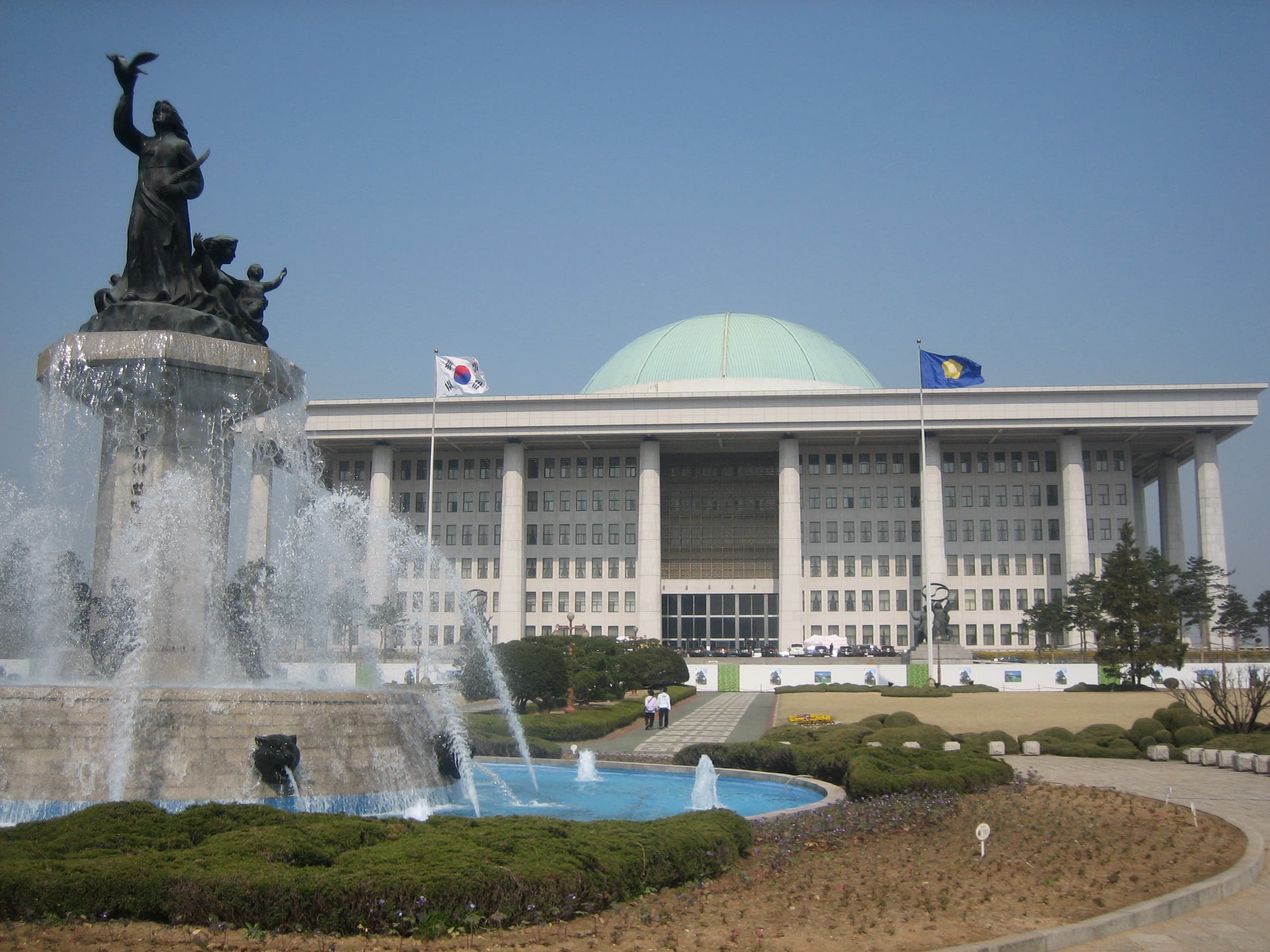
Why You Need to Know About This Now: A law that forces companies to cancel their purchased treasury shares within one year cleared the National Assembly last night. On the same day KOSPI broke 6,000, a 30-year aspirational goal of the Korean capital markets was enshrined in law.
TL;DR
- On February 25, 2026, the 3rd Commercial Act Amendment was passed at the National Assembly plenary session with 175 votes in favor (176 members present).
- Key provision: Treasury shares acquired by a company must in principle be cancelled within one year. Exceptions for retention or disposal require shareholder general meeting approval.
- On the same day, KOSPI closed at an all-time high of 6,083.86, with total market capitalization surpassing 5,016 trillion won.
- Passed unilaterally by the ruling coalition amid the People Power Party's boycott — the prevailing view is that a veto request (presidential veto) is unlikely.
- Expected to be a catalyst for resolving the Korea Discount, but pushback from the business community over its effectiveness has been signaled.
📌 The Facts: What Was Passed
Key Provisions of the 3rd Commercial Act Amendment
| Category | Content |
|---|---|
| Mandatory Treasury Share Cancellation | Acquired treasury shares must in principle be cancelled within one year |
| Exception Conditions | Retention or disposal allowed with shareholder general meeting approval |
| Legislative Progress | Passed the Legislation & Judiciary Committee on Feb. 23, 2026 → Passed plenary session after filibuster ended on Feb. 25 |
| Vote Result | 175 in favor, 1 abstention (176 members present) |
The reason this is the "3rd" amendment is that it completes the final piece of the puzzle — mandatory treasury share cancellation — following the 1st amendment (expanding minority shareholder rights and directors' duty of loyalty) and the 2nd amendment (strengthening the separate election of audit committee members).
🔥 Why This Law Is Trending Now
The timing coincided with KOSPI breaking 6,000. KOSPI, which recorded a 44% gain compared to the start of 2026, was sequentially led by the semiconductor, shipbuilding, defense, and nuclear energy sectors. On top of this, mandatory treasury share cancellation amplified market expectations by institutionally completing the incentive for companies to boost their stock prices.
One of the core reasons Korea's stock market had long traded at a price-to-book ratio (PBR) below 1x was precisely this practice of "stockpiling treasury shares." When companies accumulated treasury shares without cancelling them, the number of shares in circulation never decreased, and a structure took hold where major shareholders' stake ratios could be arbitrarily manipulated.
🗺️ Context and Background
What Is the Korea Discount?
The Korea Discount refers to the phenomenon where Korean companies trade at significantly lower stock prices compared to global peers with identical earnings. The main causes often cited include:
- Excessive issuance and avoidance of cancelling treasury shares — Used as a means of defending management control rather than returning value to shareholders
- Complex ownership structures — Circular shareholding and tunneling
- Low dividend payout ratios — About half the OECD average
- Opaque governance — Disregard for minority shareholder rights
The 3rd Commercial Act Amendment legally blocks the first of these issues.
Why Did the People Power Party Boycott?
The People Power Party did not participate in the vote, citing reasons such as "infringement on corporate management autonomy," "inconsistency with global standards," and "anti-business legislation." Indeed, major countries like the US and Japan do not mandate treasury share cancellation. However, the business community takes issue not so much with the law itself but with the one-year cancellation deadline, arguing it is too short.
🔭 Outlook: How Far Will This Law Go?
⚠️ Secondary Issues and Risks
- Investment overheating: The "dual tailwind" of KOSPI 6,000 + Commercial Act amendment raises the possibility of short-term overbought conditions. Valuation checks are needed.
- Rule-of-law controversy: On the same day as the 3rd Commercial Act Amendment, three judicial reform bills (the crime of law distortion, increase in Supreme Court justices, and petition for trial review) were also tabled, deepening political conflict over the broader legislative package.
- Abuse of exception clauses: If the "shareholder meeting approval" requirement can easily be passed via controlling shareholders' voting rights, the law's effectiveness will be diminished.
- Foreign investor reaction: Positive in the short term, but a wait-and-see posture may persist until law enforcement capacity and governance substance can be verified.
✅ Checklist (For Investors and Corporate IR Teams)
📎 Reference Links
- Commercial Act Amendment Mandating Treasury Share Cancellation Passes National Assembly Plenary Session (Korea Policy Briefing)
- 'Cancel Treasury Shares Within 1 Year': 3rd Commercial Act Amendment Completed (Seoul Shinmun)
- 'Mandatory Treasury Share Cancellation' Commercial Act Amendment Passes (Law Times)
- 1 Billion Stock Accounts…Retail Investors Fire the 6,000 Salute (Chosun Ilbo)
Image credit: Korea-Seoul-Yeouido-National Assembly Building-06.jpg, Wikimedia Commons, CC BY-SA 3.0