The End of the 7-Night, 8-Day Standoff: Why the 3rd Commercial Act Amendment Filibuster Is Ushering in the '₩22 Trillion Treasury Stock Cancellation Era'
South Korea's Democratic Party tabled the 3rd Commercial Act Amendment — mandating treasury stock cancellation — in the National Assembly plenary session on February 24. The People Power Party immediately launched a filibuster. The Democratic Party announced a vote for the afternoon of February 25, signaling the imminent arrival of an era of forced cancellation of ₩22 trillion in corporate treasury shares.
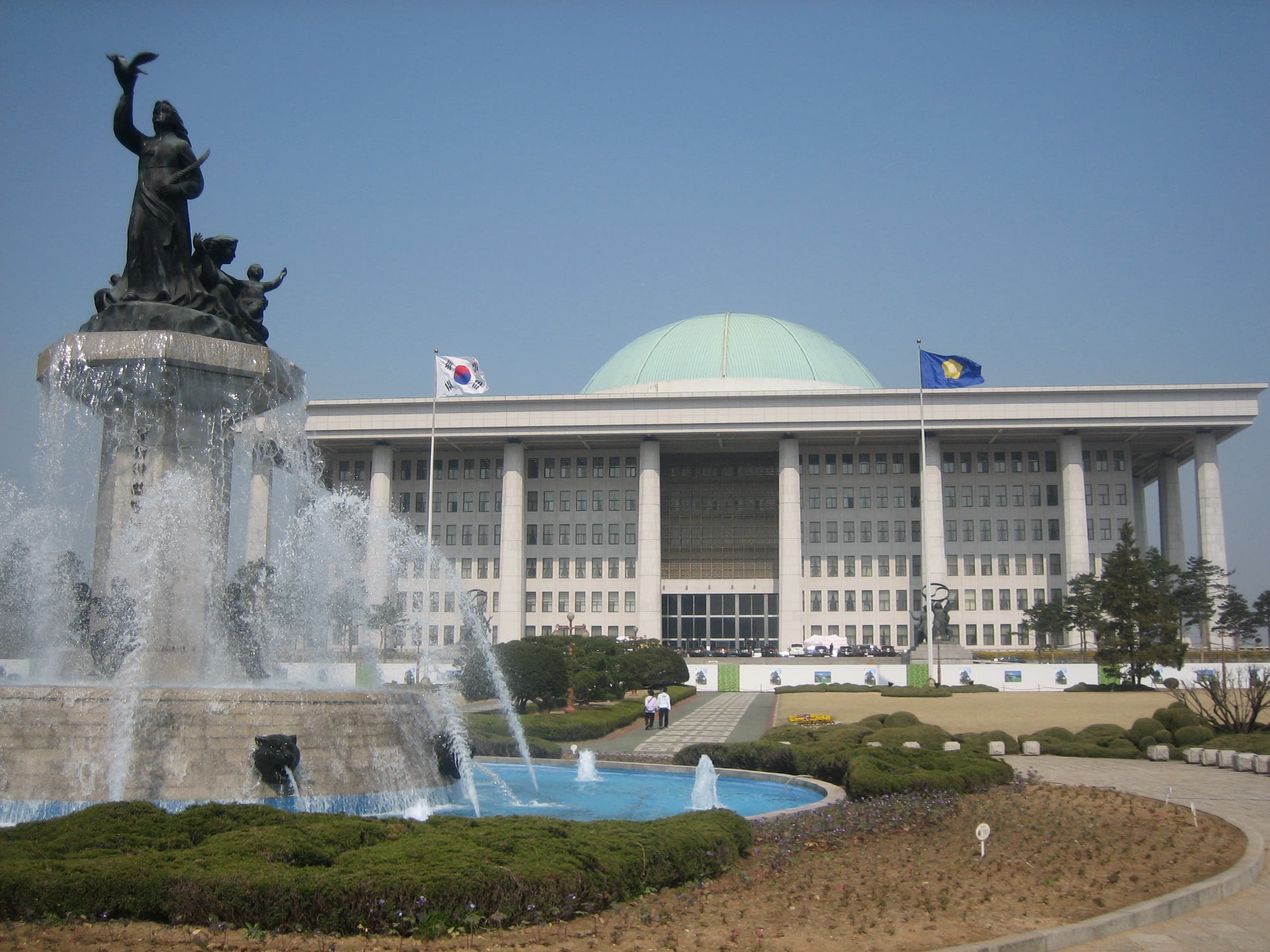
Why You Need to Watch This Now: This afternoon (February 25), the fate of ₩22 trillion in corporate treasury shares will be decided by a National Assembly vote. With KOSPI just short of 6,000, this is the single biggest variable that could immediately reshape the market.
TL;DR
- The Democratic Party tabled the 3rd Commercial Act Amendment in the National Assembly plenary session on February 24
- The People Power Party (PPP) immediately launched a filibuster (unlimited debate) — Rep. Yoon Han-hong led off
- Key provision: mandatory cancellation of treasury shares within 1 year of acquisition; existing holdings must be cancelled within 1 year and 6 months
- Violations subject to a fine of up to ₩50 million
- The Democratic Party plans to end the filibuster by a three-fifths vote and proceed to a vote on the afternoon of the 25th
- If passed, an estimated ₩22 trillion worth of corporate treasury shares will be subject to forced cancellation
The Facts: What Happened
Core Contents of the 3rd Commercial Act Amendment
The 3rd Commercial Act Amendment, which passed the National Assembly's Legislation and Judiciary Committee with only Democratic Party votes on February 23, 2026, was tabled in the plenary session on the 24th. Its key provisions are as follows:
| Category | Detail |
|---|---|
| Newly Acquired Treasury Shares | Must be cancelled within 1 year of acquisition |
| Existing Treasury Shares | Must be cancelled within 1 year and 6 months of the law's effective date |
| Fine | Up to ₩50 million for violations |
| Exemptions | Use for employee compensation or employee stock ownership plans exempt with shareholder meeting approval |
| Foreign Investment-Restricted Companies | Must dispose of shares within 3 years of the effective date |
The amendment also explicitly classifies treasury shares as 'capital', strengthening accounting transparency.
The Three-Stage Legislative Push for Commercial Act Reform
This 3rd amendment is the final piece of the Democratic Party's consecutive legislative strategy.
- 1st Commercial Act Amendment: Expanded the fiduciary duty of directors from 'the company' to 'shareholders'
- 2nd Commercial Act Amendment: Mandatory cumulative voting and expanded separation of audit committee member elections
- 3rd Commercial Act Amendment (current): Mandatory treasury stock cancellation
The Filibuster: A '7-Night, 8-Day' Standoff
The moment the bill was tabled, the PPP filed for unlimited debate (a filibuster). Rep. Yoon Han-hong went first. Under the National Assembly Act, a filibuster can last up to 7 nights and 8 days, but the Democratic Party plans to use the rule allowing termination after 24 hours with a three-fifths majority vote to force an end and hold a vote on the afternoon of the 25th.
Why This Bill Is Exploding in Attention
Arguments For (Democratic Party & Institutional Investors)
- Treasury shares have long been abused as a tool by controlling shareholders to defend management control
- Mandatory cancellation → Fewer shares in circulation → Higher EPS (earnings per share) → Stock price boost
- A core task for resolving the Korea Discount
Arguments Against (PPP & Business Community)
- Excessive government intervention that undermines companies' autonomy in utilizing capital
- Blocks even legitimate treasury share uses such as M&A defense and strategic investment
- A regulation out of step with global standards
Context and Background
President Lee Jae-myung is pushing 'Korea Discount' elimination as a core economic agenda, drawing on his own past experience of investment losses in the stock market. The 1st through 3rd Commercial Act amendments are the specific tools for implementing this agenda.
Korean listed companies hold treasury shares at rates among the highest in the world, and these shares have been criticized for diluting shareholder value. In major countries like the U.S. and U.K., it is standard practice for companies to cancel treasury shares immediately after acquisition, but Korean companies have in many cases accumulated treasury shares over decades for management control defense purposes.
Outlook: How Far Will This Go?
Short-Term (Today ~ This Week)
- Afternoon of the 25th: Vote on the 3rd Commercial Act Amendment after forced filibuster termination
- Given the Democratic Party's seats (holding three-fifths of the total), passage is nearly certain
- Afterward: Law Distortion Crime → Court Petition Bill → Supreme Court Justice Expansion Bill to be tabled in sequence
Medium-Term (After the Law Takes Effect)
- Listed companies obligated to disclose treasury share cancellation plans → A series of stock price events
- Concentrated benefits for holding companies, financial stocks, and small/mid-caps with high treasury share ratios
- Surge in shareholder meeting agenda items seeking to qualify for cancellation exemptions
Long-Term Risks
- Possibility of constitutional review petition to the Constitutional Court (signaled by the business community)
- Concern that mandatory treasury stock cancellation leads to weakened M&A defenses, intensifying pressure from foreign activist funds
Checklist
Reference Links
- Asia Economy: 'Mandatory Treasury Share Cancellation' Commercial Act Amendment Tabled in Plenary — Filibuster, Vote Tomorrow
- Hankyoreh: 'Treasury Share Cancellation' Commercial Act Amendment Tabled in Plenary — PPP Filibuster Begins
- MBC News: 3rd Commercial Act Amendment Tabled — '7-Night, 8-Day' Filibuster Launched
- Chosun Ilbo: If 3rd Commercial Act Amendment Passes, ₩22 Trillion in Corporate Treasury Shares Forced to Cancel
Image Credit
- 대한민국 국회의사당 전경: Wikimedia Commons (CC BY-SA 3.0)