Revised Twice Before the Vote: The Constitutional Debate Left Behind by the 'Judicial Distortion Crime' Bill Ahead of the Feb. 26 Plenary Session
The Democratic Party of Korea revised the 'Judicial Distortion Crime' bill once again just before its Feb. 25 plenary session submission, limiting the scope to criminal cases and clarifying the definition of distortion. While the bill is likely to pass following a forced cloture vote on the afternoon of Feb. 26, the Supreme Court and the legal community continue to warn of unconstitutionality and violations of the separation of powers.
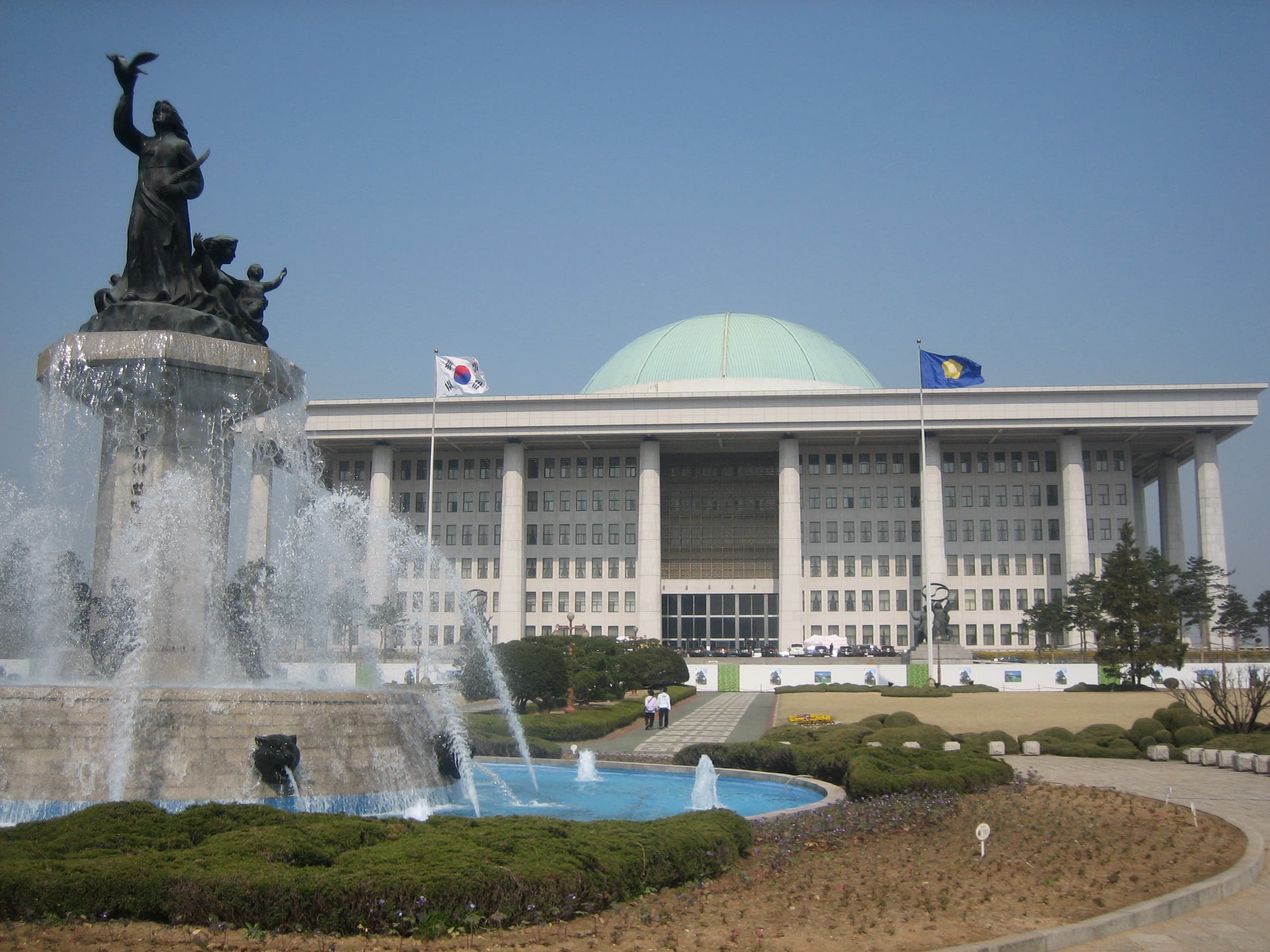
Why you should pay attention now: The 'Judicial Distortion Crime' — which would allow criminal punishment of judges and prosecutors who intentionally misapply the law — faces a plenary session vote in the National Assembly on the afternoon of February 26, 2026. If passed, Korea's judicial system will undergo its most sweeping transformation in decades.
TL;DR
- The Democratic Party revised the bill again just one hour before the plenary session — scope narrowed to criminal cases only, definition of distortion clarified
- On Feb. 26 afternoon, a forced cloture vote on the filibuster is expected, followed by near-certain final passage
- Supreme Court Chief Justice Jo Hee-dae warned of "harm to citizens"; the legal community and civic groups echo calls to "deliberate further"
- Hard-liner Rep. Choo Mi-ae and others pushed back against the amended bill — divisions are visible within the Democratic Party itself
- Beyond the Judicial Distortion Crime, a constitutional appeal system and expansion of Supreme Court justices are also slated for sequential passage
The Facts: What Happened
What Is the Judicial Distortion Crime?
The Judicial Distortion Crime (a proposed amendment to the Criminal Code) is a measure that would allow criminal punishment of judges or prosecutors who intentionally misapply statutes or fabricate the facts of a case. Similar provisions exist in some European countries such as Germany and Austria, but the concept has never existed in Korea's judicial tradition.
The Democratic Party of Korea included this bill as one of its 'Judicial Reform Three Laws' and pushed for its forced passage.
How the Bill Was Amended
At 4:30 p.m. on Feb. 25, the Democratic Party revised the existing bill in two key directions just before its plenary session submission:
- Narrowed scope of application — Civil and administrative cases excluded; limited to criminal cases only
- Clarified definition of distortion — The concept of 'intentional misapplication of statutes' was defined more precisely
At the Democratic Party caucus, roughly 70 of approximately 120 lawmakers raised their hands in favor of the amended bill, and it was adopted as the party line by a show of hands. However, hard-liners including Rep. Choo Mi-ae pushed back, calling it a "retreat."
Plenary Session Schedule
| Date | Key Event |
|---|---|
| Feb. 24 (Tue) | 3rd Commercial Act Amendment introduced → passed Feb. 25 |
| Feb. 25 (Wed) | Judicial Distortion Crime amended bill introduced; People Power Party filibuster begins |
| Feb. 26 (Thu) afternoon | Forced cloture vote on filibuster → final vote on Judicial Distortion Crime |
| Thereafter | Constitutional appeal system and Supreme Court justice expansion bills to follow |
Why It's So Heated
1. The Core of the Separation-of-Powers Debate
It is highly unusual for the judiciary (Supreme Court) to openly oppose legislation from the legislature (National Assembly). Chief Justice Jo Hee-dae convened an emergency national court chiefs meeting and stated his opposition, calling it "a fundamental change equivalent to an amendment of the Constitution." The simultaneous clash among the executive, legislative, and judicial branches has become the primary driver of public attention.
2. The Ongoing Constitutionality Controversy
The legal community and civic groups argue that constitutional concerns remain even after the amendment. Key issues include: a violation of the principle of clarity (it is unclear what constitutes 'distortion') and an infringement on judicial independence (judges may be too intimidated to rule according to their convictions).참여연대 (People's Solidarity for Participatory Democracy) also stated that "further deliberation is needed."
3. The Political Landscape
The People Power Party is responding to all three Judicial Reform Laws with filibusters. However, the pro-government bloc holds more than three-fifths of the total seats (178), making forced cloture structurally possible.
Context and Background
The legislative push for the Judicial Distortion Crime is an extension of the 'prosecution reform' initiative that the then-opposition (now ruling) party had been driving since the second half of 2024. Growing political distrust of the judiciary and prosecution following the investigation and life imprisonment sentence of former President Yoon Suk-yeol (Feb. 19) also played a role.
Furthermore, the bill is being pursued as part of the Democratic Party's 'legislative drive' — following the 3rd Commercial Act Amendment (mandatory cancellation of treasury shares, passed Feb. 25) — with far-reaching implications across politics, economics, and the law.
Outlook: Scenarios After Passage
- Constitutional Court petition — The People Power Party is likely to file an immediate constitutional complaint upon passage
- Continued judicial resistance — Additional statements from the National Judges' Representative Conference and similar bodies are expected
- Chilling effect on principled rulings — Concerns that the threat of criminal punishment will prompt self-censorship among judges and prosecutors
- Constitutional appeal system and Supreme Court expansion — If processed sequentially, additional shocks to the entire judicial system are anticipated
Checklist: Key Issues to Watch
Risks
Misinformation risk: The complexity of the amended bill creates a risk of erroneous reporting that the 'original bill passed.' The version that actually passed is the amended bill limited to criminal cases — this distinction must be maintained.
Investment impact: Growing concerns about weakened judicial independence could over the long term raise the rule-of-law risk premium, potentially affecting foreign investor sentiment.
Reference Links
- Yonhap News — Judicial Distortion Crime bill revised again before plenary session submission
- KBS — Today's plenary vote: Judicial Reform Three Laws expected to pass for the first time
- Dong-A Ilbo — Forced passage of Judicial Reform Three Laws; 7-night 8-day filibuster showdown
- Hankyoreh — Heated caucus debate over amended bill
- OhmyNews — Democratic Party introduces amended bill
Image Credit
- National Assembly Building photo — Wikimedia Commons, National Assembly Building, Seoul, CC BY-SA 3.0