The $120-per-Barrel Fear: 5 Reasons the Hormuz Blockade Reality Is Simultaneously Hitting Korea's Refining, Aviation, and Shipping Industries
Following Iran's declaration of a Hormuz Strait blockade, global investment banks including JP Morgan warn that international oil prices could surge to $120–130 per barrel. With over 70% of its crude oil imports dependent on the Middle East, Korea now faces its worst energy crisis as the refining, aviation, shipping, and petrochemical industries are all hit simultaneously.
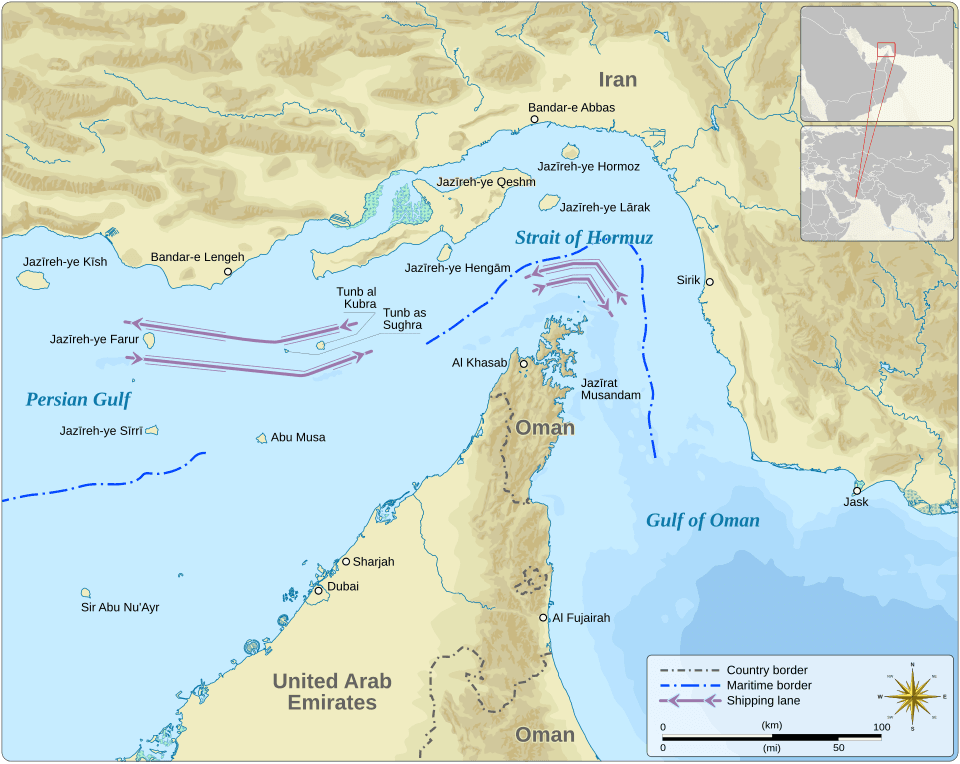
At this very moment, the passage carrying 20–30% of the world's seaborne crude oil shipments has been blocked. Korea imports over 70% of its crude oil from the Middle East. The Hormuz Strait blockade is not someone else's war.
TL;DR
- Following the U.S.-Israel joint airstrike on Iran on February 28, 2026, Iran declared a blockade of the Hormuz Strait.
- International oil prices have already surpassed $70 per barrel, and a full blockade scenario of $120–130 could become reality.
- Korea's four key industries — refining, aviation, shipping, and petrochemicals — have simultaneously entered emergency mode.
- A 10% rise in oil prices would reduce Korea's exports by 0.39% and increase imports by 2.68%, sharply worsening the trade balance.
- The government has activated emergency protocols, including a review of strategic petroleum reserve release readiness and the exercise of joint stockpile priority purchase rights.
The Facts: What Has Been Blocked and How
The Strait of Hormuz is a narrow waterway just 34 km wide, yet 20–30% of the world's seaborne crude oil shipments pass through it. The vast majority of crude oil exports from Saudi Arabia, Iraq, the UAE, and Kuwait flow through this route.
Iran declared it would "blockade the Strait of Hormuz" immediately after the U.S.-Israel joint airstrike (Operation Roaring Lion) on February 28, 2026. Unlike past threats that remained preemptive warnings, this time actual mine-laying and deployment of IRGC speedboats were reported simultaneously — prompting major oil companies to actually halt operations.
Escalating Factors: Why This Time Is Different
1. Khamenei's Death — An Uncontrollable Variable
With the death of Iran's Supreme Leader Ali Khamenei confirmed, a power vacuum has emerged inside Iran. The possibility of independent action by the Revolutionary Guards has increased, further complicating diplomatic channels.
2. U.S. Casualties — Pressure to Escalate
U.S. Central Command (CENTCOM) confirmed 3 U.S. soldiers killed and 5 seriously wounded during the Iran strike operation. As pressure mounts within the U.S. to expand the war, the space for diplomatic compromise is narrowing.
3. Iran's Retaliatory Ballistic Missiles — Simultaneous Strikes on Gulf Bases in 4 Countries
Iran launched ballistic missiles and drones at U.S. military bases in Bahrain, Kuwait, Qatar, and the UAE, as well as at Israeli territory. With the entire Middle East becoming a battlefield, even alternative sea routes have become dangerous.
Sector-by-Sector Impact Analysis on Korea
| Industry | Direct Impact | Risk Level |
|---|---|---|
| Refining & Petrochemicals | Crude supply disruption, sharp rise in input costs | 🔴 Very High |
| Aviation | Jet fuel cost surge + additional rerouting expenses | 🔴 Very High |
| Shipping | Tanker freight rate spike, insurance cost explosion | 🟠 High |
| Manufacturing Overall | Rising production costs, weakening export competitiveness | 🟠 High |
| Finance & FX | KRW/USD rate surge, flight to safe-haven assets | 🟡 Medium |
Refining & Petrochemicals: Korea sources over 70% of its imported crude from the Middle East. If the Hormuz blockade becomes reality, the four major refiners — SK Innovation, GS Caltex, S-OIL, and Hyundai Oilbank — will take a direct hit. Cost pressures on naphtha-based petrochemical companies will also explode.
Aviation: Jet fuel is directly tied to oil prices. Korean Air and Asiana Airlines will incur additional operating costs as they reroute or suspend Middle East services. The compound pressure of leasing fees, insurance premiums, and maintenance costs will eat into operating profit.
Shipping: Shipping companies like HMM may expect to benefit from soaring tanker freight rates, but surging ship insurance premiums and route restructuring costs could offset profitability. If additional war-risk zones are designated, insurance costs could spike by tens of times.
Background & Context: JP Morgan's '$120 Scenario'
Global investment banks including JP Morgan estimate that a full blockade of the Hormuz Strait could push international oil prices to $120–130 per barrel. That represents a surge of over 70% from the current level of around $70.
According to the Korea International Trade Association, a 10% rise in international oil prices would result in:
- Exports: 0.39% decrease
- Imports: 2.68% increase
- Result: Sharp deterioration in the trade balance
A 70% rise in oil prices would not translate linearly — it would amplify into a cascading shock across the entire supply chain.
Outlook: The Government's Response and Its Limits
The government is currently:
- Ministry of Trade, Industry and Energy: Emergency review of resource/energy supply and trade/supply chain
- Korea National Oil Corporation: Expanding imports from overseas production, exercising joint stockpile priority purchase rights
- Strategic Reserve Release Readiness: Activating measures under emergency protocols
However, Korea's strategic petroleum reserve stands at approximately 97 days' worth. If the blockade extends beyond three months, reserves alone will not be sufficient. Additionally, using the alternative route via the Cape of Good Hope would extend transit time by 2–3 weeks and significantly increase costs.
Checklist: 5 Things to Verify Right Now
References
- Iran declares 'Hormuz blockade'… Korean industries on emergency alert — Yonhap News
- As Hormuz blockade becomes real… Korea's refining, aviation, and shipping industries on simultaneous emergency — Nate News
- Oil prices on emergency alert over Hormuz blockade… Korea depends on Middle East for 70% of crude — Maeil Business
- Hormuz Strait blockade becomes real… Oil majors halt operations — Chosun Ilbo
- Middle East situation escalates — shipping, refining, aviation on emergency — Get News
Image source: NASA Earth Observatory / Wikimedia Commons — Public Domain