Chef vs. Cook: Why Culinary Class Wars Season 2 Winner Choi Kang-rok Refuses to Open a Restaurant — and 5 Signals for Korea's Fine Dining Market
Culinary Class Wars Season 2 winner Choi Kang-rok declared he 'won't open a restaurant for the time being.' We analyze the paradox of record-high expectations actually making a chef step back — and 5 questions it poses to Korea's fine dining market.
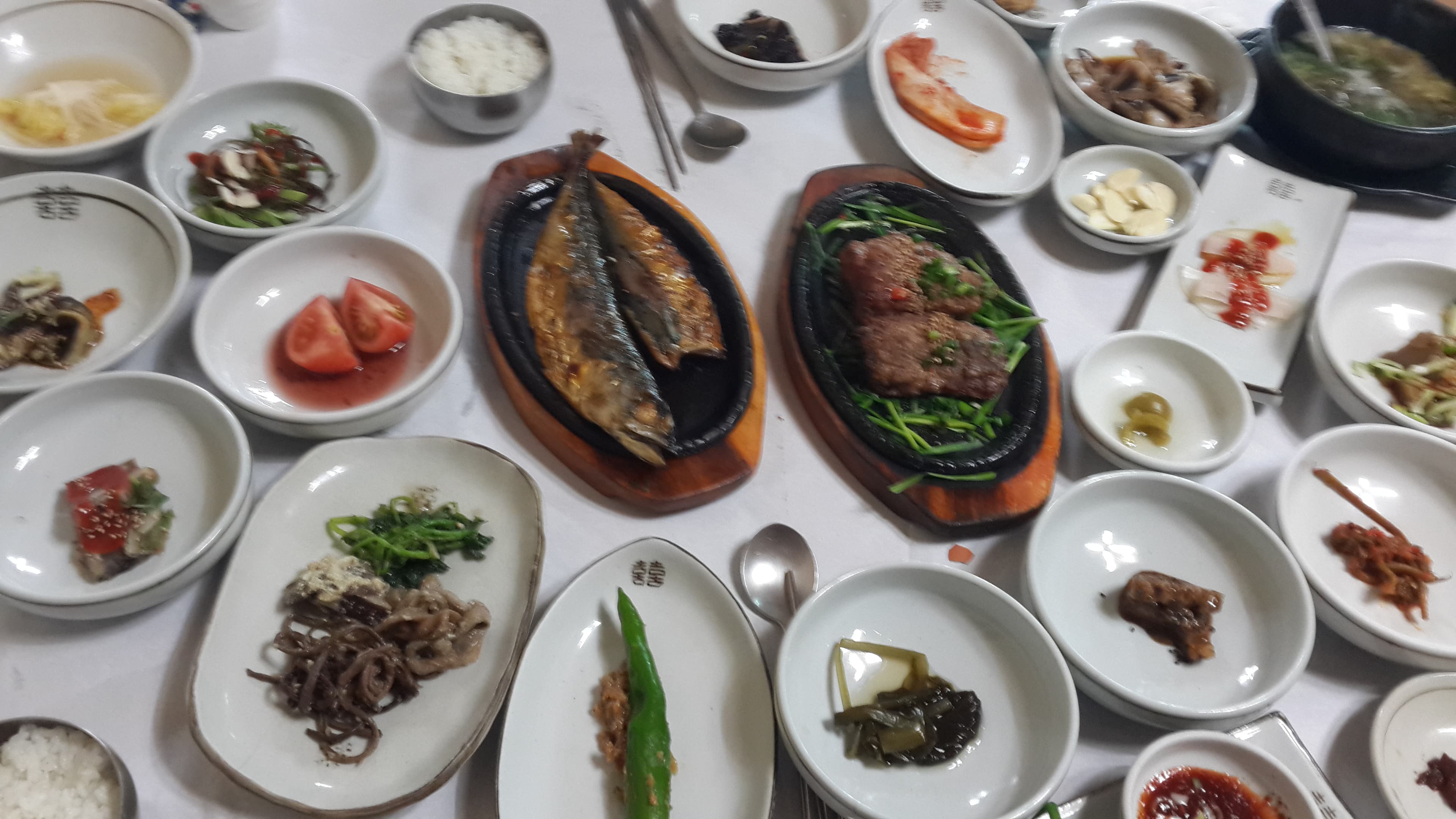
Why should you read this now? Winning actually shut the restaurant down — Choi Kang-rok's choice lays bare the 'expectation inflation' gripping Korea's food service industry.
TL;DR
- Netflix Culinary Class Wars: Season 2 winner Chef Choi Kang-rok was confirmed as champion on January 13, 2026
- Immediately after winning, he publicly stated: "For now, I won't open a restaurant — it's too frightening," indefinitely postponing any reopening
- Restaurant reservations for competing chefs increased 3.5x compared to pre-broadcast levels, with some restaurants fully booked through April
- Choi Kang-rok currently has no fixed offline location and is pursuing YouTube collaborations and project-based cooking
- This decision is a personal act of courage — and a symbolic event that shows how media-driven expectation inflation distorts the culinary world
The Facts: What Happened
Culinary Class Wars: Season 2 was a 13-episode cooking survival program aired on Netflix from December 16, 2025 to January 13, 2026. Judges Baek Jong-won and Ahn Sung-jae presided, and Choi Kang-rok entered as a 'Hidden White Spoon,' overcoming the pain of his Season 1 elimination.
The final round theme was 'The One Dish Only for Me.' Defying his nickname 'Jorimping' (braising king), he set aside braising entirely and instead presented a sesame tofu broth dish featuring pine mushrooms, shiitake mushrooms, sea urchin roe, and pumpkin leaves. Both judges voted unanimously in his favor.
With this victory, Choi Kang-rok claimed the top of a cooking survival show for the second time in 13 years, following his 2013 MasterChef Korea 2 win.
The issue was what came next. In his post-win interview, he said:
"Right after winning, I thought: 'Oh, I can't run a restaurant now.' Like touching fire — if it's too hot, you back off for a moment. I think it's best to step away for a bit."
Why It Went Viral: The Spread Factors
1. The Structural Irony: 'Won, But Has No Restaurant'
After Culinary Class Wars aired, reservation demand at competing chefs' restaurants surged 3.5 times compared to pre-broadcast levels. Some high-end restaurants were fully booked through early April. The most natural next step for viewers is 'go eat there' — but the winner having no restaurant to visit created a massive void.
2. 'Jorimping' Who Didn't Braise in the Final
Known as the master of braising — hence the nickname — he chose not to braise in the final, and confessed that 'there were times I pretended to be good at things I wasn't.' This went beyond mere cooking strategy and resonated on a deeply human level.
3. SNS Amplification
The quote "I can't run a restaurant after winning" went viral on short-form platforms like X (formerly Twitter), Instagram Reels, and YouTube Shorts. Paired with the emotional codes of 'chef reality' and 'expectation vs. reality,' it continues to circulate as of late February.
Context: 5 Signals in Korea's Fine Dining Market
Signal 1. The Trap of Media Expectation Inflation
After Culinary Class Wars Season 1, participating chefs' restaurants were hit simultaneously with reservation explosions and waves of 'disappointment reviews.' The wider the gap between the 'star chef' image TV survival shows create and the actual restaurant experience, the greater the mental pressure on the chef.
Signal 2. 'Fine' in Fine Dining Is the Heart, Not the Form
In an interview, Choi Kang-rok said: "Fine dining isn't about the format — the person making it needs to have a fine heart," adding that his dream is "to grow old running a noodle shop." This aligns with a broader shift in Korea's food industry toward redefining fine dining as an attitude rather than a genre.
Signal 3. The Polarization of Reservation Culture
The 3.5x surge in reservations is, in part, a symptom of 'the commodification of gourmet content.' A culture that consumes food not as an experience but as social proof places unsustainable pressure on chefs.
Signal 4. The ₩300 Million Prize and Reality
Choi Kang-rok revealed he has yet to receive his ₩300 million prize money, saying: "I'll put it toward a noodle shop someday." This reveals the economic gap between the 'star chef' image broadcast creates and the reality of a self-employed chef.
Signal 5. Chef Brand vs. The Cook's Presence
His activities — project-based cooking and collaborations through the YouTube channel 'TEO 테오's 'Sik-deokhu' — pose a new question: 'Can a chef brand be maintained without a fixed offline space?'
Outlook: What Comes Next
| Scenario | Likelihood | Rationale |
|---|---|---|
| Returns via pop-up or project restaurant | High | Maintains media presence while minimizing risk |
| Opens a noodle shop or small venue | Medium | Consistent with his own statements; needs time |
| Reopens a fixed omakase restaurant | Low | 'Too frightening' statement; burden of expectation inflation |
| Continues TV-based activities | Certain | Expected love calls from broadcasters and OTT platforms |
Checklist: What to Watch in This Story
Reference Links
- Chosun Ilbo: 'Culinary Class Wars 2' Choi Kang-rok Wins, Anticlimactic to the End (2026.01.13)
- Chosun Ilbo: 'Culinary Class Wars 2' Winner Choi Kang-rok — "Closed Restaurant, No Plans to Open" (2026.01.16)
- Daum: "I Want to Be Called a Cook, Not a Chef" — Choi Kang-rok's Story of Redemption (2026.01.14)
- Maeil Business: 'Culinary Class Wars 2' Choi Kang-rok Won, But Has No Restaurant (2026.01.14)
- Namuwiki: Culinary Class Wars Season 2
Image source: Wikimedia Commons - Korean cuisine hanjeongsik Damyang South Korea (CC BY-SA 4.0, Mar del Este)