The $82 Curse: Citibank's 'GDP -0.45%p' Warning and 5 Shock Scenarios for Korea's Economy Amid the Iran War
Citibank has warned that Korea's GDP growth rate could fall by up to 0.45 percentage points if oil prices remain above $82 per barrel amid the Iran-US war. With KOSPI recording its all-time largest single-day drop (-452 points) and the threat of a Hormuz Strait blockade, Korea's 2026 economic growth outlook has turned red.
Why you need to read this now: On Day 4 of the Iran-US war — the very day KOSPI recorded its all-time largest single-day drop (-452 points, -7.24%) — Citibank issued a warning that sustained oil prices above $82 per barrel could shave an additional 0.45 percentage points off Korea's GDP.
TL;DR
- Citibank analyst Kim Jin-woo, in a March 3 report: if oil stays above $82 per barrel, Korea's 2026 GDP growth forecast could fall by 0.45%p
- Iran's tightening blockade of the Strait of Hormuz making crude supply disruptions a reality
- KOSPI closing price on March 3: 5,791.91 — all-time largest single-day point drop
- Approximately 70% of Korea's crude oil imports pass through the Hormuz Strait
- As an energy-importing nation, Korea is particularly vulnerable to oil price shocks
1. The Facts — What Happened
On March 3, 2026, Citibank's Korea analyst Kim Jin-woo warned in a report that if international oil prices average above $82 per barrel, Korea's 2026 GDP growth rate could fall 0.45 percentage points below existing forecasts.
This is not a mere hypothetical. On the same day, KOSPI plunged 452.22 points (7.24%) amid fears over the Iran-US war, closing at 5,791.91 — the largest single-day point drop on record. WTI crude futures also broke through the $90s per barrel, heightening fears of an energy crisis.
2. The Transmission Mechanism — Why Korea Hurts More
Hormuz Dependency
Korea imports approximately 70% of its crude oil through the Strait of Hormuz. The more Iran tightens the blockade, the more directly Korea's energy procurement costs rise.
The Export-Led Paradox
Rising oil prices hit Korea in sequence: production costs → manufacturing competitiveness → export profitability. Energy-intensive industries such as petrochemicals, refining, and steel are the backbone of Korea's exports.
The Currency Double Shock
Crude oil is priced in US dollars. When rising oil prices and a weakening Korean won (mid-1,460s range) occur simultaneously, the impact on import prices is compounded.
3. Context and Background
| Category | Details |
|---|---|
| Citibank's previous forecast | Korea 2026 GDP growth: 2.4% (revised up in February) |
| Post-oil shock scenario | 2.4% → ~1.95% (approximately -0.45%p) |
| Middle East situation | Day 4 of Iran-US war, Hormuz blockade tightening |
| KOSPI reaction | March 3 close: 5,791.91 — all-time largest single-day drop |
| KRW/USD exchange rate | Mid-1,460 won range |
Just one month earlier, in early February 2026, Citibank had upgraded Korea's growth forecast from 2.2% to 2.4%, reflecting the semiconductor boom and the Lee Jae-myung administration's stimulus stance. But Middle East geopolitical risk has now emerged as a force that could wipe out that entire upgrade in a matter of days.
4. Five Shock Scenarios
① Surge in Energy Import Costs → Current Account Deterioration
For every $10 rise in oil prices, Korea's annual energy import bill is estimated to increase by approximately ₩15 trillion. Current account surplus narrows.
② Renewed Price Inflation → Bank of Korea Rate Dilemma
Possibility of Consumer Price Index (CPI) re-acceleration. Creates an environment where the Bank of Korea cannot easily cut rates further. Household debt relief is also delayed.
③ Business Investment Contraction → Potential Growth Rate Decline
Heightened uncertainty pushes companies to defer capital expenditure decisions. Particularly disruptive to large-scale investment projects in semiconductors and batteries.
④ Further KOSPI Downside Risk
With KOSPI already closing at 5,791.91, some analysts are raising scenarios of a further drop to the 5,500 level if oil prices continue rising. Concern over sustained foreign investor selling.
⑤ Consumer Sentiment Cooling → Domestic Demand Recovery Delayed
Higher oil = higher fuel costs = lower disposable income. Spending on dining out and travel, especially among the 20s–30s demographic, contracts — throwing cold water on the domestic demand recovery.
5. Outlook — How Long Will This Last?
Short-term (1–4 weeks): The trajectory of the Iran-US war is the key variable. Trump has mentioned a '4–5 week war.' Whether oil breaks through $100 depends on the extent of the Hormuz blockade.
Medium-term (1–3 months): If the war is not resolved quickly, Korean export companies could enter a downward earnings revision cycle. A negative GDP growth rate for Q1 cannot be ruled out.
Long-term: Energy security diversification debate reignites. Structural responses including expanded direct LNG imports and accelerated renewable energy investment will be unavoidable.
Checklist — Things to Review Right Now
Reference Links
- Korea's GDP growth may shed 0.45 percentage points if oil prices stay high: Citibank — Korea JoongAng Daily (2026.03.03)
- 'Black Tuesday': KOSPI plunges 7%, largest drop on record — Daum News (2026.03.03)
- After war breaks out, 'sell-off avalanche': KOSPI crashes below 5,900 — sell-side circuit breaker triggered — Donga (2026.03.03)
Image Credit
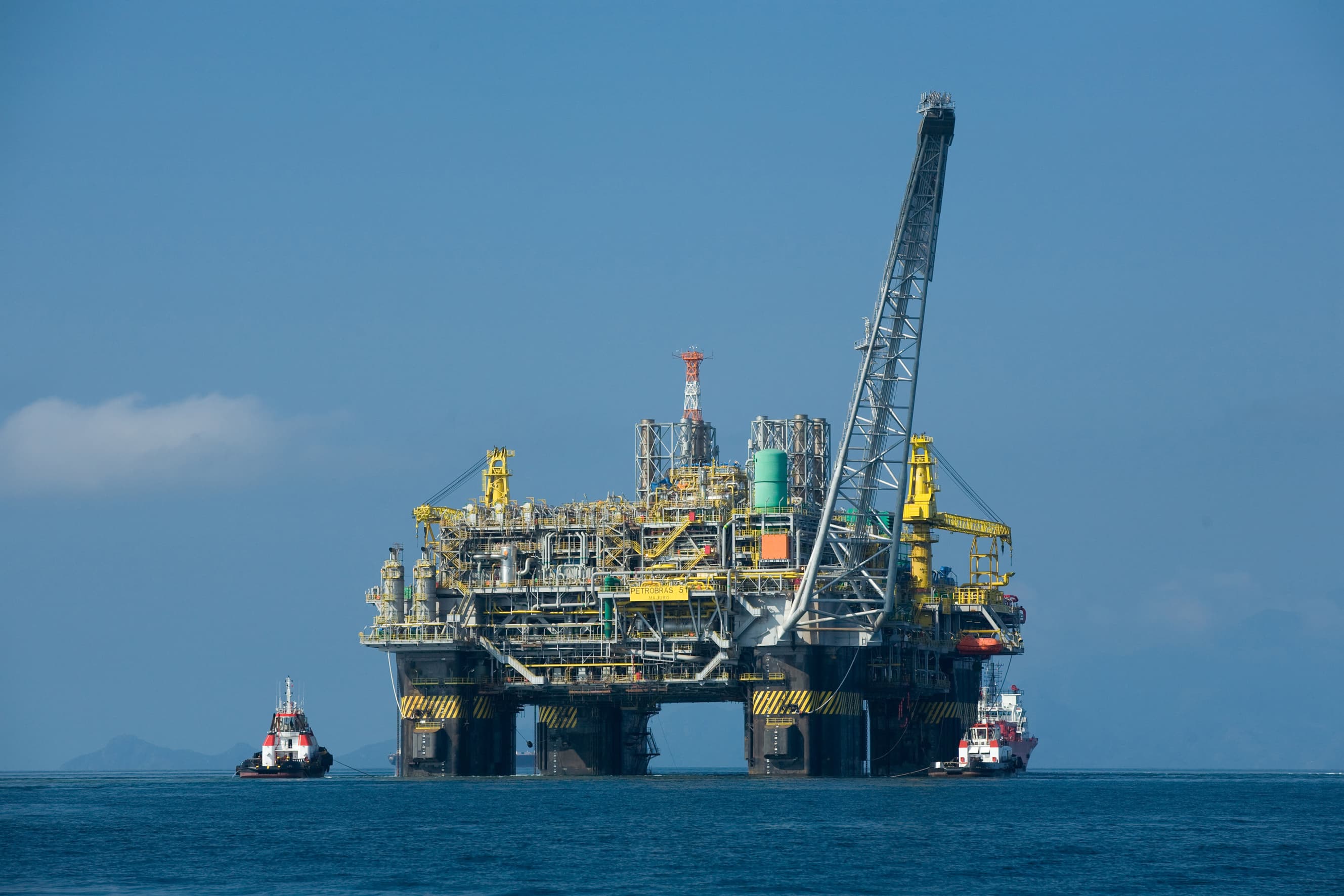
- Brazil offshore oil platform P-51 (Wikimedia Commons, CC BY-SA 3.0) — Source