The 14-Day Threshold: 5 Paths from the Hormuz Blockade to 'Stagflation → Global Economic Structural Transformation'
If Iran's Strait of Hormuz blockade extends beyond 14 days, the world faces more than a simple oil price spike — a structural transformation begins, marked by entrenched global inflation, central bank dilemmas, and supply chain realignment. JP Morgan warns of oil at $120–130, while SEB puts the upper bound at $150, cautioning of a 'second oil shock' scenario.
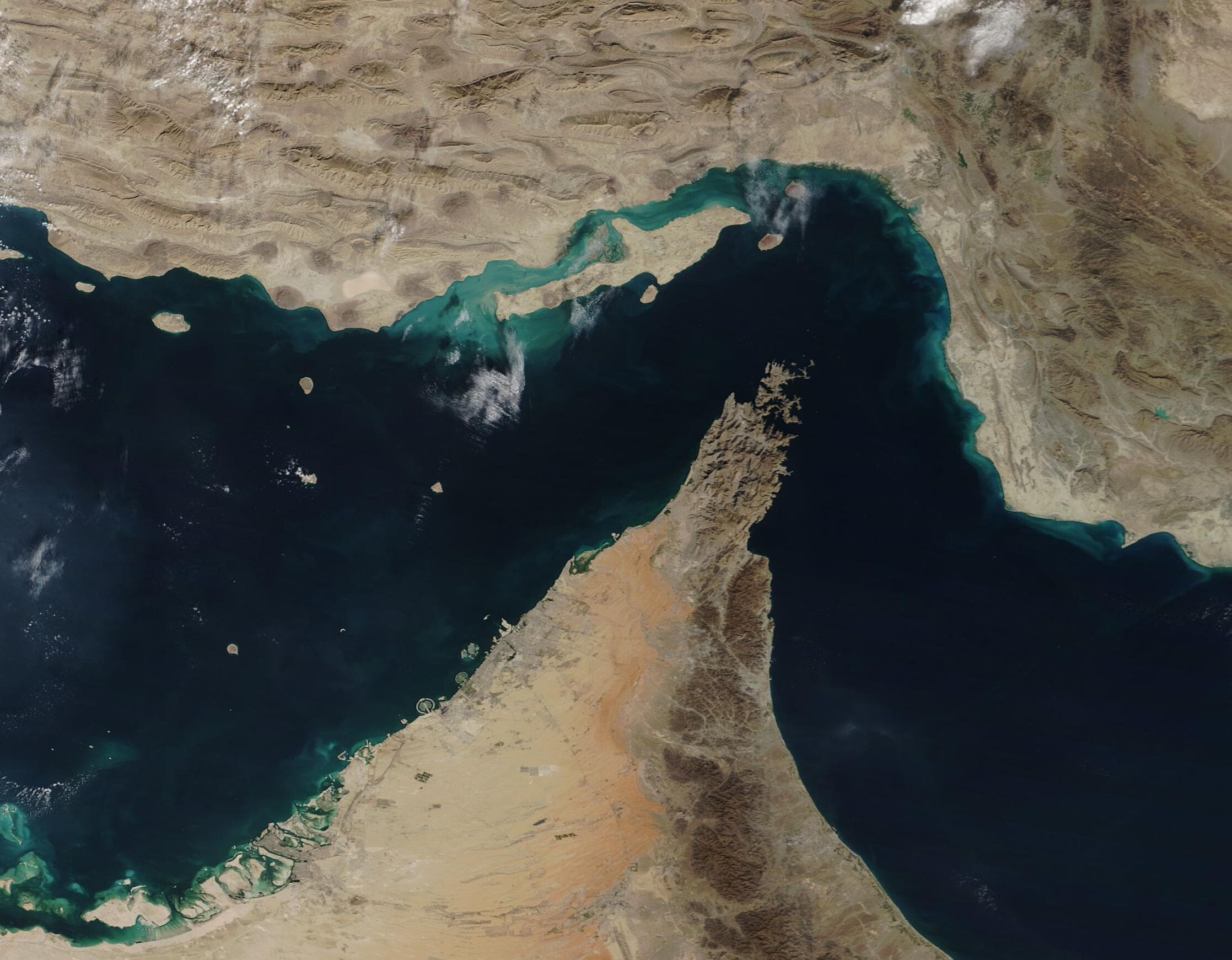
Why you need to watch this now: Today marks the third day since Iran closed the Strait of Hormuz (March 3), and experts have begun pointing to 14 days as the critical threshold. The warning: this is not merely an energy price shock — it could fundamentally reshape the structure of the global economy.
TL;DR
- The Strait of Hormuz is the 'main artery' through which roughly 20% of the world's seaborne crude oil and 23% of LNG passes
- Within 72 hours of a full blockade, Brent crude could breach $100 — JP Morgan projects $120–130, SEB forecasts $150 in a worst-case scenario
- If the blockade lasts 14+ days: simple price spike → entrenched global inflation → central bank paralysis → stagflation
- Asian nations with high energy import dependency — Japan, Korea, China — are most vulnerable
- Even after the blockade ends, 'aftershocks' such as soaring marine insurance premiums and supply chain redesign will persist for months
The Facts: What Is Happening Right Now
Following U.S. and Israeli airstrikes on Iran (February 28), Iran's Islamic Revolutionary Guard Corps (IRGC) notified vessels that transit through the Strait of Hormuz would no longer be permitted. According to maritime tracking firm MarineTraffic, the number of vessels transiting the strait on the first day of the blockade plummeted to about one-tenth of the normal level (65 ships → 6–7 ships). Major container lines including Denmark's Maersk and Germany's Hapag-Lloyd also suspended all transit through the strait.
International oil prices had already risen approximately 20% year-to-date. On the day the blockade was announced, Brent crude hit $72.48 — the highest since July 2025.
The Escalation Mechanism: Why '14 Days' Is the Turning Point
Path 1. Oil Prices → Reigniting Inflation
Scenarios based on blockade duration are clear. Goldman Sachs estimated an additional ~$15 per barrel increase in a full blockade without mitigation measures; JP Morgan put the target at $120–130. SEB projects up to $150 in the worst case. Analysts broadly expect Brent to breach $100 within 72 hours of a full blockade.
Surging energy prices deal a direct blow to consumer prices around the world. UK-based Capital Economics warned that "if the conflict is prolonged, global inflation could rise by an additional 0.6–0.7 percentage points."
Path 2. Central Bank Dilemma → Monetary Policy Paralysis
Between 2022 and 2024, central banks around the world were just finishing their war against inflation. If the Hormuz blockade reignites inflation through a supply shock, central banks face a stagflationary dilemma — they must simultaneously decide whether to raise rates (to suppress inflation) or cut them (to counter a recession). Mohamed El-Erian, Chief Economic Advisor at Allianz, described this as "the worst supply shock central banks could face right after declaring victory in the war on inflation."
Japan is particularly vulnerable. According to Reuters, the Bank of Japan had maintained a rate-hiking stance, but a surge in import prices triggered by the Iran conflict would force it to revert to a 'wait-and-see' posture.
Path 3. Asia's 'Energy Vulnerability Belt' Takes a Direct Hit
Korea sources approximately 70% of its crude oil imports and around 20% of its LNG from the Middle East. Japan, China, and India face similar exposure. The longer the blockade continues, the greater the damage to Asian economies. Zero Carbon Analytics described Asia as "the most at-risk group of nations" in the event of Hormuz supply disruption.
Path 4. Aviation & Maritime Logistics Simultaneously Paralyzed → AI Infrastructure Also at Risk
According to Kpler analysis, Iran has also struck port infrastructure at UAE's Jebel Ali and Abu Dhabi. If Gulf aviation hubs are shut down, the air cargo network linking the West to Asia is thrown into turmoil, disrupting the transport of high-value goods such as electronics and pharmaceuticals. Analysis also suggests that LNG-based power used to cool data centers would be affected, driving up AI infrastructure operating costs.
Path 5. Accelerating Global Supply Chain Realignment — 'Aftershocks' Even After the Blockade Ends
Even after the strait reopens, soaring vessel insurance premiums, rerouting to alternative sea lanes, and supply chain redesign will persist for months to years. Just as Europe restructured its energy imports after Russia's invasion of Ukraine in 2022, this crisis could serve as a structural catalyst forcing Asian nations to accelerate investment in energy diversification.
Context & Background: How This Differs from Past Precedents
There is no historical precedent for a 'complete blockade' of the Strait of Hormuz. Tensions arose during the Iran–Iraq War in the 1980s and during anti-Iran sanctions in 2011, but a full blockade never materialized. This time is different. It is an unprecedented scenario in which Iran responds to direct U.S.–Israeli airstrikes by closing the strait. OPEC+ has agreed to add 206,000 barrels per day starting in April as a short-term buffer — but the scale is incomparable to the approximately 20 million barrels that would vanish under a full blockade.
Outlook: Scenario-Based Projections
| Blockade Duration | Brent Crude Forecast | Global Inflation Impact | Structural Change Risk |
|---|---|---|---|
| Under 72 hours | $80–90 | Short-term spike, then stabilization | Low |
| 3–7 days | $90–100 | +0.2–0.3 pp additional | Medium |
| 8–13 days | $100–120 | +0.4–0.5 pp additional | High |
| 14 days or more | $120–150 | +0.6–0.7 pp+ entrenched | Structural transformation begins |
Checklist: 5 Signals to Watch Right Now
Reference Links
- Prolonged Hormuz Blockade Could Lead to Stagflation — Yonhap News
- What disrupting the Strait of Hormuz could mean for global cost-of-living — The Guardian
- Strait of Hormuz crisis reshapes global oil markets — Kpler
- Japan faces risks from Iran conflict — Reuters
- If Hormuz Blockade Prolongs, Oil Could Hit $130 — Korea Economic Daily
- '14+ Days of Hormuz Closure Would Trigger Global Economic Structural Transformation' — Energy Economy Daily
- KITA Warns: 70% of Korea's Crude Oil Depends on the Middle East — The Hankyoreh