Korean Air -10%, Shipping Stocks Surge: 5 Reasons the 'Iran War Winners & Losers Formula' Is Splitting Korea's Transportation & Logistics Stocks to Opposite Extremes
On the third day of the Iran War, Korean Air (-10.32%), Jeju Air (-7.72%), and Hanjin KAL (-10.11%) posted record-breaking losses among airline stocks, while shipping stocks surged on expectations of a Hormuz Strait blockade driving up freight rates — creating extreme sector divergence in Korea's transportation and logistics space.
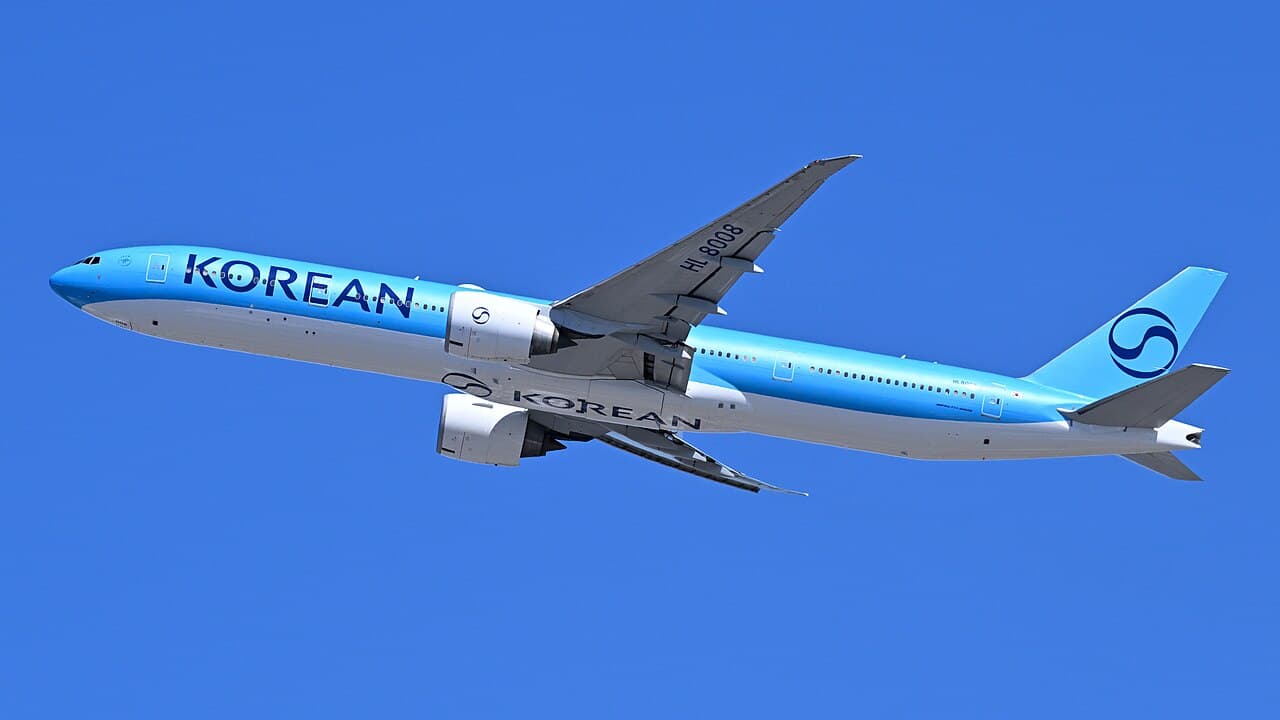
Right now, the same war is sending opposite signals to airlines and shipping companies.
TL;DR
- On Day 3 of the Iran War (2026-03-03), Korean Air -10.32% · Hanjin KAL -10.11% · Jeju Air -7.72% · Asiana -4.77% — all airline stocks fell sharply across the board
- Meanwhile, shipping stocks rallied — Hormuz Strait blockade fears reducing container supply → expectations of rising freight rates
- Jet fuel is directly linked to Brent crude, and fuel costs account for ~30% of airline operating expenses → oil price surge delivers an immediate hit to profitability
- This sell-off was deeper for airline stocks than the broader KOSPI (-7.24%) — sector-specific risk has materialized
- More important than short-term rebound scenarios is the possibility of structural cost increases if the war drags on
1. The Facts: What Happened to Airline and Shipping Stocks Today
On March 3rd, as the KOSPI posted its largest single-day drop on record (-7.24%, -452 points) amid the fallout from the Iran War, airline stocks fell even more steeply.
Airline Stock Closing Declines (3/3)
| Stock | Decline | Closing Price |
|---|---|---|
| Korean Air (003490) | -10.32% | ₩25,200 |
| Hanjin KAL | -10.11% | ₩140,500 |
| Jeju Air (089590) | -7.72% | — |
| Jin Air (272450) | -5.09% | ₩6,780 |
| Asiana Airlines (020560) | -4.77% | ₩7,390 |
| T'way Air | -4.64% | — |
Meanwhile, shipping stocks rallied on expectations that reduced container supply from a Hormuz Strait blockade would push freight rates higher. The chain of Middle East risk escalation → port and logistics bottlenecks → improved shipping market conditions played out clearly.
2. The Drivers: Why Did Airline Stocks Fall So Much Harder?
① Direct Hit from Oil Prices to Airline Cost Structure
Brent crude May futures surged 6.7% to $77.74 per barrel on the 2nd (local time). Jet fuel is indexed to Brent crude, and fuel costs account for approximately 30% of airline operating expenses. A 10% rise in oil prices can reduce major carriers' annual operating profits by hundreds of billions of won.
② Direct Shutdown of Middle East Routes
Korean Air made an emergency diversion of its Dubai-bound flight on February 28th and temporarily suspended its Incheon–Dubai route through the 5th. Emirates and Qatar Airways also halted some routes. With Middle Eastern airspace effectively closed, route revenues and transit passengers both fell simultaneously.
③ Hormuz Strait Blockade Fears
If the Hormuz Strait — through which 20–30% of the world's oil and LNG passes — is blockaded, airlines' fuel procurement costs would rise further. As the likelihood of Iran's Revolutionary Guard (IRGC) playing the blockade card grew, a preemptive uncertainty premium was priced into shares.
④ Synchronized Global Airline Sell-Off
American Airlines, United, and Delta were among the biggest fallers on Wall Street that day, while ANA (-3.3%) and Japan Airlines (-6.4%) also dropped. Korean Air (-10.3%) had the steepest decline among global peers — a result of the market recognizing Korea's structural vulnerability: 70% of its crude oil imports pass through the Hormuz Strait.
⑤ Stark Contrast with Shipping Stocks
As airline stocks plunged, shipping stocks rallied on expectations of Hormuz blockade → reduced container supply → rising freight rates. The same war event created an unmistakable 'sector divergence' — generating diametrically opposite winners and losers within the transportation and logistics sector.
3. Context: Korea's Aviation Industry's Structural Vulnerabilities
Korea's national carriers are heavily dependent on Middle East transit routes (to Europe, the Middle East, and Africa). While Korean Air's direct Middle East revenue share is only a few percentage points, the impact doubles when long-haul transit demand via Dubai and Doha is factored in.
Korean airlines had also recovered their profitability through 2024–2025's high exchange rate environment and post-COVID recovery — and there are now fears that this oil price spike could put the brakes on that recovery, driving investors to sell.
It's also notable that Korea's K-Defense 'Big 5' (Hanwha Aerospace, LIG Nex1, etc.) soared in sharp contrast to airline stocks' plunge in response to the same war event. This demonstrates that the Iran War is not a simple 'bad for all stocks' event — it is clearly splitting sectors into winners and losers.
4. Outlook: When Could Airline Stocks Rebound?
Some on Wall Street argue that "the changed revenue structure of airline stocks (fuel hedging, reduced exchange rate sensitivity) will serve as a buffer." However, if the war drags on for 4–5 weeks or more as Trump has suggested:
- If oil stays around $80 per barrel, annual operating profit at major carriers could fall by hundreds of billions of won
- Prolonged Middle East route suspension → accumulating route revenue losses
- Rising KRW/USD exchange rate (increasing airlines' dollar-denominated debt)
- Dampened travel demand sentiment → possible decline in international load factors
A rebound would require at least one of the following: ① war ceasefire or peace negotiation signals, ② partial reopening of the Hormuz Strait, or ③ oil price stabilization.
5. Checklist: 5 Things Airline Stock Investors Should Check Right Now
References
- Yonhap News: U.S.-Iran War Shakes Oil Prices — Airlines Frown, Shippers Hope
- Korea Economic Daily: Stocks That Rise When War Breaks Out... Stocks Surging Amid U.S.-Iran Tensions
- eToday: Airline Stocks Plunge on Rising Middle East Tensions, Fuel Price Fears
- Yonhap Infomax: Aviation Sector Faces Soaring Fuel Costs Amid Hormuz Strait Blockade
- Daum: Even As Hormuz Blockade Fears Grow... Airlines' Changed Revenue Structure May Serve as a Buffer
Image credit: Korean Air Boeing 747-400 (HL7461) — Wikimedia Commons, CC BY-SA 2.5