Supreme Court Strikes Down Reciprocal Tariffs: 5 Variables Trump's Trade Act §122 Global Tariff Hike to 15% Poses for Korea's Exports
Just after the U.S. Supreme Court struck down IEEPA-based reciprocal tariffs in a 6-3 ruling, Trump invoked Trade Act §122 to impose a 10% global tariff worldwide and signaled a further hike to 15%. This analysis examines five key variables facing Korea's top export sectors — automobiles, semiconductors, and steel — under the new tariff regime.
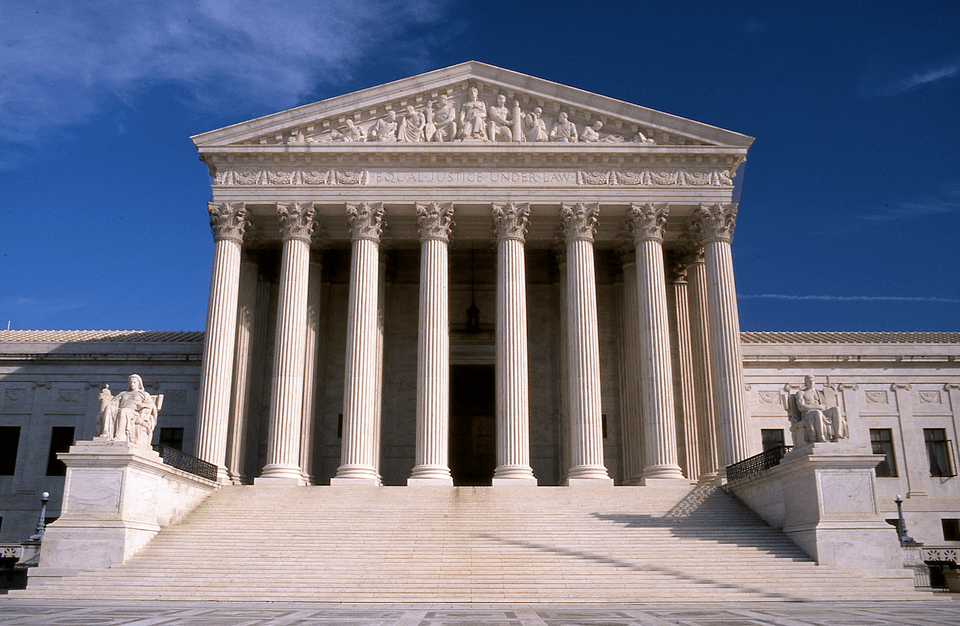
Why you need to read this now: The 25% reciprocal tariff targeting Korea has been swept away by a Supreme Court ruling — but in its place, a new era of 'global tariffs' has arrived. What should Korean exporters be preparing for right now?
TL;DR
- On February 20, 2026, the U.S. Supreme Court ruled 6–3 that IEEPA-based reciprocal tariffs were unlawful.
- Trump signed a new proclamation the same day under Trade Act §122, imposing a 10% global tariff on all countries, effective February 24.
- A hike to 15% was subsequently announced (February 22), though the timing remains "under discussion."
- §122 tariffs are valid for a maximum of 150 days (~mid-July 2026) — after that, Congressional approval is required.
- The three remaining threats to Korean companies are: ① global tariffs rising from 10% to 15%, ② §232 (autos and steel), and ③ §301 (semiconductors).
The Facts — What Happened
On February 20, 2026, the U.S. Supreme Court issued its ruling in Learning Resources, Inc. v. Trump, holding 6–3 that the reciprocal tariffs imposed by the Trump administration under IEEPA (the International Emergency Economic Powers Act) were unconstitutional and unlawful. The majority opinion, authored by Chief Justice John Roberts, stated: "The power to levy tariffs is vested in Congress under Article I, Section 8 of the Constitution."
Trump responded by denouncing the Court as "anti-American," while simultaneously invoking Trade Act §122 and signing a new proclamation. This provision allows the president to impose tariffs of up to 15% for up to 150 days to defend the balance of payments. The tariff was initially set at 10%, with an announcement on February 22 that it would be raised to 15%.
Why This Issue Is So Charged
- The scale of the shock — IEEPA tariffs reached as high as 25% on Korea and 145% on China. Although they have lost their legal basis, uncertainty persists as refund procedures will continue to be contested in lower courts.
- The 150-day time bomb — The new tariffs automatically expire in mid-July 2026. What follows — congressional permanence, or a pivot to §232 and §301 — will trigger a wave of negotiations and litigation.
- Korea's government "stay the course" declaration — The Ministry of Foreign Affairs announced immediately after the ruling: "Investment plans toward the U.S. will proceed as scheduled." Companies are quietly relieved but officially maintaining a neutral stance.
5 Key Variables Facing Korea's Exports
Variable 1 — Timing of the 10%→15% Global Tariff Hike
Trump declared the 15% increase, but the White House hedged with "still under discussion." If it materializes, it would hit Korea's total U.S.-bound exports (roughly $140 billion annually) directly. Particularly affected would be semiconductors, displays, and consumer goods — many of which were already under the IEEPA framework.
Variable 2 — Whether §232 Tariffs on Autos and Steel Remain in Force
The IEEPA ruling does not affect §232 tariffs (Trade Expansion Act). The 25% §232 tariff on automobiles, along with steel and aluminum tariffs, remains fully intact. This is precisely why Hyundai and Kia have been ramping up U.S. production.
Variable 3 — Possibility of a §301 Semiconductor Investigation
The Trump administration could use §301 (retaliation for unfair trade practices) to impose new tariffs on key chip exports from Samsung and SK Hynix. §301 moves through an investigation → public hearing → presidential decision process, so it is slower — but since it can sustain permanent tariffs without Congress, it is the most dangerous option.
Variable 4 — Congressional Negotiations After §122 Expires
If Congress does not approve after 150 days, the tariffs automatically disappear. This gives Korea leverage. The Korea-U.S. FTA framework could be used as a renegotiation card for the auto and steel sectors — though the growing protectionist voices in the U.S. Congress remain a wildcard.
Variable 5 — The Ripple Effects of IEEPA Refund Litigation
With IEEPA tariffs confirmed unlawful, U.S. importers can now file lawsuits to recover previously paid tariffs. The parties bringing suit are U.S. importers, not Korean companies — but if refunds are issued, there would be an indirect benefit of temporarily improved price competitiveness for Korean consumer goods and components.
Context — Legal Significance
The core of this ruling is the "major questions" doctrine. Actions with trillions of dollars in economic impact cannot be decided unilaterally by the president — they require clear congressional authorization. The fact that IEEPA, enacted in 1977, had never once been used to impose tariffs before was also decisive in the ruling.
Outlook
- Short-term (~July): The 10% global tariff regime holds; watch for the 15% hike.
- Medium-term (July–December): Congressional effort to make tariffs permanent vs. a two-track pivot to §232 and §301.
- Long-term: Possibility of Korea-U.S. FTA renegotiation or sector-specific bilateral agreements.