Trump Marches On Despite the Court: 5 Scenarios Korea Faces for the '25% Differential Tariff' After the IEEPA Unconstitutionality Ruling
The U.S. Supreme Court ruled IEEPA-based tariffs unconstitutional on February 20, but the Trump administration immediately shifted to a 10% global tariff and threatened Korea with a 25% differential tariff. Korea, where 85% of GDP depends on trade, stands at a crossroads over the passage of the Korea-US Investment Special Act and its negotiation strategy.
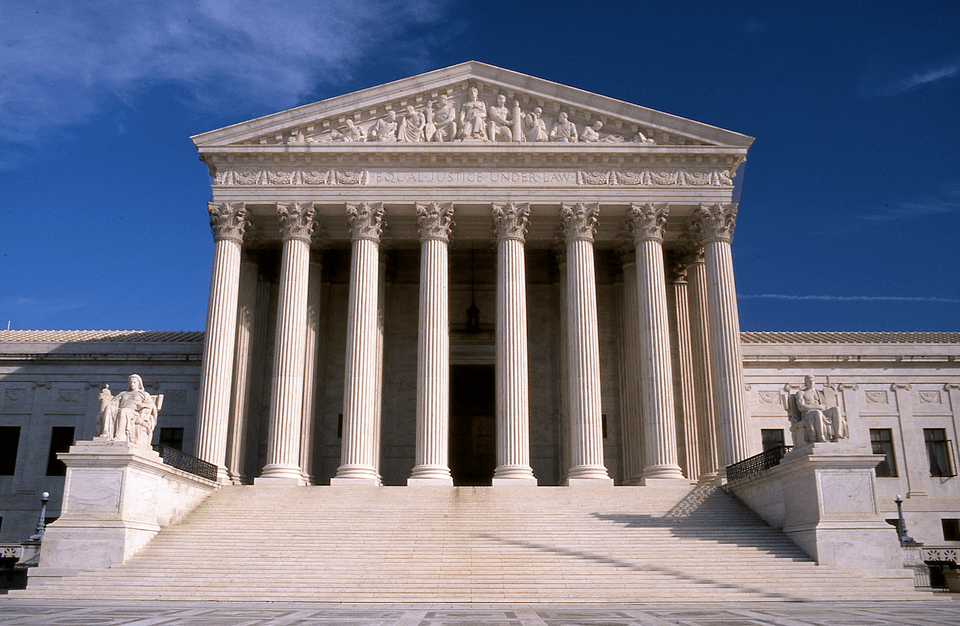
Why this matters now: Even after the Supreme Court struck down Trump's tariff authority as unconstitutional, the tariff threat against Korea has only grown stronger. The expectation that 'the courts will put a stop to it' was wrong.
TL;DR
- The U.S. Supreme Court ruled 6–3 on February 20, 2026, that tariffs based on the IEEPA (International Emergency Economic Powers Act) are unconstitutional.
- Trump immediately replaced them with a temporary 10% global tariff for 150 days, and specifically threatened Korea with a 25% differential tariff.
- Korea had secured a 15% rate in Korea-US investment negotiations, but the IEEPA ruling has undermined the legal basis for that agreement.
- Alternative legal tools such as Section 232 and Section 301 remain intact, so the trade war is far from over.
- The National Assembly is deadlocked over passing the 'Korea-US Strategic Investment Special Act.'
What Happened
The Supreme Court Ruling — February 20, 2026
The U.S. Supreme Court ruled in Learning Resources, Inc. v. Trump that the IEEPA (International Emergency Economic Powers Act) does not grant the president authority to impose tariffs. The majority opinion, authored by Chief Justice John Roberts, interpreted that the 'regulation of imports' clause in IEEPA does not encompass tariffs. This effectively eliminated the legal basis for the country-specific reciprocal tariffs and additional China tariffs that Trump had imposed in 2025.
Trump's Immediate Counterpunch
Hours after the ruling, President Trump held a press conference, called the justices "fools and puppets," and announced two measures:
- A temporary 10% global tariff for 150 days — invoked immediately under Section 122 (balance of payments provision)
- Launch of new investigations under Section 232 and Section 301 — previewing "new tariffs permitted by law"
Trump specifically issued a public threat of a 25% differential tariff against Korea, citing "non-compliance with reciprocal agreements."
Why It Spread — Korea's Vulnerability
Korea's trade dependence as a share of GDP stands at approximately 85%, among the highest of any major advanced economy. The United States is Korea's second-largest export market, with semiconductors, automobiles, and steel heavily exposed. With the KOSPI already plunging 7.24% on March 3 in the wake of the Iran war, added tariff uncertainty accelerated the flight of foreign investors.
Context and Background — Where Does the '15% Agreement' Stand Now?
The Trump administration had discussed a 'Korea-US Strategic Investment Package' with Korea in early 2026 and had agreed on a 15% rate. However, the IEEPA unconstitutionality ruling has eliminated the very legal foundation of that agreement. The Brookings Institution analyzed that "without IEEPA, it is unclear how Trump could raise the Korean rate to 25%." In contrast, the Korea Economic Institute of America (KEIA) pointed out that Section 301 can enable tariffs above 25%, but requires months to years of investigation.
In the National Assembly, a joint emergency statement from six major economic organizations urged the swift passage of the Korea-US Strategic Investment Special Act. The Korea JoongAng Daily warned that "the longer the bill is delayed, the less leverage Korea has in Washington."
5-Scenario Checklist
Outlook
In the short term (1–3 months), the tariff issue may be pushed somewhat to the back burner in tandem with the developments in the Iran war. However, in the medium term, whether a Section 301 investigation is launched is the key variable for the Korean economy. The speed at which the Korea-US Investment Special Act is processed in the National Assembly has emerged as the most important domestic variable determining Korea's negotiating leverage.
Reference Links
- Stimson Center — What the IEEPA Ruling Means for Korea
- Brookings — Expert Analysis
- Reuters — Pursuing IEEPA Replacement Tariffs
- KEIA — Trump's Next Trade Moves
- Yonhap News English — Korean Government Response
- Korea JoongAng Daily — Korea-US Investment Special Act Debate
Image Credit
- U.S. Supreme Court Building — Wikimedia Commons (Public domain)