The Ship Hyundai Heavy Industries Built in 2000: 5 Implications the U.S.-Sunk Iranian Drone Carrier 'Shahid Bagheri' Poses for Korea's Shipbuilding Industry
The world's first Iranian drone aircraft carrier 'Shahid Bagheri,' sunk during the U.S. military's 'Operation Epic Fury,' has been identified as a converted version of the container ship 'Peralin' built at Hyundai Heavy Industries' Ulsan shipyard in 2000. This incident — in which a Korean-built vessel was used as a strategic weapon by an adversary — starkly exposes the gaps in post-sale vessel tracking and sanctions frameworks, and the geopolitical risks borne by Korea's shipbuilding industry.
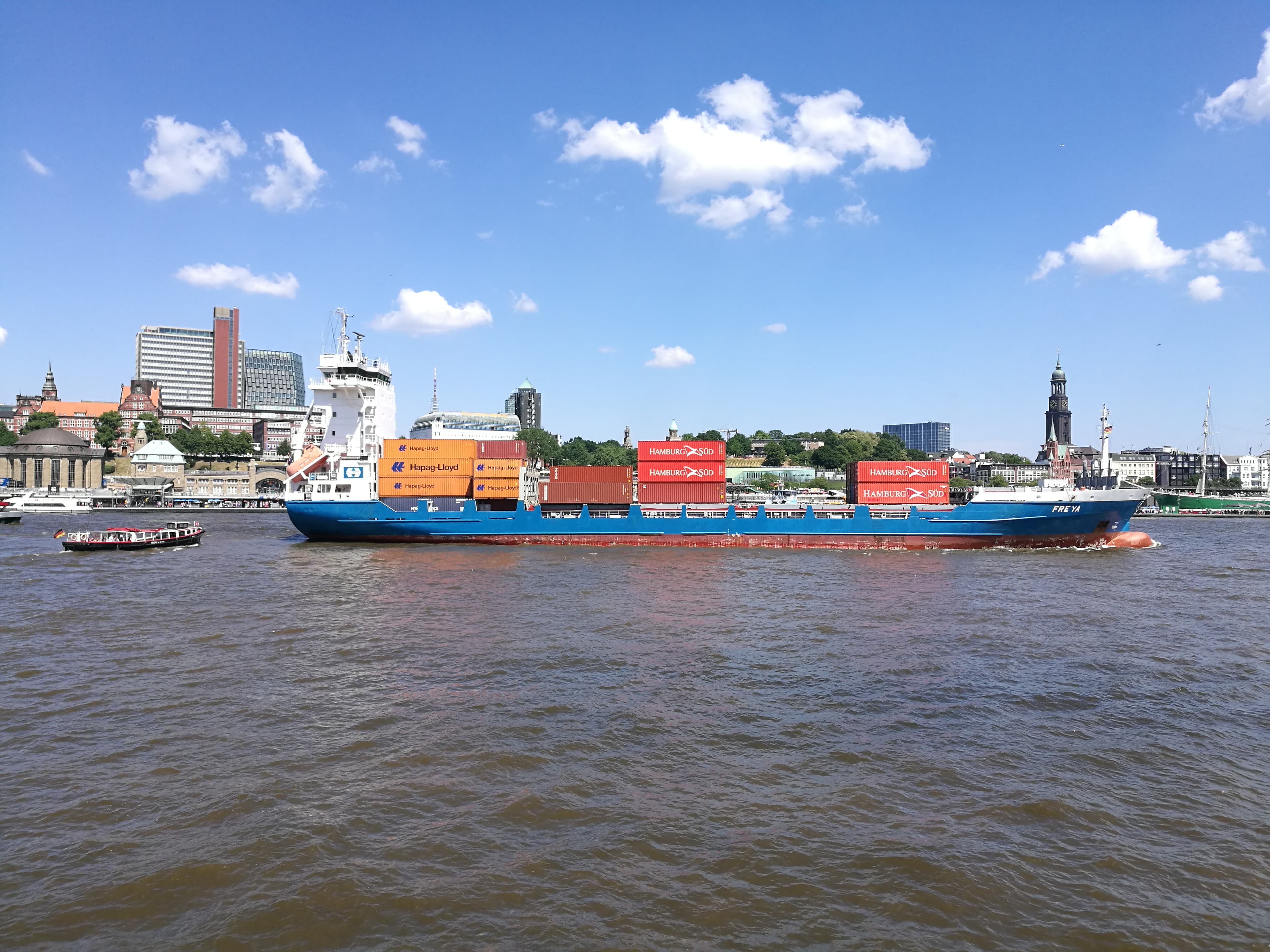
Image source: Wikimedia Commons, Container ship Colombo Express (CC BY-SA 3.0)
TL;DR
- The Iranian drone carrier Shahid Bagheri (C110-4), sunk by U.S. Central Command (CENTCOM) during Operation Epic Fury, is a conversion of the container ship 'Peralin,' ordered by Hyundai Heavy Industries in 1998 and launched at its Ulsan shipyard in 2000.
- The world's first drone aircraft carrier, it was commissioned in February 2025, measuring 240m in length and 36,014 tons.
- It operated suicide drones and military helicopters from a 180m ski-jump-style runway.
- The fact that an adversary converted a Korean-built merchant vessel into a weapons platform has sent strategic shockwaves through the shipbuilding, shipping, and government sectors.
- This conversion, carried out outside the international sanctions net, exposes structural loopholes in post-sale vessel tracking and dual-use regulations.
The Facts — What Happened
The Birth of the Shahid Bagheri
The container ship Peralin was ordered by Hyundai Heavy Industries' Ulsan shipyard in 1998 and launched in 2000. A large container ship measuring 240 meters in length and 36,014 gross tons, its construction record is officially registered in international ship databases.
The Islamic Revolutionary Guard Corps (IRGC) acquired this aging merchant vessel and converted it into a military drone carrier over two years. It was fitted with a 180m ski-jump-style runway (no catapult), and modified to operate small suicide drones (Shahed-136 series) and military helicopters. It also acquired a range of up to 40,744 km without refueling.
Shahid Bagheri officially entered service with the IRGC on February 6, 2025. Iran's state-run IRNA news agency touted it as "the world's first drone aircraft carrier."
The U.S. Military Strike
On March 2, 2026 (local time), U.S. CENTCOM officially announced via X (formerly Twitter):
"The only aircraft carrier actually struck was Iran's drone carrier, Shahid Bagheri."
CENTCOM was rebutting Iran's propaganda claim that it had sunk a U.S. aircraft carrier, confirming that it was in fact the U.S. that sank Iran's drone carrier.
The Spread Mechanism — Why It Went Viral in Korea
The shocking fact that "an adversary built a weapon from a Korean ship" hit Korean portal real-time search trends hard. The Dong-A Ilbo, Maeil Business Newspaper, Munhwa Ilbo, Newsis, and Daum·Nate News all reported simultaneously on the afternoon of March 3, pushing it to the top 2 trending topics.
Factors driving the search surge:
- The prolonged Iran war context adding the extra stimulus of "Korean involvement"
- The appearance of the specific corporate name "Hyundai Heavy Industries"
- The irony of "Made in Korea" origins, given that Iranian drone weapons had been a hot topic since the beginning of the war
- The collision between national pride in Korean shipbuilding and the risks of international sanctions and diplomatic fallout
Stakeholders — Who Is Involved
Longevity — How Long Will This Last?
This issue contains both short-term shock and medium-to-long-term structural debate.
- Short-term (1–3 days): Consumed within the Iran war news cycle. The "Korean-made" angle has a short shelf life.
- Medium-term (1–4 weeks): The National Assembly and media may begin discussions on strengthening export controls and dual-use regulations.
- Long-term (several months): Discussions on strengthening Korean shipbuilding export control policy and international sanctions cooperation frameworks may continue.
5 Implications for Korea's Shipbuilding Industry
1️⃣ Even 'Legally Built' Vessels Are Not Free from Responsibility
Hyundai Heavy Industries legally built and delivered this container ship in 2000. However, the fact that 26 years later this vessel became a strategic weapon for a nation at war with the United States shows that — even if the international community and sanctions frameworks do not apply retroactive liability to shipbuilders — reputational risk remains real.
2️⃣ The Absence of a Vessel 'Full Lifecycle Tracking' System
International ship databases contain construction records, but there is no public information on when or how this vessel ended up in Iran's hands. Iran has been subject to international maritime sanctions since 2012, but cases of vessel acquisition through circumvention routes (third-country shell companies, flag laundering, etc.) continue to repeat.
3️⃣ Merchant-to-Warship Conversion Is a Blind Spot in 'Dual-Use' Regulations
The conversion of a large civilian container ship into a military platform is difficult to catch under export control laws governing dual-use (civilian-military) items, because the vessel itself is not subject to export controls. This incident could trigger discussions on including the military conversion potential of merchant ships in pre-export screening.
4️⃣ K-Shipbuilding's Global Market Share Amplifies Geopolitical Risk
Korea is the world's largest shipbuilding nation as of 2025. With hundreds of vessels exported globally each year, there is a growing likelihood that more cases of Korean-built ships reaching sanctioned countries — such as Iran, North Korea, or Russia via third-country routes — may come to light. The greater the market dominance, the higher the geopolitical exposure.
5️⃣ Korea's Defense and Shipbuilding Industries Need a 'Proactive Transparency' Strategy
In this incident, neither the Korean government nor Hyundai Heavy Industries issued any official statement. However, as the U.S. and EU intensify Iran sanctions enforcement, Korea's diplomatic positioning — proactively participating in post-sale vessel tracking cooperation — would be advantageous on both trade and security fronts.