Resigned After Just 46 Days: 5 Meanings of Court Administrator Park Young-jae's Resignation Against the Judicial Reform 3 Laws
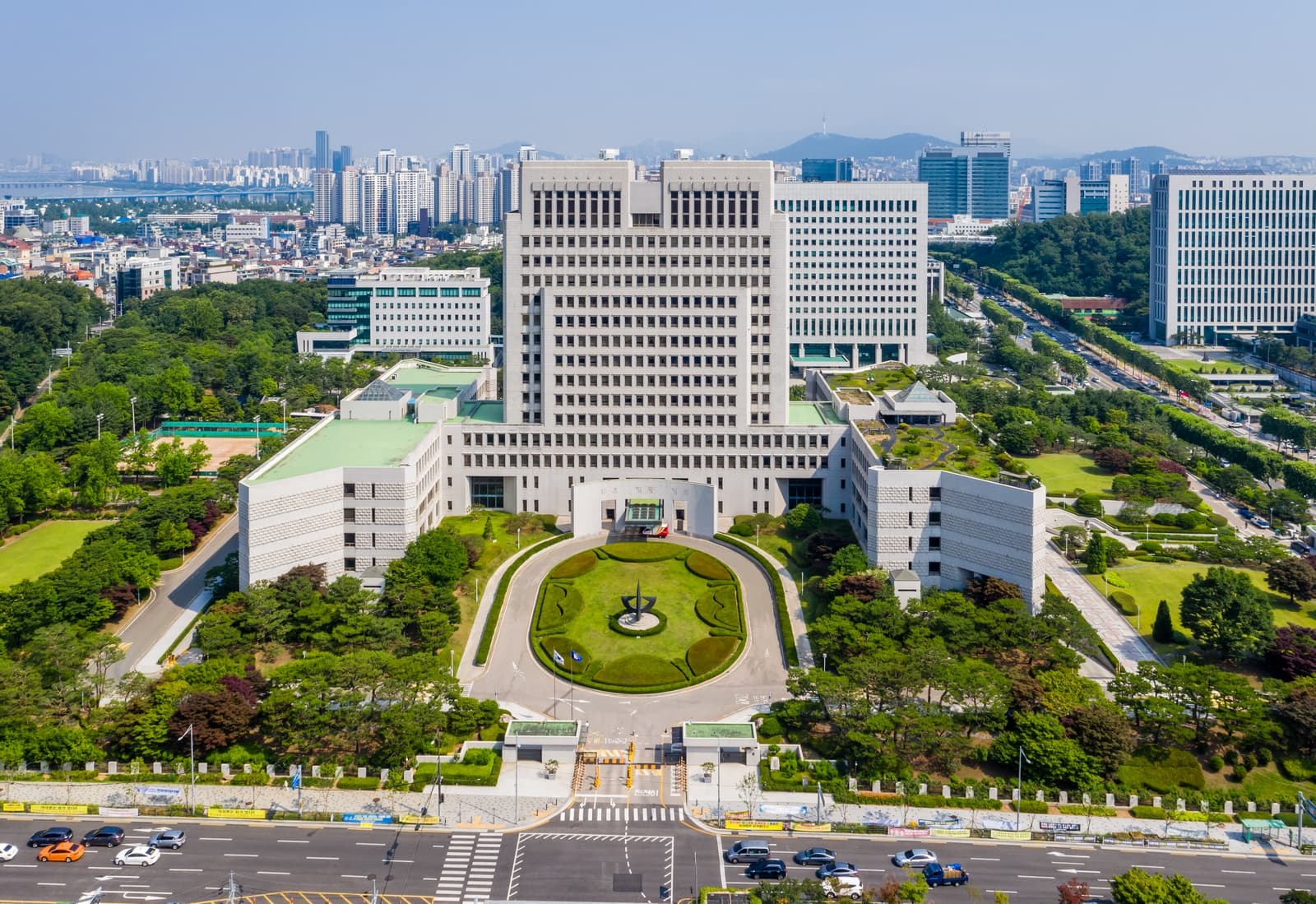
Park Young-jae, Court Administrator (Supreme Court Justice), submitted his resignation after just 46 days in office on February 27, 2026, in protest against the Democratic Party's push to pass the Judicial Reform 3 Laws (law distortion crime, court petition system, and Supreme Court Justice expansion). The shortest-ever tenure of a Court Administrator marks a full frontal collision between the judiciary and the legislature.
.jpg&w=3840&q=75)
"The Judicial Reform 3 Laws could bring fundamental changes to the essential role and function of the courts." — Court Administrator Park Young-jae, February 27, 2026
TL;DR
- Court Administrator Park Young-jae (Supreme Court Justice) submitted his resignation to Chief Justice Cho Hee-dae on February 27, 2026.
- His departure after just 46 days in office marks the shortest-ever tenure of a Court Administrator in Korean constitutional history.
- The direct cause is the Judicial Reform 3 Laws — the Law Distortion Crime bill, the Court Petition System bill, and the Supreme Court Justice Expansion bill — pushed through by the Democratic Party of Korea.
- The judiciary has characterized this as a 'violation of the separation of powers' and is expected to mount an organized resistance, including convening an emergency conference of court presidents.
- If the Supreme Court Justice Expansion bill passes the plenary session vote on the evening of February 28, the legislative package known as the 'Judicial Reform 3 Laws' will be complete.
The Facts: What Happened
Park Young-jae took office as Court Administrator on January 13, 2026. Just 46 days later, on the morning of February 27, he submitted his resignation to Chief Justice Cho Hee-dae.
This follows the earlier departure of his predecessor, Cheon Dae-yeop, making it a consecutive series of resignations. The catalyst was the National Assembly's passage of the Judicial Reform 3 Laws pushed by the Democratic Party.
| Bill | Status | Key Content |
|---|---|---|
| Law Distortion Crime | Passed plenary session | Criminal punishment for judges/prosecutors who deliberately distort the law |
| Court Petition System Bill | Passed plenary session on Feb 27, 2026 | Allows constitutional petitions against Supreme Court rulings (effectively a 4th trial system) |
| Supreme Court Justice Expansion Bill | Plenary vote scheduled for evening of Feb 28, 2026 | Expands Supreme Court Justices from 14 to 26 |
Immediately after tendering his resignation, Park stated: "The Judicial Reform 3 Laws could bring not only fundamental changes to the essential role and function of the courts, but could also have a direct impact on the Korean public."
Why This Is Trending Now
1. A Symbolic Clash Between the Judiciary and the Legislature
The Court Administrator position is held concurrently by a Supreme Court Justice, and the person in this role oversees the entire judicial administration. The Administrator's resignation is being read not as a mere personnel change, but as the judiciary's formal declaration of 'refusal' against the legislature's reform drive.
2. The Shock of Back-to-Back Resignations
With former Administrator Cheon Dae-yeop followed immediately by Park Young-jae's resignation, concerns are mounting that the vacancy at the Court Administration will be prolonged. Court presidents are reportedly planning to convene an emergency meeting.
3. The Court Petition System and Its Link to President Lee Jae-myung's Trial
The Court Petition System bill was pushed forward immediately after President Lee Jae-myung's election law case was remanded by the Supreme Court with a guilty verdict in mind. The opposition characterizes it as 'legislation effectively designed to rescue Lee Jae-myung,' which has intensified the political conflict surrounding the bills to an extreme degree.
Context and Background: What Are the Judicial Reform 3 Laws?
The Democratic Party of Korea has been pursuing 'judicial reform' as a top priority since late 2025. The Law Distortion Crime bill makes it possible to criminally prosecute judges and prosecutors if they deliberately distort the law in rendering a verdict.
The Court Petition System bill enables the Constitutional Court to review whether Supreme Court rulings are unconstitutional. Some legal scholars have characterized this as effectively a 4th trial system, arguing it destabilizes the constitutional framework.
The Supreme Court Justice Expansion bill is centered on increasing the number of justices from the current 14 to 26. Starting two years after promulgation, four new justices are to be added annually over three years — which analysts say would allow President Lee Jae-myung to appoint 22 of the 26 total Supreme Court Justices within his term.
The main opposition People Power Party (PPP) responded with a filibuster (unlimited debate), but the Democratic Party has been passing the bills one by one, leveraging its majority of seats.
5 Ripple Effects and Outlook
① Prolonged Vacancy in Judicial Leadership
With the Court Administrator position vacant again, there are concerns that judicial administration could grind to a halt. Even if Chief Justice Cho Hee-dae moves quickly to appoint a successor, convincing a qualified candidate from among the Supreme Court Justices will not be easy.
② The Possibility of Collective Action by Court Presidents
Court presidents across the country are highly likely to convene an emergency meeting and issue a joint statement. This could be interpreted as organized resistance by the judiciary, amplifying the political fallout.
③ Possible Constitutional Court Challenge
The PPP and portions of the legal community are expected to file petitions with the Constitutional Court — including a dispute over constitutional authority and a constitutional review of law — against the Court Petition System bill and the Supreme Court Justice Expansion bill.
④ Impact on President Lee Jae-myung's Trial
If the Court Petition System takes effect, it introduces new variables into President Lee Jae-myung's election law case currently pending before the Supreme Court. However, legal battles over the scope of the transitional provisions are anticipated.
⑤ A Crisis of Public Trust in the Judiciary
A situation in which Court Administrators resign in succession and court presidents mount collective resistance could have a direct impact on public confidence in the judiciary. In the short term, the debate over judicial independence will take center stage.
Checklist: Key Dates to Watch Going Forward
References
- Park Young-jae submits resignation as Court Administrator — Yonhap News
- Sense of helplessness pervades judiciary over 'Judicial 3 Laws' — Hankyoreh
- Court Petition bill passes plenary session; Supreme Court expansion vote today — YTN
- Supreme Court Justice Park Young-jae resigns as Court Administrator — Dong-A Ilbo
Image Credit
- Supreme Court of Korea building (2020): Wikimedia Commons