Six Days, Then the White Flag: 5 Meanings of the People Power Party's Sudden Filibuster Halt for the Daegu-Gyeongbuk Integration Law and Korea's Political Landscape
The People Power Party abruptly ended its six-day filibuster against the Judicial Reform Trilogy and demanded that the opposition process the Daegu-Gyeongbuk Administrative Integration Special Act (TK Integration Act). Whether the ruling party's strategic pivot toward practical gains will become a turning point in the March National Assembly power struggle remains to be seen.
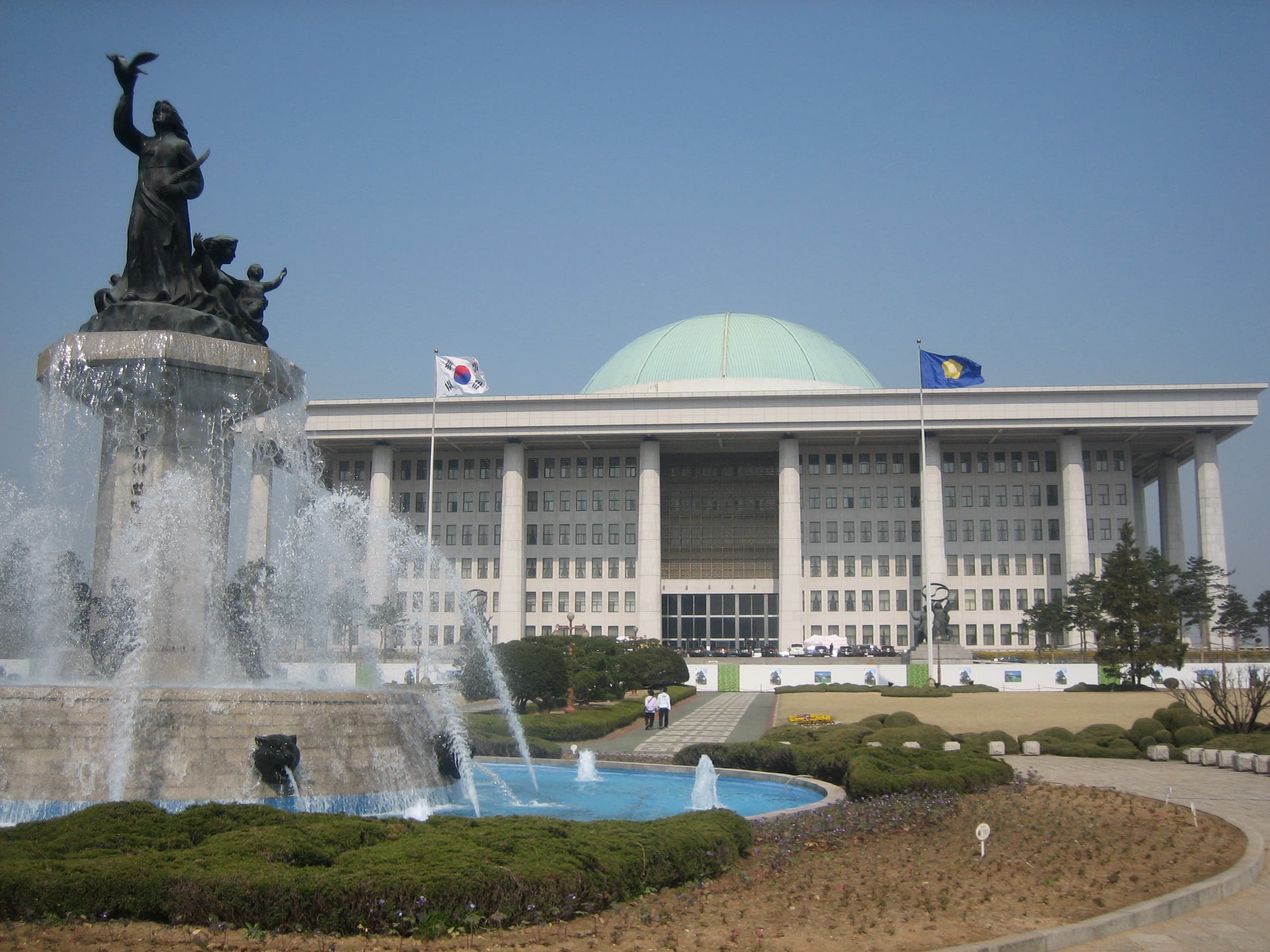
🏛️ Image Note: Direct file upload to the Files property is unavailable. The Wikimedia Commons image has been embedded in the body. Source: Wikimedia Commons (National Assembly of Korea)
Why you need to read this now: The People Power Party (PPP) voluntarily laid down its filibuster card. After six days of unlimited debate ended in effective failure, the rules of the 'legislative war' between the ruling and opposition parties have begun to change.
TL;DR
- The PPP had been conducting a filibuster since February 24, 2026, opposing the Judicial Reform Trilogy (Perversion of Justice Crime, Constitutional Court Appeal of Verdicts, and expansion of Supreme Court justices to 26).
- Six days later, on March 1, PPP floor leader Song Eon-seok declared a sudden halt to the filibuster.
- Condition: The Democratic Party of Korea must agree to process the Daegu-Gyeongbuk Administrative Integration Special Act (TK Integration Act) in the Legislation and Judiciary Committee.
- The Democrats fired back: "The PPP must cancel the filibuster first before we can convene the committee."
- This is widely interpreted as the PPP having failed to block the judicial reform bills and making a strategic pivot to seek the practical gain of TK integration.
1. What Happened — The Facts
Starting February 24, the PPP launched a filibuster (unlimited debate) in the National Assembly plenary chamber against the Judicial Reform Trilogy that the Democratic Party of Korea was pushing through by force. The bills — criminalizing deliberate perversion of justice by judges and prosecutors, introducing the right to appeal Supreme Court rulings to the Constitutional Court, and expanding the number of Supreme Court justices from 14 to 26 — were characterized by the ruling party as 'legislation to seize control of the courts and prosecution.'
However, the Democrats cut off the filibusters through cloture votes and proceeded to pass the bills one by one. Six days of filibustering had no practical effect in blocking the legislation.
On the afternoon of March 1, PPP floor leader Song Eon-seok held a press conference and announced: "We have decided to halt the filibuster effective immediately." The reason was singular — a demand that the Daegu-Gyeongbuk Administrative Integration Special Act (TK Integration Act) be processed in the National Assembly's Legislation and Judiciary Committee.
2. Why Stop Now — The Strategic Logic
This was the moment the strategic limits of the filibuster were exposed. In a situation where the opposition holds a parliamentary majority, unlimited debate can delay proceedings but cannot ultimately block a final vote. The Judicial Reform Trilogy was passed regardless, and the ruling party chose to seek a concrete achievement rather than maintain "the symbolism of resistance."
The TK Integration Act is a special act for the administrative integration of Daegu Metropolitan City and North Gyeongsang Province into a single broad administrative district. For the PPP, which has its base of support in the Yeongnam region, it is a 'regional livelihood bill that must be passed.' The calculation is to give up the filibuster in exchange for securing TK integration.
3. Context and Background — Why These Bills Are Clashing
🔵 What Is the Judicial Reform Trilogy?
| Bill | Key Content | Ruling vs. Opposition Stance |
|---|---|---|
| Perversion of Justice Crime | Criminal punishment for judges/prosecutors who deliberately pervert the law | Opposition: for / Ruling: "Targeted legislation" |
| Constitutional Court Appeal of Verdicts | Supreme Court rulings can also be appealed to the Constitutional Court | Opposition: for / Ruling: "Judicial chaos" |
| Expansion to 26 Supreme Court Justices | Current 14 → 26 justices | Opposition: "Democratization of justice" / Ruling: "Opposition seizure" |
🟠 What Is the TK Integration Act?
A special act to integrate Daegu Metropolitan City and North Gyeongsang Province into a single broad administrative district. It has been pursued since 2023 but was delayed due to issues of power distribution and finances. Expected benefits include expanded economic scale, administrative efficiency, and a response to regional depopulation.
The two bills have no direct connection, but they became entangled as cards in a package negotiation within the National Assembly's legislative schedule.
4. Outlook — Where Is the March National Assembly Headed?
The Democratic Party's response is key. The opposition is maintaining its position that "the filibuster cancellation comes first, the committee meeting comes second," making negotiations difficult. However, since the TK Integration Act is something the Democrats themselves find hard to oppose on the grounds of regional development, the door to conditional negotiations remains open.
The March extraordinary session faces additional pressure to process economic and diplomatic bills related to the Iran crisis, making it highly likely that both ruling and opposition parties will shift toward a 'practical negotiation' stance.
5. Checklist — 5 Points to Keep Watching
Watch Points
- The halt to the filibuster could serve as a signal flare for resumed negotiations for both ruling and opposition parties.
- The judicial reform bills have been passed, but follow-up phases remain — Constitutional Court deliberation, Supreme Court justice confirmation hearings, etc.
- The TK Integration Act is a crossroads in the history of local autonomy, directly connected to the lives of 4 million people in Daegu and North Gyeongsang Province.
- The outcome of these negotiations has room to be linked to candidate nominations for the April/May local elections.
Reference Links
- PPP Filibuster Halt Declaration — YTN
- PPP Ends Filibuster… TK Integration Act Must Be Processed — Hankyung
- PPP Halts Filibuster, Asks to Open Committee for TK Integration — YouTube/지금뉴스
Image Source: National Assembly of Korea — Korea-Seoul-Yeouido-National_Assembly_Building-06.jpg (Alain Seguin / Wikimedia Commons, CC BY-SA 3.0)