107 Voices of Silence: Why the Democratic Party Is Trying to 'Withdraw' President Lee Jae-myung's Indictment Through an Official Party Body — and the Rule of Law Dilemma
107 members of the Democratic Party absorbed the 'President Lee Jae-myung Indictment Withdrawal Caucus' into an official party special committee, formally elevating the withdrawal of indictment beyond mere trial suspension into official party policy. With President Lee maintaining public silence, the conflict among the executive, legislative, and judicial branches is entering a new phase.
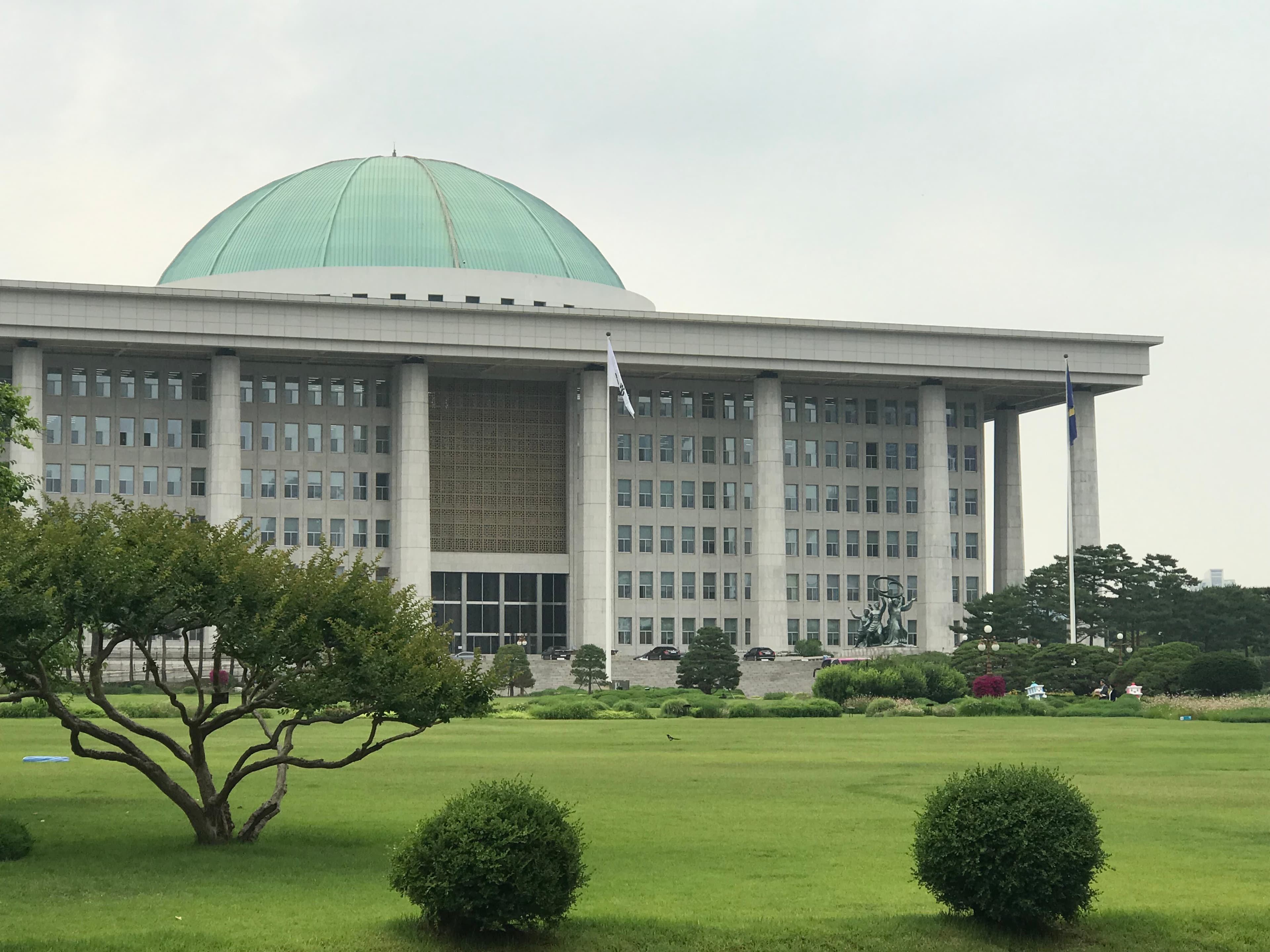
Why this matters now: The trial is suspended, but the indictment is alive — and the ruling party is trying to erase it entirely.
TL;DR
- 107 Democratic Party lawmakers (a majority) formed a caucus to withdraw President Lee Jae-myung's indictment, which has since been absorbed into an official party special committee
- Full withdrawal of all 8 criminal charges — including Daejang-dong, Ssangbangul, and perjury solicitation — is the stated goal
- The trial was suspended after Lee won the presidency, but the indictment itself remains legally valid
- President Lee is maintaining public silence — a fact noted by major foreign outlets including the JoongAng Daily
- A direct clash between concerns over the erosion of separation of powers and rule of law vs. arguments about exposing politically manipulated prosecutions
What Happened
In early February 2026, 87 Democratic Party lawmakers launched the 'Caucus for Withdrawing the Indictment of President Lee Jae-myung and Pursuing a National Investigation'. Membership subsequently grew to 107 lawmakers, and the Democratic Party absorbed the caucus into an official party special committee, elevating indictment withdrawal to formal party policy.
The special committee's argument is as follows:
- President Lee Jae-myung was indicted on a total of 8 charges — including the Daejang-dong development corruption, Ssangbangul North Korea money transfer, and perjury solicitation — allegedly through fabricated indictments by politically motivated prosecutors
- Although the trial was suspended upon his election as president, the indictment itself remains legally valid
- The fabrication of these charges must be officially confirmed, and a national investigation into prosecutorial misconduct must be conducted in parallel
Lawmaker Park Seong-jun serves as standing chair, with lawmakers Kim Seung-won and Yoon Geon-yeong as co-chairs.
Why It's Trending Now: The Spread Mechanism
1. The Legal Gap: 'Trial Suspension ≠ Indictment Dismissal'
Under the constitution, criminal trials are suspended during a president's term due to immunity from prosecution — but the indictment itself does not disappear. Since the trial could resume after leaving office, supporters view indictment withdrawal as 'complete legal clearance.'
2. Party Leadership Competition — 97 Days Before the June 3 Local Elections
With a party convention and local elections approaching, pro-Lee factions are rallying around the indictment withdrawal issue. Internal factional tensions with the 'New Lee Jae-myung' camp have also surfaced.
3. The President's Silence Is the Bigger Story
The JoongAng Daily (Feb. 27, 2026) noted that "President Lee Jae-myung has not publicly commented on this initiative that directly benefits him," turning the silence itself into a major story.
Stakeholders
| Party | Position |
|---|---|
| Democratic Party Caucus (107 members) | Pursuing official confirmation of fabricated charges and formal indictment withdrawal |
| President Lee Jae-myung | Public silence — neither denying direct involvement nor openly supporting the effort |
| People Power Party | Criticizing the ruling party for "wasting party resources to eliminate the president's legal risk" |
| Prosecution & Judiciary | Indictment withdrawal is the exclusive right of prosecutors; legislative interference is inadmissible |
| Legal Community | Indictment withdrawal is a prosecutorial decision — the National Assembly cannot compel it |
Legal Context
Under Article 255 of the Criminal Procedure Act, only a prosecutor may withdraw an indictment. The National Assembly can pressure the prosecution through resolutions, but such resolutions carry no legal binding force. However, some analysts note that if the Prosecutor General is a figure recommended by the ruling party, political pressure could effectively operate in practice.
People Power Party lawmaker Cho Gwang-han sharply criticized the move, saying, "What 86 people are doing when they gather is forming a Lee Jae-myung indictment withdrawal club."
Sustainability Outlook
- Short-term (~March): Special committee operations begin in earnest; debate over scope of national investigation targets
- Medium-term (March–June): Used as a tool for party consolidation ahead of the June 3 local elections; legislative push to withdraw indictment expected
- Long-term: Attempts to establish legal mechanisms to pre-empt the possibility of trial resuming after leaving office — separation of powers debate likely to persist
Risk Check
Core Summary (3 Lines)
- 107 Democratic Party lawmakers have elevated President Lee Jae-myung's indictment withdrawal to an official party body — formally pursuing the withdrawal of charges and a national investigation as party policy
- President Lee is maintaining public silence on this issue that directly benefits him, drawing attention from major international media
- While indictment withdrawal is legally the exclusive right of prosecutors, whether the party's 107-member strength will translate into effective political pressure is the key variable
Watch Points
- 🔍 Whether the Prosecutor General responds to the indictment withdrawal push
- 🔍 When President Lee makes his first official public comment
- 🔍 Whether the opposition files a constitutional petition or challenge
- 🔍 The connection between June 3 local election candidate nominations and caucus membership
- 🔍 Whether internal party conflict intensifies between the 'New Lee Jae-myung' line and the caucus faction
References
- JoongAng Daily: Silence from President Lee on ruling party's push to drop indictments (2026.02.27)
- MBC News: Lee Jae-myung Indictment Withdrawal Caucus Inauguration Tomorrow — 104 Ruling Party Members Participating (2026.02.22)
- Yonhap News TV: Democratic 'Indictment Withdrawal Caucus' — Pro-Lee Faction Consolidation? (2026.02.23)
Image Credit
- National Assembly of Korea (Uisadang) — Wikimedia Commons, CC BY-SA 3.0