End of 73 Years Under the Armistice: 5 Meanings of the Lee Jae-myung Government's Push to Transform the Korean War Armistice into a Peace Regime for the Peninsula and Korea's Diplomacy
South Korea's Ministry of Unification officially reported to the National Assembly on March 6, 2026, its plan to pursue an 'End-of-War Declaration' to transform the Korean War armistice into a permanent peace regime. Despite North Korea's refusal to engage in dialogue, the strategy of proactively institutionalizing a peace process on the Korean Peninsula is emerging as a key variable in Korean diplomacy amid the Middle East crisis triggered by the Iran war.
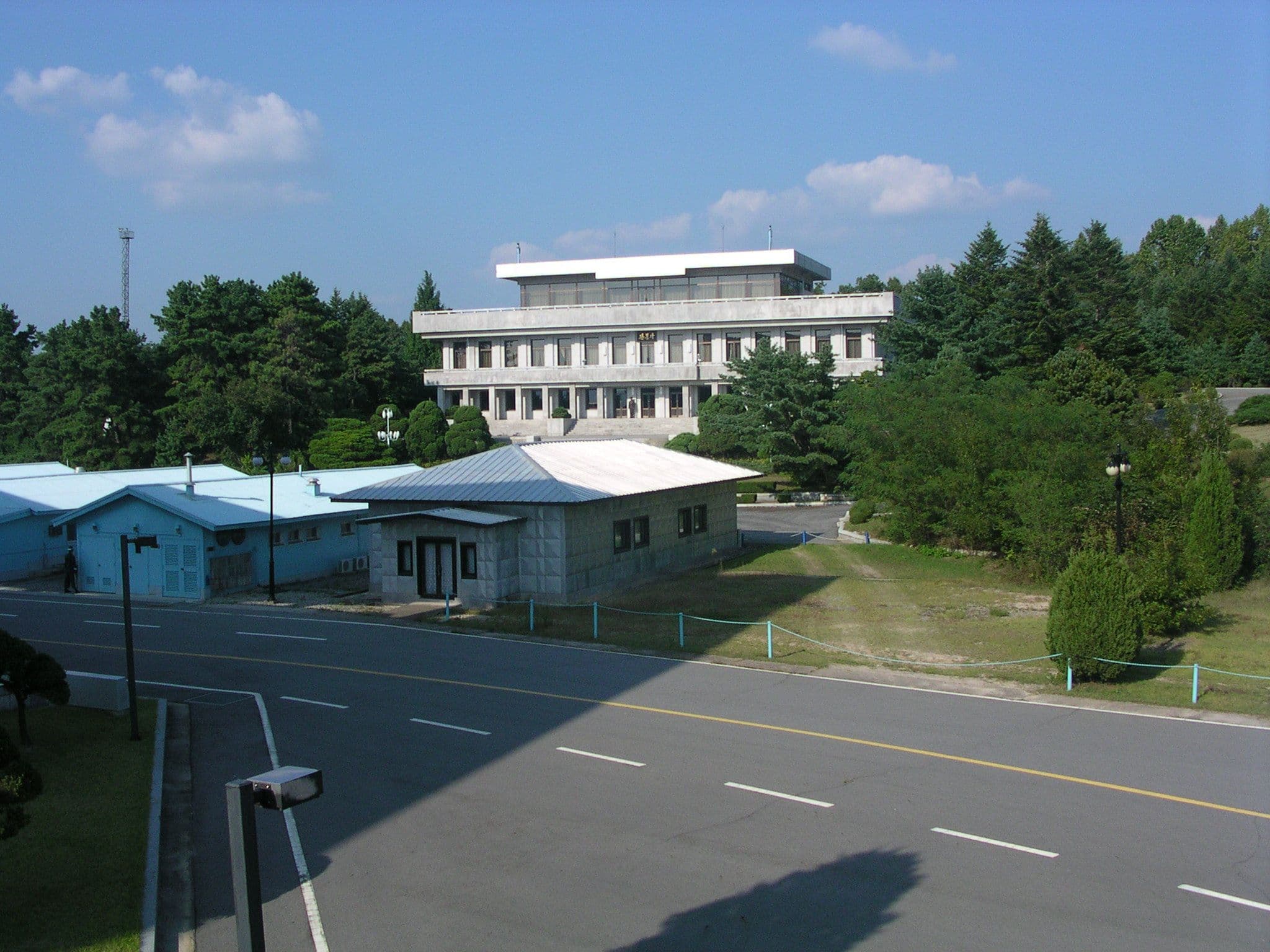
At this very moment, an official declaration has begun to put an end to 73 years of a Korean Peninsula technically 'at war.'
TL;DR
- South Korea's Ministry of Unification officially reported to the National Assembly's Foreign Affairs and Unification Committee on March 6, 2026, its plan to pursue an 'End-of-War Declaration' to transform the Korean War armistice into a peace regime.
- President Lee Jae-myung had declared in his March 1st Movement anniversary address, "Let us transform the armistice regime into a peace regime," and this Unification Ministry report is the follow-up action.
- North Korea reaffirmed the 'severance of all inter-Korean relations' at its 9th Party Congress, but Seoul has chosen a strategy of keeping the door to dialogue open.
- As the Middle East situation changes rapidly due to the Iran war, Korean Peninsula stability is directly tied to Korea's core national interests in terms of energy, diplomacy, and security.
- The key question is how far Korea's independent peace diplomacy can be effective amid the U.S.-China hegemony competition.
1. The Facts — What Happened
Unification Minister Jeong Dong-young officially formalized the following plans in a policy report submitted to the National Assembly's Foreign Affairs and Unification Committee on March 6:
- Pursuing an End-of-War Declaration: Advancing a declaration reflecting the political will to end the Korean War
- Initiating discussions for a peace treaty: Using the end-of-war declaration as a springboard to begin negotiations for establishing a permanent peace regime
- Transition to a 'Unification-oriented Peaceful Two-State' system: Rejecting absorption-style unification, establishing a new inter-Korean relationship based on coexistence and cooperation
- Pursuing the appointment of a Korean Peninsula Peace Envoy
This came immediately after President Lee Jae-myung stated in his March 1st Movement anniversary address on March 1, "Let us realize here and now, on the Korean Peninsula, the dream of peace and coexistence that our forebears earnestly wished for."
2. Why It's Rising Now — The Driving Forces
- Energy crisis sparked by the Iran War: With the threat of a Hormuz blockade shaking energy supply, Korean Peninsula stability creates the diplomatic space for Korea to focus on Middle East risks.
- Lee Jae-myung government's foreign policy agenda drive: Part of a 'peace diplomacy package' running from the March 1st address → second China visit (3/7) → pursuit of the end-of-war declaration.
- Paradoxical space after North Korea's 9th Party Congress: While Pyongyang declared 'severance of relations,' Seoul paradoxically seeks to gain a favorable position in the global court of opinion through a proactive peace process.
3. Context and Background — Why It Matters
The Korean War ended in 1953 with an armistice (ceasefire), but a formal peace treaty was never concluded, leaving the two Koreas technically still at war. This structure, maintained for 73 years:
- Serves as the legal basis for the stationing of U.S. Forces Korea (USFK)
- Has been used as a justification for North Korea's nuclear development
- Is a structural factor creating a 'geopolitical discount' in Korea's sovereign credit rating and foreign investment decisions
The Lee Jae-myung government, judging that changing this structure is advantageous for both the economy and security, has moved away from the 'conditional dialogue' approach repeated by past governments and chosen proactive agenda-setting.
Differences from Past Attempts
| Category | Roh Moo-hyun Government | Moon Jae-in Government | Lee Jae-myung Government |
|---|---|---|---|
| Stance | Continuation of June 15 Joint Declaration | Panmunjom Declaration & September 19 Military Agreement | Phased pursuit: End-of-War Declaration → Peace Treaty |
| North Korea's Response | Inter-Korean summit achieved | Severed after Hanoi No Deal | After 9th Party Congress 'severance' declaration |
| External Environment | Hawkish Bush administration | Trump 1st term dialogue attempt | Trump 2nd term + Iran war variable |
4. Outlook — How Long Will It Last?
Estimated lifespan: Long-term (policy agenda — sustained through term of office)
Positive scenario: If the Iran war ends and the U.S. turns its attention to Northeast Asian stability, Trump's 2nd term will have an incentive to attempt North Korea-U.S. negotiations in the form of a 'big deal.' In this case, the end-of-war declaration could come to the negotiating table.
Negative scenario: If North Korea continues to refuse, the end-of-war declaration could end as a 'unilateral declaration,' and in conjunction with discussions on USFK redeployment, could actually trigger controversy over a security gap.
Key variables:
- Trump administration's priority of the Iran war vs. bandwidth for North Korea diplomacy
- China's willingness to mediate (outcomes of Lee's second China visit)
- Whether North Korea resumes ICBM and nuclear tests
5. Checklist — What to Watch Right Now
References
- Unification ministry to pursue 'peace declaration' — The Korea Herald (2026.3.6)
- South Korea calls for Korean War 'peace declaration' with North — UPI (2026.3.6)
- South Korean President Pledges to Respect North's System in March 1st Address — The Diplomat (2026.3.2)
- Lee urges North Korea to return to talks — NK News (2026.3.1)
- President Lee: "Creating a Peaceful Peninsula Is the Spirit of the March 1st Revolution" — Yonhap News (2026.3.1)
Image Source
- Armistice Building, Panmunjom — Military Armistice Commission Conference Room — Wikimedia Commons, Public Domain