'2 Years' Salary + ₩10 Million': Why Binggrae, Lotte Wellfood, and CJ Are All Tightening Their Belts at Once — The Reality Behind Korea's Food Industry Restructuring Domino
As domestic demand slumps and high inflation and exchange rates compound, major Korean food companies including Binggrae, Lotte Wellfood, and CJ CheilJedang have launched sweeping restructuring measures including voluntary redundancies, factory closures, and subsidiary mergers. With operating profits of major food companies down up to 30%, the 'already-started diet' is spreading across the entire industry.
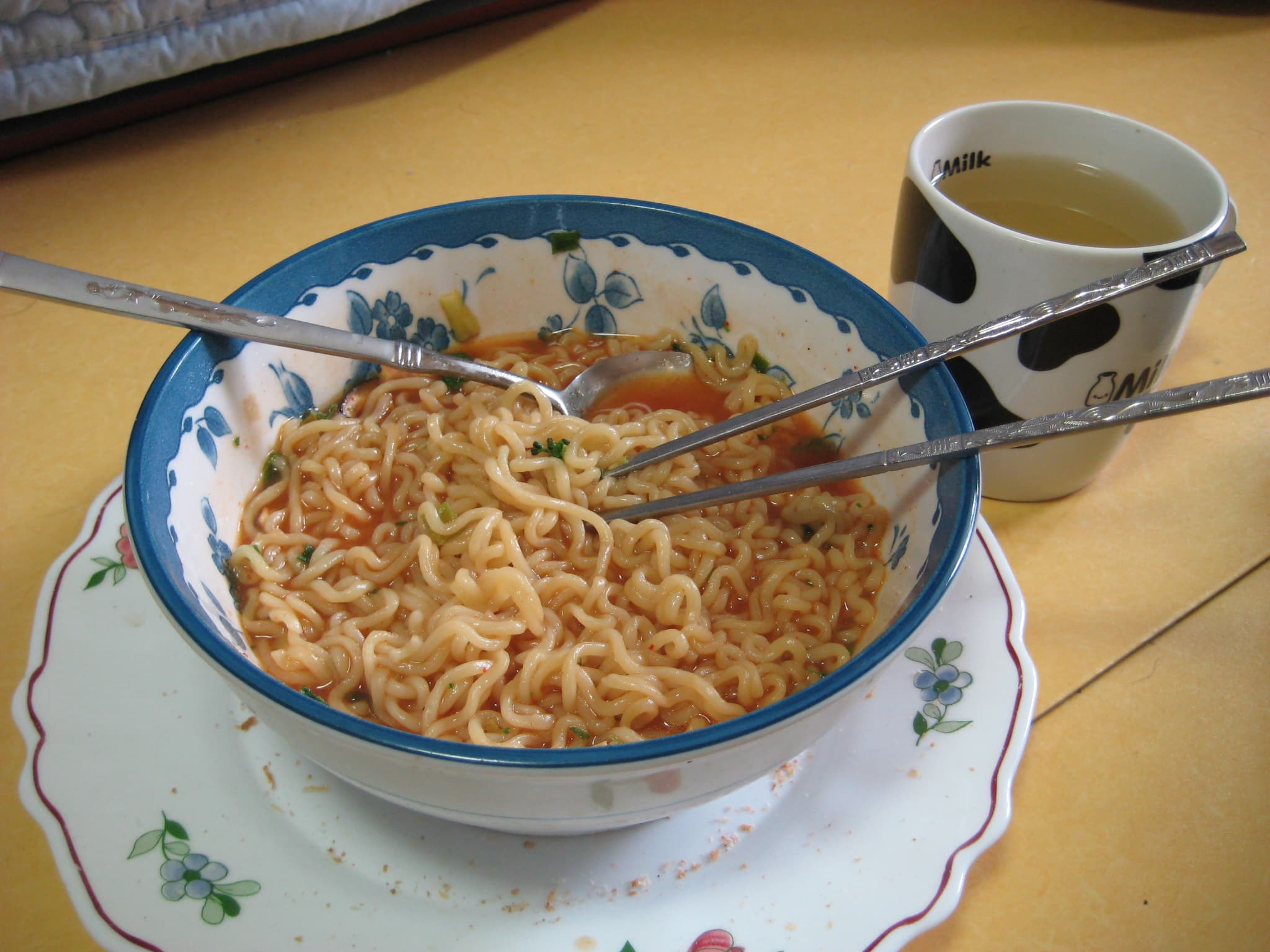
Why you need to read this now: The companies behind every pack of ramen and bag of snacks are telling their employees to pack up — all at the same time. This is no ordinary corporate restructuring — it's a warning light flashing across Korea's entire domestic consumer market.
TL;DR
- Binggrae (January) and Lotte Wellfood (February) have initiated voluntary redundancy programs; CJ CheilJedang has declared a 'full-scale structural overhaul'
- Operating profits at major food companies dropped by up to 30% in 2025
- 'Downsizing' is spreading across the board — factory closures, subsidiary mergers, overseas entity divestitures
- Backdrop: a 'quadruple blow' of domestic demand slump + high inflation + high exchange rates + rising raw material costs
- With the government pushing price stability, price hikes are off the table — cost-cutting is the only way out
The Facts: What Is Happening Right Now
The Voluntary Redundancy Relay
Since the start of 2026, voluntary redundancy programs in the food industry have been falling like dominoes.
Binggrae carried out voluntary redundancies in January 2026, citing rising costs and shrinking consumer demand. The fact that Korea's number-one dairy and ice cream company launched its first-ever large-scale headcount reduction sent shockwaves through the industry.
Lotte Wellfood is currently in the process of accepting voluntary redundancy applications as of February 2026. Eligibility covers employees aged 45 and older (born before 1981) with at least 10 years of service. The compensation package is striking:
- 10–15 years of service: 18 months' base salary
- 15+ years of service: 24 months' base salary
- Re-employment support fund: ₩10 million
- University tuition support per child: up to ₩10 million
CJ CheilJedang has stopped short of announcing direct voluntary redundancies, but has officially declared a 'full-scale structural overhaul' and signaled a move toward austerity management.
Factory Closures and Subsidiary Consolidations
The cuts go beyond headcount. Major Korean food companies are re-merging subsidiaries that had been spun off and consolidating low-profitability production sites under a 'focus and select' strategy. Some companies are reportedly also considering divesting overseas subsidiaries.
Why Now? The Drivers Behind the Spread
The Simultaneous 'Quadruple Blow'
| Factor | Details |
|---|---|
| Domestic Demand Slump | Prolonged high inflation has snapped consumer wallets shut. Even everyday staples like ramen, snacks, and beverages are shifting to 'value-for-money' purchasing |
| High Inflation & Exchange Rates | A stronger dollar has pushed up the price of imported raw materials (wheat, sugar, cooking oil, etc.) |
| Rising Raw Material Costs | Global supply chain instability has caused a structural rise in unit costs for major food ingredients |
| Government Price Controls | Fear of government pressure and consumer boycotts over price hikes makes increases difficult, while margins are under constant pressure |
Analysts note that even as operating profits at major food companies plunged by up to 30% in 2025, price increases remain practically off the table — making improving cost structure the only viable option.
AI and Automation Shrinking Some Operations
The faster adoption of AI and data-driven marketing and production automation is also a structural backdrop, as demand for labor in the high-fixed-cost food and distribution sector declines.
Stakeholders: Who Is Affected and How
Companies: Short-term cost savings are real, but risks of talent gaps and morale decline loom large
Employees: Middle-aged workers 45 and older are the primary target. Considering the harsh reemployment market, the packages may look sweet — but the reality is tough
Consumers: Post-restructuring product portfolio cuts and reduced quality control headcount are concerns
Suppliers: If major food company orders shrink, small and mid-sized suppliers could suffer a domino effect
Durability: How Long Will This Last?
"With profitability deteriorating due to weak domestic consumption and rising exchange rates and raw material prices... there are concerns that the voluntary redundancy trend will continue."
— MTN News
Experts expect restructuring in the food and distribution industry to continue through at least the first half of 2026. Unless signals of a domestic consumption recovery emerge, 'trimming the fat' is likely to become entrenched as a survival strategy.
Checklist: What to Watch Right Now
Secondary Issues & Risks
- Investment bubble risk: Be cautious about buying on short-term rebound expectations after restructuring announcements. Without a genuine domestic recovery, any bounce is likely temporary
- Misinformation risk: 'Voluntary redundancy = forced layoff' misunderstandings could amplify labor-management tensions
- Cascade effects: Food industry restructuring → small food ingredient suppliers → farms — the ripple could go all the way down
Reference Links
- "Operating profits down up to 30%"... Food industry restructuring and voluntary redundancies spread — Asia Today
- From voluntary redundancies to factory closures... Food industry in the midst of a shake-up — iNews24
- 'Close factories, merge subsidiaries'... Food companies pursue focus-and-select to boost profitability — Chosun Biz
- "Pack up now and get 2 years' salary + ₩10M"... Food industry on the cliff's edge with voluntary redundancies — Nate
Image credit: Wikimedia Commons — Korean food Tasty Ramyeon (CC BY-SA 2.0)