From 0.72 to 0.80: The Checklist for Deciding Whether Korea's 2025 Fertility Rate Rebound Signals the 'End of the Low-Birth Tunnel'
Korea's total fertility rate (TFR) recovered to 0.80 in 2025, returning to the 0.8 range for the first time in four years. With 254,500 births — a 6.8% increase year-on-year and the largest surge since 2010 — debate is heating up over whether this is a structural rebound or merely a base effect.
Why you should read this now: Today (February 25, 2026), Korea's Statistics Agency released its '2025 Birth and Death Statistics (Provisional),' showing the country's total fertility rate (TFR) hit 0.80. After bottoming out at 0.72 in 2023, births have risen for two consecutive years — and whether this marks the beginning of the end of the low-birth crisis, or merely a temporary rebound, is the hottest topic right now.
TL;DR
- 2025 births: 254,500 (up 16,100 year-on-year, +6.8%)
- TFR: 0.80 — the highest since 2021 (0.81), a four-year high
- Largest absolute increase in births since 2010; highest growth rate since 2007
- Yet South Korea remains the only OECD member with a TFR below 1.0
- Key drivers: post-COVID marriage recovery + echo-boom generation (early-to-mid 30s) entering peak childbearing years
The Facts: What Happened
These are the headline figures from the National Statistics Agency's '2025 Population Trend Survey — Birth and Death Statistics (Provisional),' released February 25, 2026.
| Indicator | 2023 | 2024 | 2025 | Change |
|---|---|---|---|---|
| Number of births | 230,028 | 238,400 | 254,500 | +16,100 (+6.8%) |
| Total fertility rate | 0.72 | 0.75 | 0.80 | +0.05 |
| Natural population decline | — | — | approx. −108,900 | 6th consecutive year of decline |
After falling for eight straight years — from 438,000 births in 2015 to 230,000 in 2023 — the number of births has now rebounded for two consecutive years.
Notable Age-Group Trends
- Birth rate among women in their late 30s (ages 35–39) reached an all-time high since records began
- Growth also sustained among women in their early-to-mid 20s through early 30s
- The echo-boom generation (born 1990–1992, now in their early-to-mid 30s) has entered peak childbearing age
Why the Rebound Happened Now
1. Post-COVID Deferred Marriage Effect
Couples who postponed marriage and childbearing during 2020–2022 began entering the marriage market in earnest from 2023. The typical 1.5–2 year lag between marriage increases and birth increases has now filtered through to the 2025 figures.
2. The Echo-Boom Generation's Timing
The echo-boom cohort — born during a brief uptick in births around 1990–1991 after the low-birth trend began in 1983 — is now in their early-to-mid 30s. This aligns perfectly with Korea's average age at first marriage (33.9 for men, 31.6 for women).
3. Rising Awareness of Government Support
A cumulative package of policies — including birth grants, higher parental leave pay, and expanded public childcare — became more visible to the public from 2023–2024 onward, and appears to have contributed to a more positive attitude toward having children.
Context: How Significant Is This?
- Korea's TFR trajectory: 2015 (1.24) → 2020 (0.84) → 2023 (0.72, all-time low) → 2024 (0.75) → 2025 (0.80)
- Natural population decline — more deaths than births — continued in 2025 at approximately 109,000
- Only Sejong City maintained natural population growth; all other major municipalities recorded natural decline
Outlook: Can the Rebound Continue?
Optimistic Scenario
- TFR in the first half of 2026 projected at 0.85 (Chosun Ilbo / government estimate)
- Echo-boom generation's peak childbearing window could extend through 2026–2027
- Cumulative effect of government low-birth response policies continues
Pessimistic Scenario
- Once the base effect is exhausted, rebound momentum may weaken
- Structural issues remain unresolved: capital-city concentration, housing costs, education expenses
- The echo-boom effect is one-time — the generations that follow (born 1993–early 2000s) are smaller
- Income inequality: the gap between the top 30% income group (TFR 0.95) and lower-income groups is widening
Checklist: Criteria for Judging Whether This Is a 'Real' Rebound
Secondary Issues: What Ripple Effects Could Follow?
- Pension and welfare fiscal planning revision — Projections based on the 2023 'worst-case' scenario may need to be revised upward
- School consolidation pace adjustment — Impact on Ministry of Education's appropriate school size planning
- Long-term real estate demand outlook — The 'population collapse → long-term house price decline' narrative may fracture
- Low-birth budget debate — Was it cash support or structural reform that proved more effective?
Risks
| Risk Type | Description |
|---|---|
| Excessive optimism | If 0.80 is misread as 'low-birth crisis solved,' policy urgency may ease prematurely |
| Investment overheating | Short-term spike possible in infant/childcare-related stocks |
| Misinformation risk | Watch for media treating this 'provisional' data as final figures |
| Privacy | Publishing regional birth rates in detail may stigmatize certain municipalities |
Reference Links
- Yonhap News: First cries — biggest birth surge in 15 years, TFR recovers to 0.8 range
- Korea Policy Briefing: 2025 Birth and Death Statistics (Provisional)
- Asia Economy: 2025 TFR 0.8, two consecutive years of rebound — late-30s birth rate hits all-time high
- MK: Births surge to 15-year high — TFR recovers to 0.8
Image Credit
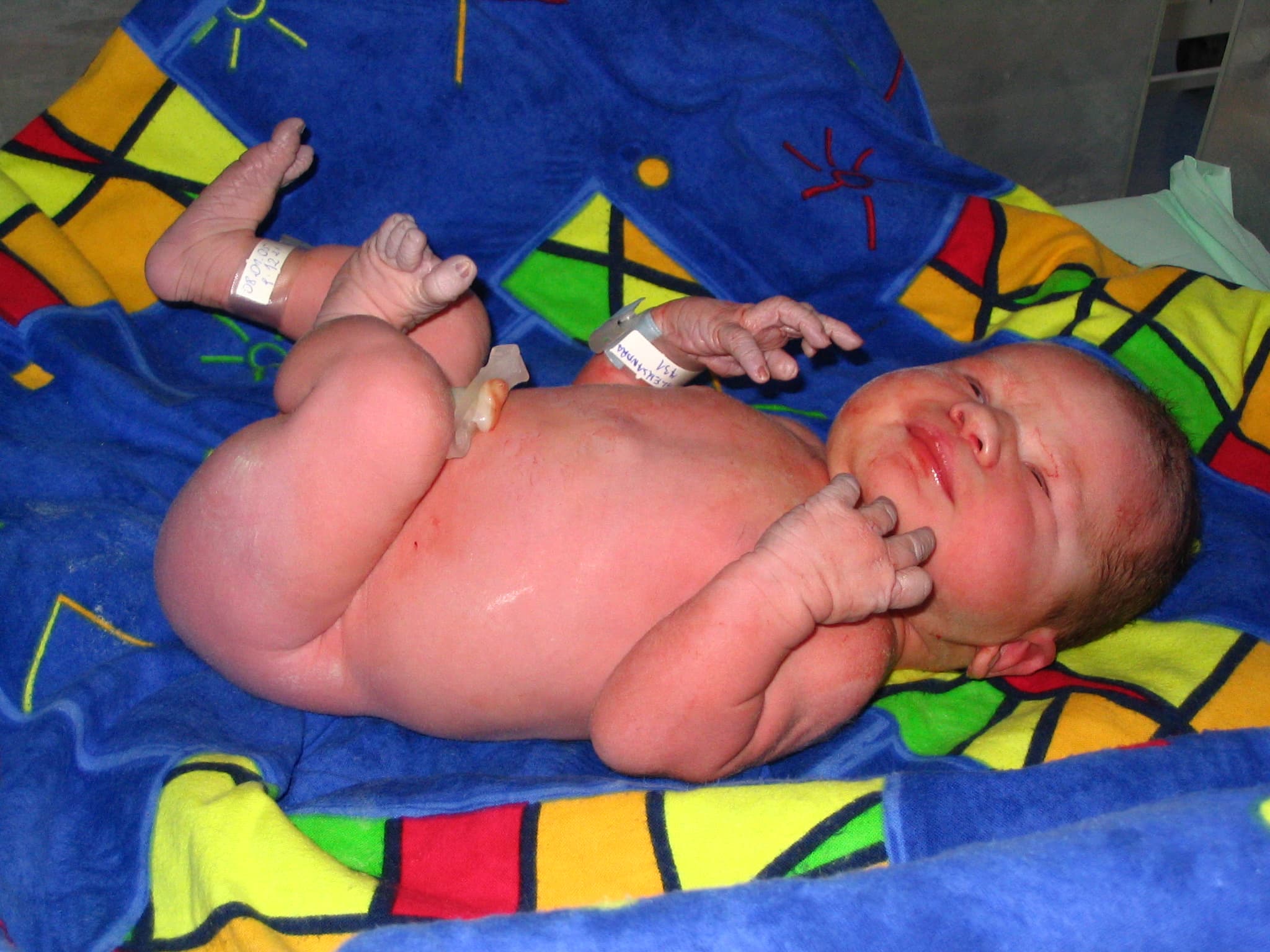
- Featured image: Newborn baby.jpg — Wikimedia Commons (Public Domain)