Declaration of 'Enemy, Not Kin': 4 Scenarios Kim Jong-un's Permanent Exclusion of South Korea and Trump's Dialogue Willingness Pose for the Korean Peninsula
Kim Jong-un declared at the closing ceremony of North Korea's 9th Party Congress that he would 'permanently exclude South Korea from the category of compatriots.' At the same time, he signaled conditional willingness to engage with the United States, and the White House confirmed that Trump is open to meeting Kim Jong-un without preconditions.
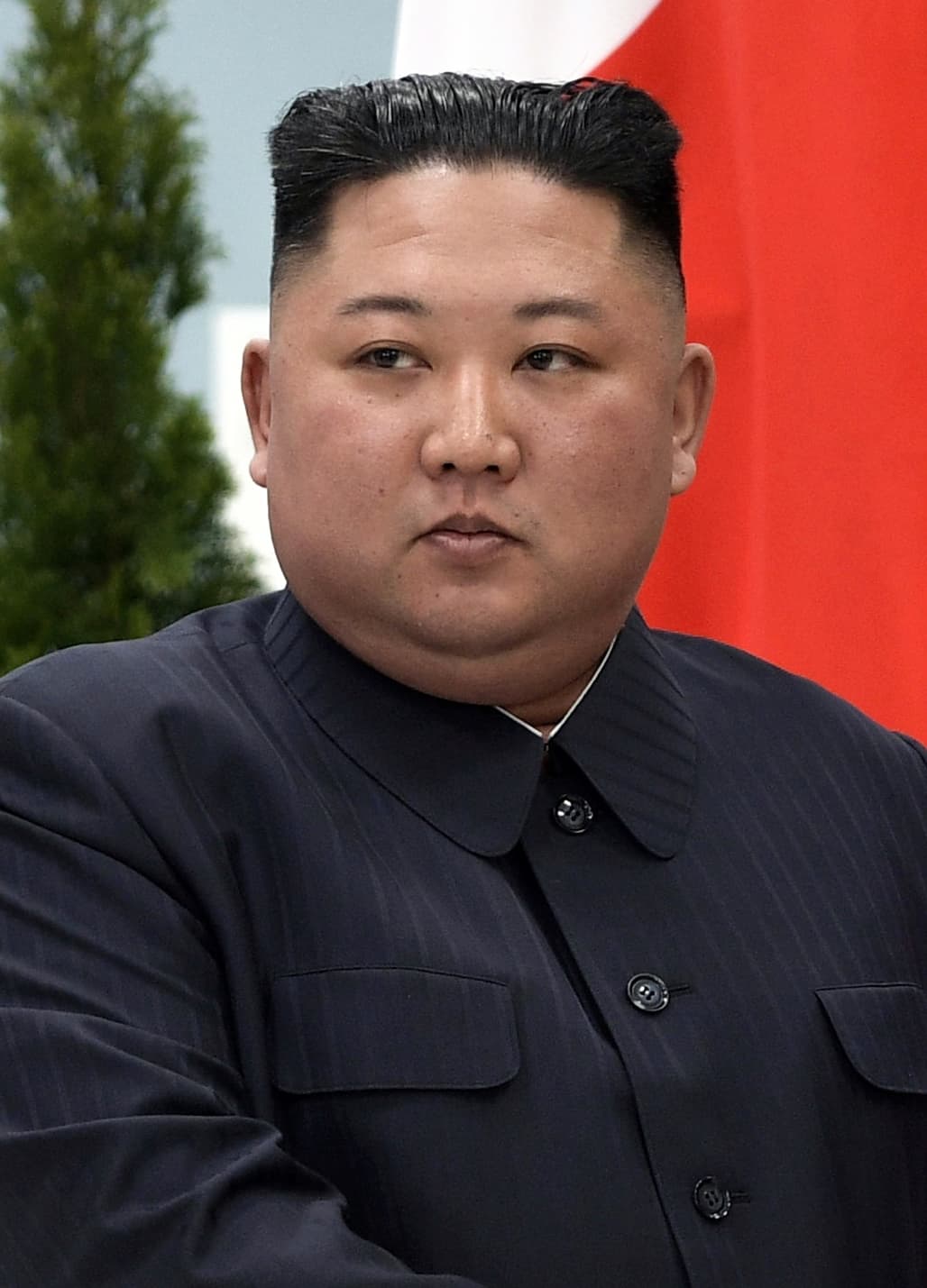
Why You Need to Read This Now: Kim Jong-un's declaration of 'permanently excluding South Korea' and Trump's willingness for 'talks without preconditions' have emerged simultaneously. The Korean Peninsula's diplomatic equation is being shaken at its very foundation.
TL;DR
- Kim Jong-un officially declared at the close of North Korea's 9th Party Congress that South Korea is "permanently excluded from the category of compatriots"
- Declared a complete cutoff of inter-Korean contact, stating "there is absolutely nothing to discuss with the Republic of Korea, the most hostile entity"
- In contrast, expressed conditional willingness toward the US: "if the US abandons its hostile policy toward North Korea, improvement in relations is possible"
- The White House officially confirmed on February 27 that President Trump "remains open to talking with Kim Jong-un without any preconditions"
- The South Korean government (Blue House) responded by urging both sides to "refrain from confrontational rhetoric and build mutual trust"
The Facts: What Happened
North Korea's 9th Workers' Party Congress concluded on February 26, 2026. Chairman Kim Jong-un simultaneously outlined his policy toward South Korea and the United States in his closing address.
Toward South Korea: He declared that "there is absolutely nothing to discuss with the Republic of Korea, the most hostile entity, and South Korea will be permanently excluded from the category of compatriots." The modifier 'permanently' is unprecedented. This is interpreted as a step toward legally, institutionally, and linguistically cementing the existing 'two hostile states theory.'
Toward the US: He left the door open to conditional dialogue, stating that "if the United States abandons its hostile policy toward North Korea, improvement in US-North Korea relations is also possible." This is read as a message aimed at the return of Trump, who held three US-North Korea summits during his first term.
In the early hours of February 27, 2026 (Korean time), the White House officially confirmed to Yonhap News that "President Trump remains open to talking with Kim Jong-un without any preconditions."
Why This Statement Exploded Right Now
- The Trump 2nd Term Return Effect: Memories of US-North Korea summits during Trump's first term, combined with 'Kim Jong-un's conciliatory signals toward the US,' have generated explosive attention
- The Word 'Permanently': Not a simple repetition but a declaration of permanence, triggering fierce headline competition in the media
- The Contrast Effect: In the same speech, closing the door on South Korea while extending a hand to the United States — a stark 'dual message' contrast
- The Party Congress Timing: Remarks from the highest decision-making body, convening at intervals of more than five years, function as official policy
Context and Background: The Evolution of the 'Two Hostile States Theory'
In late 2023, Kim Jong-un first declared at the Supreme People's Assembly that 'North Korea and South Korea are not compatriots but two states.' Subsequently, the constitution was revised to explicitly designate 'the Republic of Korea as the No. 1 hostile state.'
This latest 'permanent exclusion' statement is an extension of that, but with heightened intensity. Whereas before, the hostile relationship was premised on the assumption of eventual reunification, this is now a declaration to remove reunification itself from the agenda.
At the same time, the signal for resuming dialogue with the United States suggests a strategic shift by North Korea toward sanctions relief and normalization of relations before denuclearization negotiations. How the Trump administration responds will be the biggest variable in Korean Peninsula diplomacy in 2026.
4 Scenarios
Scenario 1. US-North Korea Talks Resume → South Korea Sidelined
If a Trump-Kim Jong-un summit is realized, South Korea could be excluded from the negotiating table. Concerns about a repeat of the 1994 Geneva Agreement and the 2018–2019 Hanoi summit failure.
Scenario 2. Talks Collapse → Escalating Tensions
If the US precondition (denuclearization) and North Korea's precondition (withdrawal of hostile policy) clash, there is the possibility of missile provocations resuming in the second half of 2026.
Scenario 3. South Korea Attempts to Build Independent Inter-Korean Channel
With direct dialogue channels blocked, the Lee Jae-myung government may explore alternative routes through multilateral mediation (including China and Russia).
Scenario 4. Prolonged Status Quo
The possibility that a state of 'diplomatic deadlock' — with neither US-North Korea talks nor inter-Korean talks materializing — persists throughout 2026.
Risk Check
Reference Links
- Yonhap News: Kim Jong-un "South Korea excluded from compatriots... US-North Korea relations depend on US attitude"
- Kyunghyang Shinmun: Party Congress closes, Kim Jong-un "permanently excludes South Korea from the category of compatriots"
- Yonhap News: White House "Trump open to unconditional talks with Kim Jong-un"
- Chosun Ilbo: Kim Jong-un "Current South Korean government's conciliatory attitude is a deception... permanently excluded from the category of compatriots"
- KBS: Kim Jong-un "South Korea excluded from compatriots... US-North Korea relations depend on US attitude"
Image Credit
- Photo of Chairman Kim Jong-un: Wikimedia Commons (presumed public domain, source: AP/Korean Central News Agency)