Larijani Is Coming: Why Khamenei Established a 4-Tier Succession Order and Iran's Power Vacuum Scenarios
Iran's Supreme Leader Khamenei has reportedly designated Ali Larijani as the top power successor in preparation for assassination threats from the US and Israel. The establishment of a 4-tier emergency succession order is both a survival strategy for the Iranian regime and carries immediate implications for Korea's energy security amid Middle Eastern geopolitical upheaval.
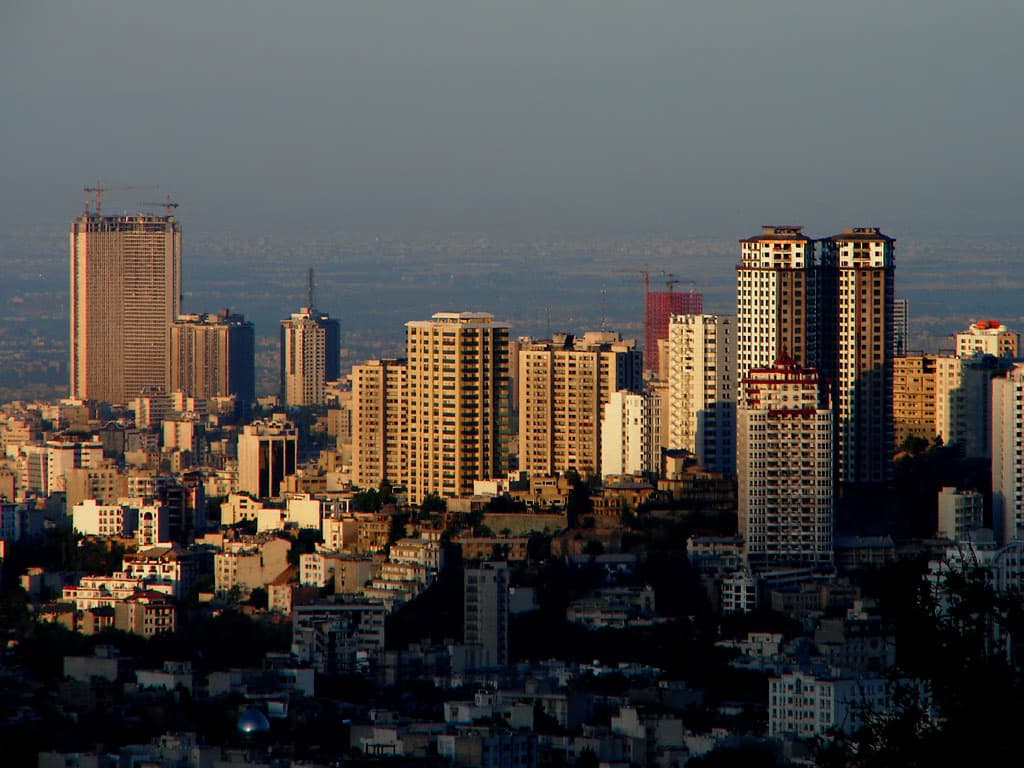
Why This Matters Now: Iran's Supreme Leader Khamenei has officially decided 'who takes power when I die.' Should the U.S. military threat become reality, the survival equation of the Iranian regime and the Middle East's oil supply chain would be shaken simultaneously.
TL;DR
- Khamenei designates Ali Larijani as top successor in preparation for assassination (confirmed by multiple outlets including NYT and Haaretz)
- Succession order: 1) Larijani → 2) Parliament Speaker Ghalibaf → 3rd & 4th undisclosed
- Larijani already holds effective executive power as Secretary of the Supreme National Security Council
- Nationwide protests across Iran + U.S. airstrike threats trigger 'wartime footing'
- Korea impact: Deterioration in Iran — Korea's 3rd-largest oil supplier — could trigger oil price spikes and directly hit energy security
1. The Facts: What Happened
On February 22–23, 2026, the New York Times and Israeli daily Haaretz, citing multiple Iranian government sources, reported that Ayatollah Ali Khamenei (85) has established a 4-tier emergency power succession order.
According to the reports:
- 1st in line: Ali Larijani — current Secretary of the Supreme National Security Council
- 2nd in line: Mohammad Baqer Ghalibaf — Speaker of Parliament
- 3rd & 4th: Undisclosed (believed to be figures within the military command)
Larijani is reportedly already sidelining elected President Masoud Pezeshkian and exercising core state decision-making authority. Khamenei has issued directives for the Larijani group to immediately assume power in the event of communications blackout or death.
Background: U.S. President Donald Trump has publicly threatened to strike Iran's nuclear facilities since taking office. On February 26, the 3rd round of U.S.-Iran nuclear talks resumed in Geneva, but within Iran, the possibility of a U.S. preemptive strike in the event of a negotiation breakdown is viewed as highly likely. On top of this, anti-government protests have spread nationwide including the capital Tehran, pushing regime security to its highest priority.
2. The Spread Mechanism: Why This News Is Breaking Now
2-1. Trigger: U.S. Threat to Assassinate Iranian Leadership Becomes Real
The Trump administration has used 'elimination of Iranian leadership' as a diplomatic card since 2025. When SBS Nightline (February 27) featured 'Khamenei Initiates Successor Designation' as its top issue pick, domestic search trends also spiked.
2-2. The Larijani Risk Profile
Larijani is a hardline conservative and opponent of nuclear negotiations. Should he seize real power, the likelihood of a nuclear deal diminishes and Iran's nuclear development could accelerate. This strengthens Israel's justification for a preemptive strike and makes a Middle East war escalation scenario more realistic.
2-3. Domestic Sentiment: Oil Price and Energy Fears
In Korea, searches for 'What happens to gas prices if Iran goes to war?' are rising in tandem. Iran is OPEC's 3rd-largest oil producer, producing approximately 3.3 million barrels per day.
3. Context & Background: Who Are Khamenei and Larijani?
Ali Khamenei (1939–)
Assumed the role of Supreme Leader after Khomeini's death in 1989. Has ruled as Iran's absolute authority for 37 years. Health concerns have been raised consistently in recent years, and his public appearances dropped sharply in 2025.
Ali Larijani (1960–)
A visiting scholar at Harvard. Served as chief nuclear negotiator (2005–2007) and Speaker of Parliament (2008–2020). Assessed as a hardline conservative but pragmatist. After being disqualified from the 2024 presidential race, he returned as Secretary of the National Security Council and has consolidated his position as the de facto top decision-maker.
4. Durability Outlook: How Long Will This Issue Last?
| Scenario | Probability | Iran Outcome | Korea Impact |
|---|---|---|---|
| Nuclear deal reached | 25% | Tension eased, Larijani's power strengthened | Oil price decline — a positive |
| Negotiations collapse, sanctions continue | 50% | Status quo maintained, Larijani regime consolidated | Continued oil price volatility |
| U.S./Israel airstrikes | 25% | Regime restructuring, Larijani succession realized | Oil price spike, Korea energy emergency |
Estimated lifespan: 1–3 days (short-term news) → Could transition to long-term issue if airstrikes materialize
5. Secondary Issues: Derivative Debates
- Acceleration of Iran's nuclear program: A Larijani-led regime is more likely to prioritize completing nuclear deterrence over restoring the JCPOA
- Israel's preemptive strike timing: A power vacuum or the immediate aftermath of succession could be the 'golden window' for military operations
- Strait of Hormuz blockade risk: If Iran retaliates, the strait through which 20% of the world's oil passes could be shut
- Korea's energy vulnerability: Korea depends on the Middle East for approximately 60% of its crude oil imports. A $10/barrel oil price rise is estimated to worsen the annual trade balance by approximately $4.5 billion
6. Risk Checklist
Checklist: What to Do Right Now
References
- NYT: Inside Iran's Preparations for War and Plans for Survival (2026.02.22)
- Haaretz: Khamenei Forms Succession Plan as Iran Braces for War (2026.02.22)
- Yonhap News: Iran Supreme Leader Issues 'Assassination Preparedness' Order to Security Chief (2026.02.23)
- Jerusalem Post: Khamenei appoints Larijani to key role
- CFR: Leadership Transition in Iran (2026.02)
Image Credit
- Cover image: Tehran city skyline — Wikimedia Commons, CC BY 2.0