The 1-Hour Counterstrike: 5 Meanings of Iran's Drone and Missile Strikes on Israel and U.S. Military Bases
On February 28, 2026, Iran's Islamic Revolutionary Guard Corps (IRGC) launched a massive retaliatory drone and ballistic missile attack against Israeli territory and U.S. military bases across seven Middle Eastern countries — just about one hour after a pre-emptive U.S.-Israeli strike. Israel's Iron Dome intercepted many of the projectiles, but U.S. facilities in Bahrain were confirmed hit.
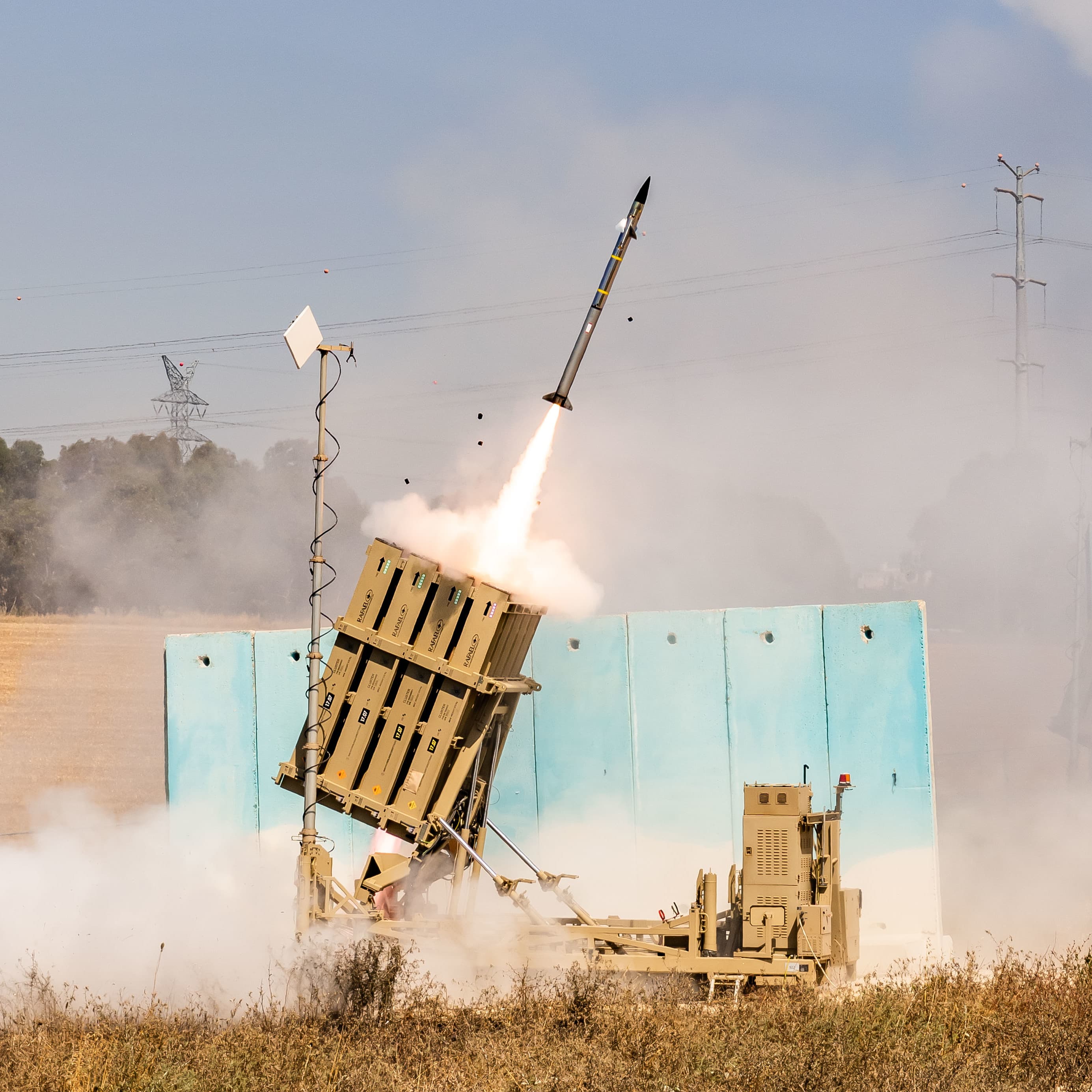
Why you need to watch this now: Following the U.S.-Israeli pre-emptive strikes on Iran (February 28), Iran launched a full-scale retaliation within just one hour — firing drones and ballistic missiles at Israel and U.S. military bases across seven Middle Eastern countries. As a full-scale Middle East war becomes reality, we analyze the structure and implications of this counterattack.
TL;DR
- On the morning of February 28, 2026 (local time), the U.S. and Israel conducted large-scale strikes on Iranian nuclear facilities and military infrastructure
- Iran's Islamic Revolutionary Guard Corps (IRGC) launched its first wave of drone and ballistic missile attacks targeting Israel and U.S. military bases in the Middle East in just about one hour
- Israel's Iron Dome and David's Sling intercepted the majority, but a hit on the U.S. Navy's Fifth Fleet facilities in Bahrain was confirmed
- Airspace over Iraq, UAE, and Kuwait temporarily closed / Qatar and Bahrain raised security alert to maximum level at U.S. bases
- At least 201 Iranian casualties (AP, JoongAng Ilbo) / Iran's Foreign Ministry issued a hardline statement: "We will not hesitate"
1. The Facts: What Happened
At 10:00 a.m. on February 28, 2026 (Tehran local time), the U.S. and Israel simultaneously struck Iran's key uranium enrichment facilities (Fordow and Natanz) and IRGC military infrastructure. President Trump called it "the opening of a major battle."
Iran's response was faster and broader than expected.
- Israeli territory: Dozens of ballistic missiles and kamikaze drones were launched at the Tel Aviv, Haifa, and Jerusalem areas. AFP and Euronews reported that air raid sirens were nearly continuous.
- U.S. military bases in 7 countries: Simultaneous strikes on the U.S. Navy's Fifth Fleet in Bahrain, Al Udeid Air Base in Qatar, Kuwait, UAE, Iraq, and others. The hit on U.S. facilities in Bahrain was officially confirmed (Edaily).
- Iran's Foreign Ministry: "This response is an exercise of the right to self-defense under international law," warning of further waves of attacks.
2. Why This News Exploded: The Spread Mechanism
| Factor | Details |
|---|---|
| Speed | Retaliation just 1 hour after the pre-emptive strike — 20 times faster than Iran's June 2025 retaliation (20 hours) |
| Scale | Simultaneous strikes across 7 countries, underscoring the 'regional war' character |
| Symbolism | War news spread on Korea's March 1st Independence Movement Day (Samiljeol) — drawing intense public attention |
| Platform | YouTube KBS and MBC special news streams recorded hundreds of thousands of simultaneous viewers |
3. Context and Background: Why This War?
The core justification for these strikes is preventing Iran from developing nuclear weapons. Israel and the U.S. had already struck Iran in June 2025, and launched a second major operation just eight months later. This time, the Trump administration joined directly — based on the judgment that Iran nuclear negotiations had effectively collapsed — marking an unprecedented escalation.
The Iron Dome's role is also drawing new attention. Originally designed to defend against Hamas's short-range rockets, the Iron Dome formed a multi-layered defense network with David's Sling and the Arrow system against this Iranian ballistic missile barrage, intercepting most missiles — but concerns about depleting air defense stockpiles were immediately raised by experts (NYT).
4. Outlook: How Long Will This Last?
- Short-term (~1 week): Iran has threatened a 'second wave,' and additional U.S. forces are deploying to the Middle East → possibility of expanding frontlines
- Medium-term (1–3 months): Internal instability in Iran and uncertainty over Khamenei's health → risk of a power vacuum emerging
- Economy: Strait of Hormuz blockade scenario → international oil prices could spike, directly impacting Korea's energy import costs
- Diplomacy: Korean government issued a Level 1 advisory for nationals in Iran and Israel to depart immediately. President Lee Jae-myung departed as scheduled for a state visit to Singapore on the same day as Samiljeol.
5. Risk Checklist
Reference Links
- Iran fires missiles and drones at Israel in retaliation... "Iron Dome intercepting" — Chosun Ilbo
- Iran retaliates against U.S.-Israel strikes... targeting U.S. bases in 7 Middle Eastern countries — Edaily
- U.S.: "No U.S. casualties in Iran strike"... at least 201 Iranians killed — JoongAng Ilbo
- A visual guide to US-Israeli strikes on Iran – and Tehran's response — The Guardian
- Mapping US and Israeli attacks on Iran and Tehran's retaliatory strikes — Al Jazeera
- Israel-U.S. strikes on Iran — Namu Wiki
Image source: IDF Iron Dome launcher firing during Operation Guardian of the Walls, May 2021, Wikimedia Commons, CC BY-SA 3.0 (IDF Spokesperson's Unit) — original link