'Canary in the Coal Mine': What Blue Owl's Redemption Halt Means for Wall Street's Private Equity Sector Crash
US private equity firm Blue Owl Capital permanently halted redemptions for its OBDC II fund, triggering a sector-wide drop of up to 10% across NYSE-listed private equity stocks. Mohamed El-Erian warned it resembles 'the BNP Paribas shock of August 2007,' sounding alarm bells across the global private credit market.
Why you need to read this now: A Wall Street giant just told investors it cannot return their money. Experts are comparing this to the signals seen right before the 2008 financial crisis.
TL;DR
- US private equity firm Blue Owl Capital (Blue Owl Capital) declared a permanent halt on redemptions for its OBDC II fund on February 19, 2026
- Blue Owl's stock plunged 10%, dragging down Apollo, Blackstone, KKR, Ares and the broader private equity sector
- Investor losses estimated at approximately 35%; concerns are spreading as the product is held in US 401(k) retirement plans
- Mohamed El-Erian: "A canary in the coal mine, similar to the BNP Paribas shock of August 2007"
- The redemption crisis compounds existing pressure on the private credit industry from Anthropic's Claude Cowork launch
Facts: What Happened
Blue Owl Capital officially announced on February 19, 2026 (local time) that it would permanently halt redemptions for its retail-focused private credit fund, 'OBDC II' (Blue Owl Capital Corp II).
OBDC II had originally pursued a merger with the NYSE-listed fund (OBDC), temporarily suspending redemptions during that process. However, as investor loss concerns mounted, the merger plan was scrapped in November 2025 — and just three months later, Blue Owl made the drastic move of permanently halting all redemptions.
Key figures:
- Investor losses: Estimated at approximately 35%
- Redemption structure change: Quarterly redemptions → complete halt
- Blue Owl stock: Intraday drop of -10%, hitting its lowest point in two and a half years
The Contagion: Why This Became a Bigger Issue
This is not just a Blue Owl problem. On that day, the entire private equity sector on the NYSE fell in tandem.
| Company | Decline |
|---|---|
| Blue Owl | -10% |
| Blackstone | -6% |
| Apollo Global Management | -6% |
| Ares Management | -5% |
| KKR | -3% |
The private credit market has grown rapidly following tighter regulations on traditional bank lending. Three structural vulnerabilities converge here: opaque asset valuation, limited liquidity, and sustained high interest rates.
Adding to the pressure, the recent launch of Anthropic's generative AI 'Claude Cowork' has raised concerns about the collapse of software and data analytics firms — sectors where private credit lenders have concentrated their loan portfolios.
Context: A 2007 Déjà Vu?
Former PIMCO CEO and prominent economist Mohamed El-Erian drew comparisons to August 2007 in a CNBC interview:
"This situation may be a 'canary in the coal mine.' There is a larger systemic problem that everyone knows about but no one is talking about."
In August 2007, France's largest bank BNP Paribas abruptly suspended redemptions on three funds invested in US subprime mortgage assets — a moment now recognized as a precursor to the 2008 global financial crisis.
Counterarguments exist, however. Some analysts note that the assets Blue Owl sold traded close to face value, and that the fund's size has limited connections to the broader financial system — making a direct parallel to the BNP Paribas episode debatable.
Who Is Affected
Direct victims: OBDC II retail investors. Ordinary investors who expected quarterly redemptions can no longer retrieve their funds.
US 401(k) holders: OBDC II is also held in 401(k) retirement plans, raising fears that American workers' retirement savings could be impacted.
Korean investors: Korean institutional and retail investors with indirect exposure to US private equity, as well as those holding USD and US Treasury positions, should review their risk exposure.
Global private credit industry: As liquidity concerns come to the fore, the cost of raising capital is rising and investor outflows may accelerate.
Outlook: One-Off Event or the Start of a Structural Crisis?
Short-term (1–3 days) scenario: If Blue Owl's asset sales proceed near face value, the situation may be contained as a firm-specific risk rather than a broader liquidity crisis.
Medium-term (1–3 months) scenario: If confidence in the private credit market erodes persistently, further redemption halts could follow, compounded by the Federal Reserve's rate policy decisions.
Long-term risk: A structural scenario in which AI-era industrial restructuring → private credit impairment → cascading financial institution losses. Whether El-Erian's warning of 'a larger systemic problem' materializes is the key variable to watch.
Checklist: What to Review Now
Reference Links
- Munhwa Ilbo: This Is How Financial Crises Begin… US Private Equity Blue Owl Halts Redemptions
- Chosun Biz: US Private Equity Giant 'Blue Owl' Halts Redemptions — Wall Street Fears 'Precursor to Financial Crisis'
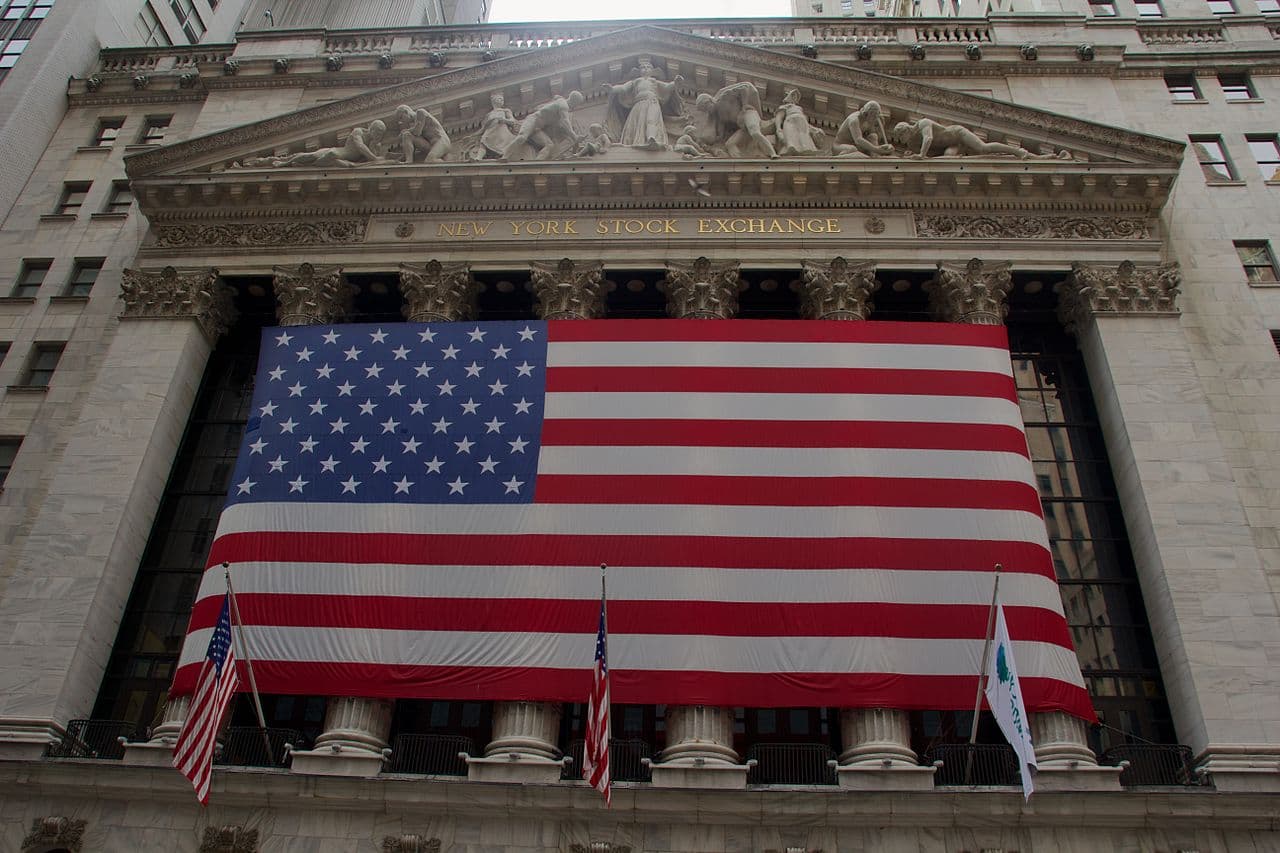
Image source: New York Stock Exchange, Wall Street 1, Wikimedia Commons (CC BY-SA 4.0, Mike Peel)