All 34 Unanimous: Why the Bank of Korea Is Holding at 2.50% and Everything About the 2026 Rate Path
Ahead of the Bank of Korea Monetary Policy Board's benchmark rate decision on February 26, all 34 economists surveyed by Reuters unanimously expected a hold at 2.50%. Korean won weakness and real estate risks are blocking room for cuts, with rates potentially frozen throughout all of 2026.
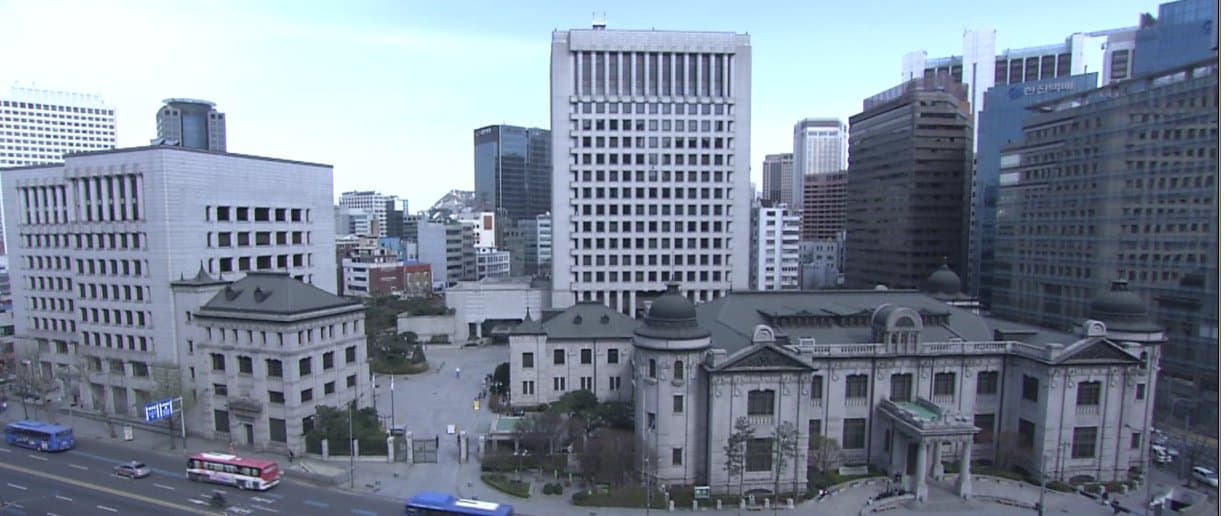
Why does this matter right now? Two days from now (February 26), the Bank of Korea will decide its benchmark interest rate. Thirty-four economists have spoken in unison — "hold" — but behind that consensus lies a complex equation entangling Korean won weakness, real estate, and a semiconductor export boom.
TL;DR
- Reuters poll (2026-02-24): All 34 respondents → expect benchmark rate held at 2.50% on February 26
- 60% forecast no rate cuts throughout 2026
- Korean won weakness (vs. USD) and rebounding real estate prices are the key factors blocking a cut
- Meanwhile, KDI projects 2026 growth at 1.9% → economic recovery signal weakens the case for easing
- The Bank of Korea may also revise its growth forecast upward alongside the February 26 decision
The Facts: Why All 34 Went All-In on a Hold
On February 24, 2026, Reuters published economist survey results that were, unusually, unanimous. All 34 respondents said the Bank of Korea would keep the benchmark rate at the current 2.50% at the February 26 Monetary Policy Board meeting.
Two factors are pressing hard on the side of a hold:
- Korean Won Weakness: Amid tariff uncertainty from the Trump administration and a global dollar-strengthening cycle, the KRW/USD exchange rate has been surging. Cutting rates in this environment would intensify capital outflow pressure and push the won to further depreciation.
- Real Estate Risk: With Seoul apartment prices showing signs of a rebound, a premature rate cut could send an overheating signal to the property market.
Paradoxically, economic recovery also justifies a hold. The Korea Development Institute (KDI) projected the 2026 growth rate at 1.9%, citing a surge in semiconductor exports. With the economy recovering, the rationale for a "preemptive cut" is weak.
Why This News Matters Now
| Category | Details |
|---|---|
| Rate Decision Date | Thursday, February 26, 2026 |
| Current Benchmark Rate | 2.50% |
| Survey Respondents | 34 economists (Reuters, February 24) |
| No 2026 Cut Forecast | 60% of respondents |
| Key Hold Factors | Won weakness, real estate prices, economic recovery |
| Growth Forecast (KDI) | 1.9% for 2026 (improved from 1.0% in 2025) |
Just one year ago, the Bank of Korea was aggressively hiking rates to combat high inflation. Rate-cut discussions then emerged alongside recession fears, but heading into 2026, the semiconductor supercycle, KOSPI strength, and export boom have shifted the center of gravity toward "no urgent reason to cut."
Context and Background: The Bank of Korea's Triple Dilemma
The Bank of Korea must currently balance three conflicting objectives.
① Growth vs. Inflation
Semiconductor exports are widening the current account surplus and KOSPI is posting some of the world's highest gains, but the January Producer Price Index rose +0.6% month-on-month — a fifth consecutive monthly increase. With inflation showing signs of stirring again, a cut becomes all the more delicate.
② Defending the Won
If the Trump administration deploys alternative tools such as Section 301 or Section 232 following the IEEPA tariff ruling, Korean exports to the U.S. could take a hit. This uncertainty is a structural factor sustaining won weakness.
③ Household Debt and Real Estate
Seoul apartment transaction volumes have been recovering since the second half of 2025. The Bank of Korea, mindful of the aftermath of the 2022–2023 "all-in" borrowing frenzy, fears that a rate cut would pour fuel on the property market.
Outlook: How Will the Bank of Korea Move in 2026?
Near-term (February 26)
A hold is virtually certain. The Bank of Korea may also slightly raise its economic growth forecast (from the existing 1.8% to 1.9–2.0%) on the same day.
Medium-term (Second Half of 2026)
While 60% of economists forecast no cuts this year, 30% keep open the possibility of one cut in Q4. Three pivot points to watch:
- If Trump tariffs materialize and exports plunge sharply → cut card may be played
- If the won surges past 1,500 KRW/USD → hold or even a hike under consideration
- If real estate prices rebound more than 10% → prolonged hold scenario
Long-term
The IMF recently warned that Korea's aging population could push its fiscal situation into crisis within 25 years. The decline in growth potential from demographic shifts may inevitably lead to "structurally low rates" over the long run.
Checklist: Key Points for Investors and Consumers
Reference Links
- Reuters: Bank of Korea to keep rates at 2.50% through 2026 (Feb 24, 2026)
- KED Global: Economists see no BOK rate cut in 2026 (Feb 22, 2026)
- KDI Economic Outlook 2026
Image Credit
- Bank of Korea Headquarters: Wikimedia Commons (CC BY-SA 3.0)