'Unconditional Surrender or Nothing': 5 Shocks Trump's Iran Ultimatum and '4–6 Week End' Declaration Send to the Middle East, Korea, and the World Order
President Trump declared there will be 'no deal with Iran except unconditional surrender' and revealed a timeline to end the war within 4–6 weeks. This ultimatum, which closes off any possibility of negotiation, is expected to be a decisive turning point for the Middle East energy order, global supply chains, and Korea's security and economy.
"There will be no deal with Iran except unconditional surrender. We can end this war in 4 to 6 weeks."
— President Donald Trump, morning of March 7, 2026
Why You Need to Read This Now
On the morning of March 7, 2026, President Trump officially declared that there would be no negotiation with Iran other than 'unconditional surrender.' At the same time, he presented a concrete timeline to end the war within 4–6 weeks. This statement, which led the 08:00 news on both KBS and MBC, is not mere rhetoric. It effectively formalizes a demand tantamount to Iran fully abandoning its nuclear program, dismantling its military, and undergoing regime-level change — and could fundamentally shift the landscape surrounding the exit from the Middle East war.
TL;DR
- Trump officially declares "no deal with Iran except unconditional surrender" — all negotiation channels formally closed
- 4–6 week end timeline announced → signals a major escalation in the speed and intensity of military operations
- U.S. military already deploying B-2 bombers, submarines, and more; striking over 200 Iranian underground launch sites
- Iran declares control of the Strait of Hormuz, tankers attacked → international oil prices continue to surge
- Korea: 6 million barrels of UAE crude secured, Cheongung-II combat-proven — yet energy and security compound crisis continues
1. The Facts — What Happened
The Meaning of the 'Unconditional Surrender' Declaration
President Trump officially closed off the possibility of negotiations with Iran via social media and a White House statement on the morning of March 7. The BBC Korean service also reported a White House spokesperson's remarks that "it is too late to talk."
The historical weight of the phrase 'unconditional surrender' itself is enormous. It has been used in major conflicts extremely rarely since World War II. This is interpreted as demanding not simply a return to nuclear negotiations or a ceasefire, but effectively a regime-level transformation of Iran.
The 4–6 Week Timeline
Setting the war's end date at 4–6 weeks carries two meanings:
- Acceleration of military operations — a signal that the U.S. military will neutralize Iran's strategic assets far more aggressively than at present
- Inducing surrender rather than negotiation — a declaration of intent to push military pressure on Iran to an extreme within 4–6 weeks, forcing it to raise the white flag
The U.S. military is already striking over 200 Iranian underground nuclear and missile launch sites using B-2 stealth bombers, and a submarine has been confirmed to have sunk an Iranian warship in the Indian Ocean — the first such incident since World War II.
2. Why It's Exploding in Attention Right Now
| Factor | Details |
|---|---|
| Historical weight of 'unconditional surrender' | Rarely used in major wars since WWII → explosive spread on social media |
| Specificity of the 4–6 week timeline | A specific date given rather than vague promises → immediate reaction in energy and financial markets |
| KBS & MBC simultaneous top story at 08:00 | Leading the domestic morning news → search queries surge during commute hours |
| Hormuz-oil price linkage | Iran's declaration of Hormuz control + tanker attacks → combines with context of ongoing oil price surge |
| Direct relevance to Korea | Korea's clear stakes: crude oil import dependence, Cheongung-II exports, USFK redeployment, etc. |
3. Context & Background — Why Now?
A Strategic Choice One Week Into the War
It is no coincidence that Trump made this statement approximately one week after the U.S.-Israel attack on Iran ('Operation Righteous Fury') began.
- Iran's navy has been effectively decimated
- Iran's underground nuclear and missile facilities have largely been destroyed
- Iran's retaliatory strikes (IRGC's declaration of Hormuz control, tanker attacks, destruction of the THAAD radar) continue, but military superiority lies with the U.S.-Israel side
In other words, having judged that military superiority was secured, Trump chose this moment to completely shut the door on negotiations and present a binary choice: surrender or sustained pressure.
Iran's Likely Response
For Iran, 'unconditional surrender' effectively means the collapse of Supreme Leader Khamenei's regime, making acceptance extremely unlikely. This paradoxically suggests that within 4–6 weeks, the war could end not with 'Iran's surrender' but with one of two outcomes: the military dismantlement of the Iranian regime or a transition to a prolonged war of attrition.
4. Outlook — How Long Will This Last?
5. Five Shocks to Korea
① Energy Security — The Hormuz Dependency Backlash
Korea imports roughly 70% of its crude oil from the Middle East, a significant portion of which passes through the Strait of Hormuz. An emergency procurement of 6 million barrels from the UAE has been secured, but if the war continues for another 4–6 weeks, securing additional replacement volumes becomes urgent. International oil prices have already surged to $77/barrel (WTI) and $84/barrel (Brent).
② Prices & Economy — A Second Wave of Inflation
With nationwide gasoline prices already surpassing ₩1,800, another 4–6 weeks of war could deliver a second shock to prices. The Bank of Korea has already warned of Middle East-driven inflation, and the trend toward rate cuts could also be put on hold.
③ Stock Market & Exchange Rate — Continued Volatility
The KOSPI showed a V-shaped pattern — a 12% crash followed by a 9% rebound — but Trump's ultimatum could reignite uncertainty. The won-dollar exchange rate may face renewed upward pressure back toward the ₩1,480–1,500 range, driven by a flight to safe-haven assets.
④ Defense & Diplomacy — Cheongung-II Export Opportunities vs. Alliance Dilemma
Following the combat-verified success of the Cheongung-II in the UAE (94–96% intercept rate), additional procurement requests are coming in from several Middle Eastern nations. At the same time, some USFK Patriot assets are being redeployed to the Middle East, draining Korea's own security assets. The dilemma between 'defense export windfall' and 'security gap' is expected to deepen.
⑤ Lee Jae-myung's Diplomacy — The U.S.-China-Iran Triangular Dilemma
With President Lee Jae-myung currently on his second visit to China, the U.S. demand for Iran's 'unconditional surrender' further narrows Korea's diplomatic room for maneuver between China, Russia, and Iran. Trump has hinted at secondary sanctions against countries that assist Iran, which could also affect Korea-China relations.
Checklist: What to Check Right Now
Reference Links
- KBS News — Iran operation: 'Destroy so it cannot be rebuilt' — U.S. Defense Secretary press conference (3/6)
- MBC News — 'No deal except unconditional surrender' — end in 4–6 weeks (3/7)
- BBC Korean — Trump declared war, and did the U.S. Congress approve the Iran attack?
- JoongAng Ilbo — ₩5 trillion gone in 100 hours of war… Can the U.S. sustain a long war burning ₩1.3 trillion daily?
- Euronews — South Korean stocks suffer worst day on record amid Iran war shocks
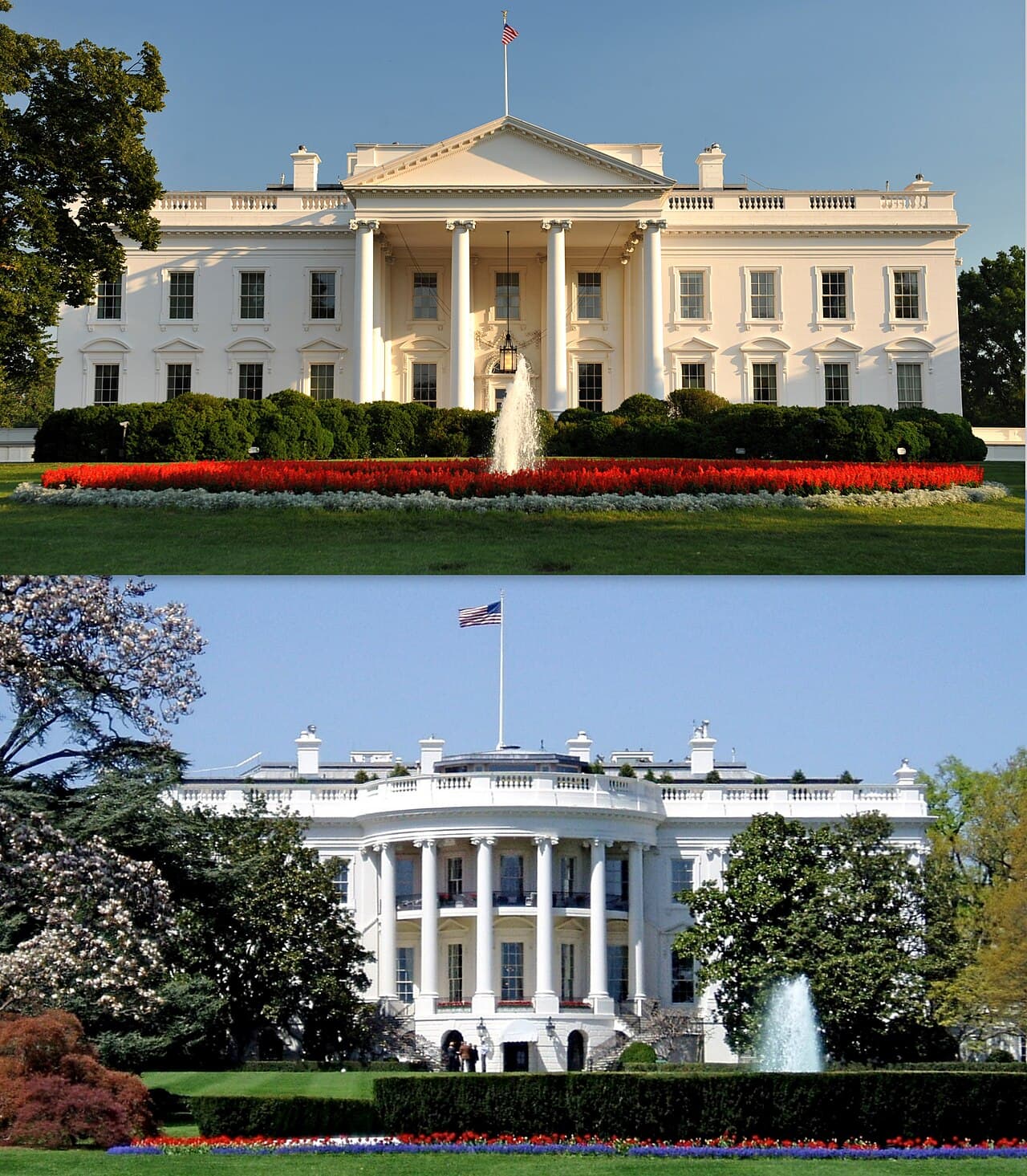
Image source: The White House, Washington D.C. — Wikimedia Commons, Public Domain