No Defense Is Perfect: 5 Shocks U.S. Defense Secretary Hegseth's Admission of Missile Interception Limits Sends to Korea's Air Defense and K-Defense Exports
U.S. Defense Secretary Pete Hegseth publicly admitted during the Iran-U.S. conflict that 'even the U.S. military cannot intercept every missile Iran fires.' Despite maintaining air dominance, this statement is simultaneously triggering a surge in K-defense demand, discussions on additional THAAD deployments, and an urgent review of Korea's air defense network.
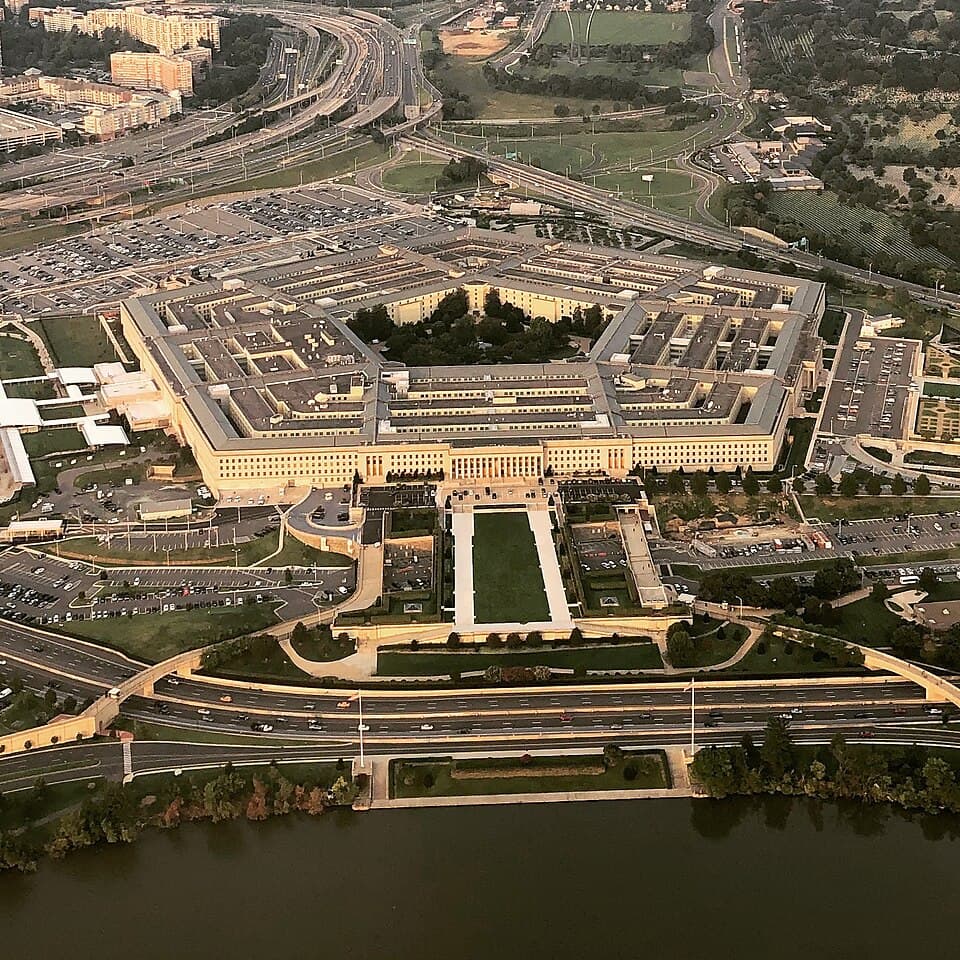
"We cannot stop everything Iran fires" — U.S. Defense Secretary Pete Hegseth
The world's most powerful military has admitted its own defensive limits. These words are simultaneously reshaping the trajectory of the Middle East war, the future of K-defense exports, and the security landscape of the Korean Peninsula.
TL;DR
- U.S. Defense Secretary Hegseth officially acknowledges that U.S. forces cannot intercept every Iranian missile
- Korea's Cheongung-II deployed in the UAE achieved a 90–96% interception rate against Iranian missiles in its combat debut
- U.S. admission of air defense saturation → simultaneously triggering requests for early K-defense deliveries and a surge in exports
- South Korea's Ministry of National Defense faces growing pressure to review additional THAAD deployment and Patriot reinforcement
- Experts warn: "If the U.S. is experiencing interception saturation, what about Korea's air defense?" — urgent review of peninsula security needed
The Facts: What Hegseth Actually Said
U.S. Defense Secretary Pete Hegseth told reporters in a recent briefing that "while U.S. forces maintain air dominance in the Middle East, intercepting every ballistic missile and drone Iran fires is impossible."
This is not mere humility. Following the U.S.–Israel airstrikes on Iran, as Iran's Islamic Revolutionary Guard Corps (IRGC) unleashed a volume offensive of ballistic missiles, cruise missiles, and drones, Hegseth effectively made the first official public acknowledgment that interception assets could be overwhelmed.
Middle East Air Defense by the Numbers (UAE Basis):
| Category | Detected | Intercepted | Interception Rate |
|---|---|---|---|
| Iranian Ballistic Missiles | 174 | 161 | 92.5% |
| Iranian Drones | 689 | 645 | 93.6% |
A 90%+ interception rate is impressive, but it also means 13 missiles out of 174 got through. Hegseth's statement was a direct acknowledgment of this reality.
Why This Statement Is Spreading So Explosively Right Now
There are three reasons this remark has sent shockwaves through the global security community.
- The myth of the 'invincible shield' has cracked: The U.S. air defense network — represented by Patriot, THAAD, and Aegis — had long been perceived as capable of stopping everything. An official denial of this is unprecedented.
- The reality of a volume offensive: One Iranian 'Shahed' drone costs roughly $20,000; one Patriot PAC-3 missile used to intercept it costs approximately $4 million. A 200:1 asymmetric cost war is underway.
- Korean-made weapons entering combat: With the Cheongung-II debuting at a 96% interception rate, not only the UAE but Saudi Arabia, Iraq, and Poland are now requesting early delivery.
Context and Background: What This Means for Korea
🇰🇷 Reality Check on Korea's Air Defense Network
Korea currently operates one U.S. THAAD battery (Seongju) and multiple Patriot PAC-3 batteries. Korea's indigenous assets include the Cheongung-II, which is in active deployment.
But Hegseth's statement raises a sharp question: What if North Korea fires hundreds of missiles simultaneously, just as Iran has done?
North Korea currently operates 600mm super-large multiple rocket launchers, the Hwasong-18 ICBM, and hypersonic missiles simultaneously. There has never been a public verification of how long Korea's defenses could hold in a simultaneous saturation scenario.
🏭 A 'Golden Ticket' for K-Defense
On the industrial side, however, this is a major tailwind.
- UAE: Requesting early delivery of Cheongung-II + in talks for additional battery purchases
- Saudi Arabia: Negotiations reportedly underway
- Poland: Defense investment accelerating following the Iran war; sharp rise in interest in the Cheongung system
- NATO Eastern European nations: Expanding air defense budgets amid dual lessons from the Russia-Ukraine and Iran wars
In particular, the Cheongung-II's value proposition — "96% interception rate at one-third the cost of Patriot" — is accelerating the purchasing timelines of nations whose interest in air defense has surged since Hegseth's admission.
Outlook: 5 Shock Scenarios
1️⃣ Growing Pressure for Redeployment of U.S. Air Defense Assets
Admission of interception saturation → increased likelihood of pressure for additional THAAD battery deployments in Korea and review of Aegis Ashore. Strategic judgment will be required from the Korean government.
2️⃣ Rapid Acceleration of Cheongung-II and L-SAM Exports
Combat validation + U.S. admission of saturation = optimal marketing conditions. Forecasts suggest K-defense export revenues could grow 40%+ year-over-year in 2026.
3️⃣ Redesigning the 'Economics of Defense'
The asymmetry of a $20,000 drone vs. a $4 million interceptor missile is unsustainable. Competition to develop low-cost countermeasures — laser weapons, electronic warfare systems — will accelerate.
4️⃣ Inevitable Expansion of Korea's Independent Air Defense Investment
Broader political and military consensus is expected to grow around reducing reliance on U.S. forces and building a self-sufficient multi-layered air defense network. Discussions on accelerating L-SAM mass production are possible.
5️⃣ Strengthening of the Iran War Prolongation Scenario
Hegseth's statement paradoxically gives Iran an incentive to keep firing missiles. With the calculus that '10% will get through,' Iran's strategy of a prolonged war of attrition is likely to continue.
Checklist: What You Should Verify Right Now
References
- Korean air defense system in UAE downs Iranian missile — The Korea Times
- UAE seeks faster delivery of Korean air defense system after reported 96% hit rate — The Korea Times
- UAE seeks early delivery of South Korea's Cheongung-II interceptor missiles — Korea Herald
- Korea's Cheongung-II Achieves 96% Hit Rate in Combat Debut in UAE — The Seoul Daily
- First Combat Use for South Korea's Cheongung II — Army Recognition
Image Source
- The Pentagon, U.S. Department of Defense — Wikimedia Commons, Public Domain