A Mistake Repeated 4 Times: The Warning the Milan Olympics' Wrong Taegeukgi Sent to International Sports Administration
At the 2026 Milan-Cortina d'Ampezzo Winter Olympics short track speed skating medal ceremonies, a defective Taegeukgi with the taeguk symbol rotated counterclockwise was displayed no fewer than four times. Following an official protest from the Korean Sport & Olympic Committee (KSOC), the IOC and organizing committee issued an apology, but the repeated errors exposed the structural flaws in national symbol management at international sporting events.
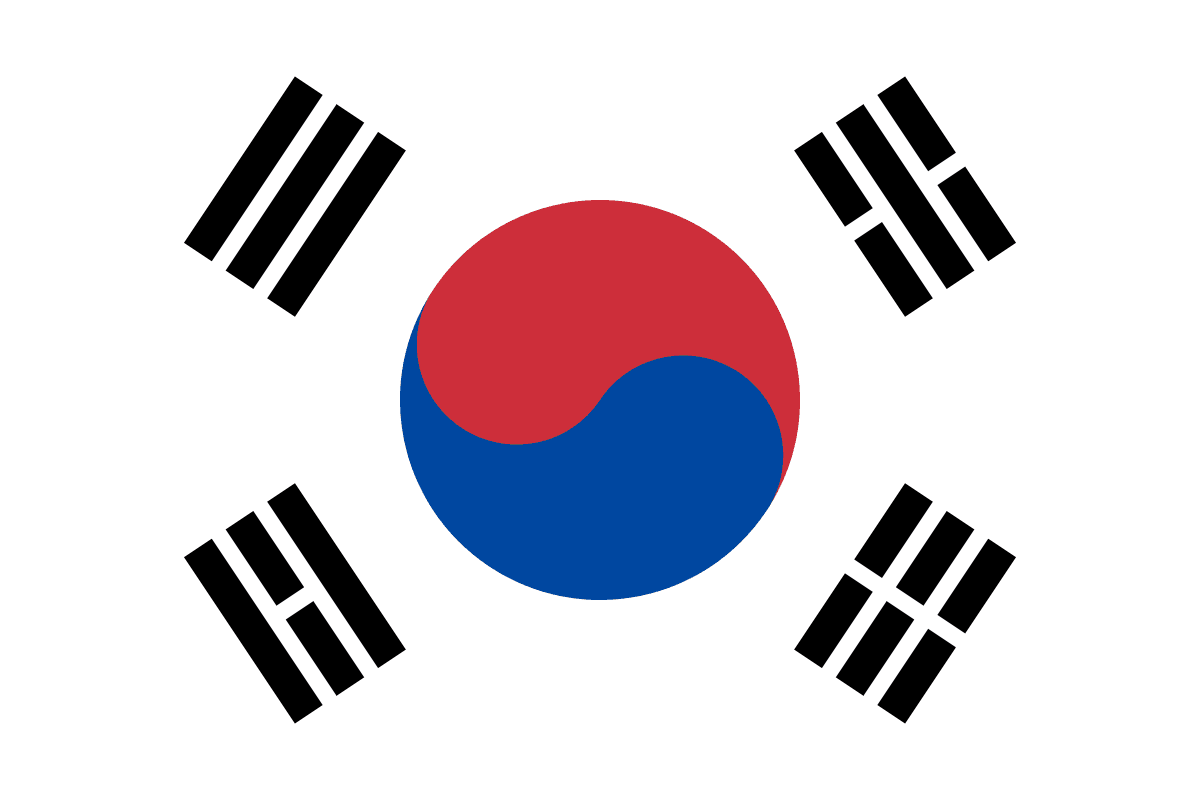
Why you should care: At the very moment athletes stood on the gold medal podium, the Taegeukgi raised was 'wrong.' This mistake — repeated four times — is raising serious questions about how national symbols are managed on the international sporting stage.
TL;DR
- At the 2026 Milan Winter Olympics short track speed skating medal ceremonies, a defective Taegeukgi with the taeguk symbol rotated counterclockwise was used 4 times.
- The Korean Sport & Olympic Committee (KSOC) filed an official protest with the IOC and the organizing committee; the IOC immediately apologized and promised to correct the error.
- Although it appears to be a simple printing mistake, the fact that the same error was repeated has put the structural problems in administrative and quality-control systems under the spotlight.
- The Taegeukgi is one of the most complex national flags in the world, with strict regulations governing its accurate production.
What Happened — The Facts
On February 13, 2026, at the Milan Ice Skating Arena, Im Jong-eon won a bronze medal in the men's 1000m short track speed skating final. As he stepped onto the podium, spectators and broadcasters watched a large Taegeukgi being raised — but this flag did not conform to official specifications.
The problem: The central taeguk (the red and blue yin-yang symbol) was printed rotated counterclockwise compared to the official standard.
The error did not end there.
| Date (local time) | Medal ceremony | Athlete | Medal |
|---|---|---|---|
| February 13 | Short track men's 1000m | Im Jong-eon | Bronze |
| February 15 | Short track men's 1500m | Hwang Dae-heon | Silver |
| February 16 | Short track women's 1000m | Kim Gil-li | Bronze |
| February 19 | Short track women's 3000m relay | Korean team | Gold |
The same defective Taegeukgi was used four consecutive times. Most notably, the women's 3000m relay ceremony was a gold medal ceremony.
How It Spread — The Viral Mechanism
Videos from the February 19 gold medal ceremony — where Choi Min-jeong, Kim Gil-li, Noh Do-hee, Shim Suk-hee, and Lee So-yeon stood on the podium — spread across social media and news outlets, making the flag error widely known for the first time.
Sharp-eyed netizens pointed out the incorrect angle of the taeguk symbol, and sports media outlets quickly followed up, triggering an explosive spread of the 'wrong Taegeukgi' controversy.
On February 20, the KSOC issued an official statement: "We have filed an official protest with the IOC and the organizing committee regarding the display of an inaccurate Taegeukgi at the short track venue medal ceremonies, and have requested immediate corrective action."
The IOC and the Milan-Cortina d'Ampezzo organizing committee immediately acknowledged the error and issued an apology. The correct Taegeukgi was displayed at subsequent medal ceremonies.
Context and Background — Why Is the Taegeukgi So Difficult?
The Taegeukgi is one of the most design-complex national flags in the world. Behind its seemingly simple white background, every element is strictly regulated:
- Taeguk symbol: Red (yang) on top, blue (yin) on bottom. Precise 15-degree rightward tilt
- Four trigrams (geon, gon, gam, ri): The placement and orientation at each corner are stipulated by law
- Proportions: Width-to-height ratio of 3:2; taeguk diameter equals half the flag's height
It is an open secret that even Koreans find it difficult to draw the Taegeukgi accurately by hand. For international events, the standard procedure is for the KSOC to provide the IOC with an officially approved digital design file.
"We provide the organizing committee with the official government-approved Taegeukgi design file and national anthem audio for every Olympic Games."
— Official KSOC statement
This means the error was likely not a file-production mistake, but rather an administrative error in which the correct file that had been provided was not used.
Outlook — How Long Will This Last?
Short-term: The Taegeukgi controversy at the Milan Olympics is moving into the wrap-up phase after the Games closed on February 23. With the IOC apology secured, the likelihood of this escalating into a diplomatic dispute is low.
Medium-term: Calls for strengthened national symbol verification procedures at future international sporting events — including the 2030 Winter Olympics in the French Alps — are expected to continue. Within the KSOC, discussions about deploying on-site management personnel and establishing pre-inspection manuals are anticipated.
Structural issue: Large-scale international sporting events must simultaneously manage the flags and anthems of hundreds of countries. The more complex a flag — like the Taegeukgi — the greater the risk of error. Voices demanding that flag inspection processes be formally codified in international event operating standards will grow louder.
Checklist — Key Points for Understanding This Issue
Reference Links
- Seoul Shinmun — 4 Times the 'Wrong Taegeukgi' at Milan…IOC Raises Correct Flag After Apology
- Yonhap News (English) — IOC apologizes after South Korean flag displayed incorrectly at medal ceremony
- Korea Times — IOC apologizes after South Korean flag displayed incorrectly
- Korea Herald — Wrong flag at Olympics? Why the Taegeukgi is tricky — and how to get it right
Image source: Flag of South Korea (Taegeukgi) — Wikimedia Commons, Public Domain