"Put Judges in Prison": Law Distortion Crime Vote D-Day — Why the Supreme Court Called It a "Constitutional Amendment-Level" Change
On February 27, 2026, the National Assembly votes on the 'Law Distortion Crime' bill, which would criminally prosecute judges who deliberately distort or misapply the law in trials. The Supreme Court Chief Justice opposes it as 'unconstitutional and equivalent to a constitutional amendment,' while the opposition labels it a 'judicial censorship system.' The Democratic Party is expected to push it through unilaterally.
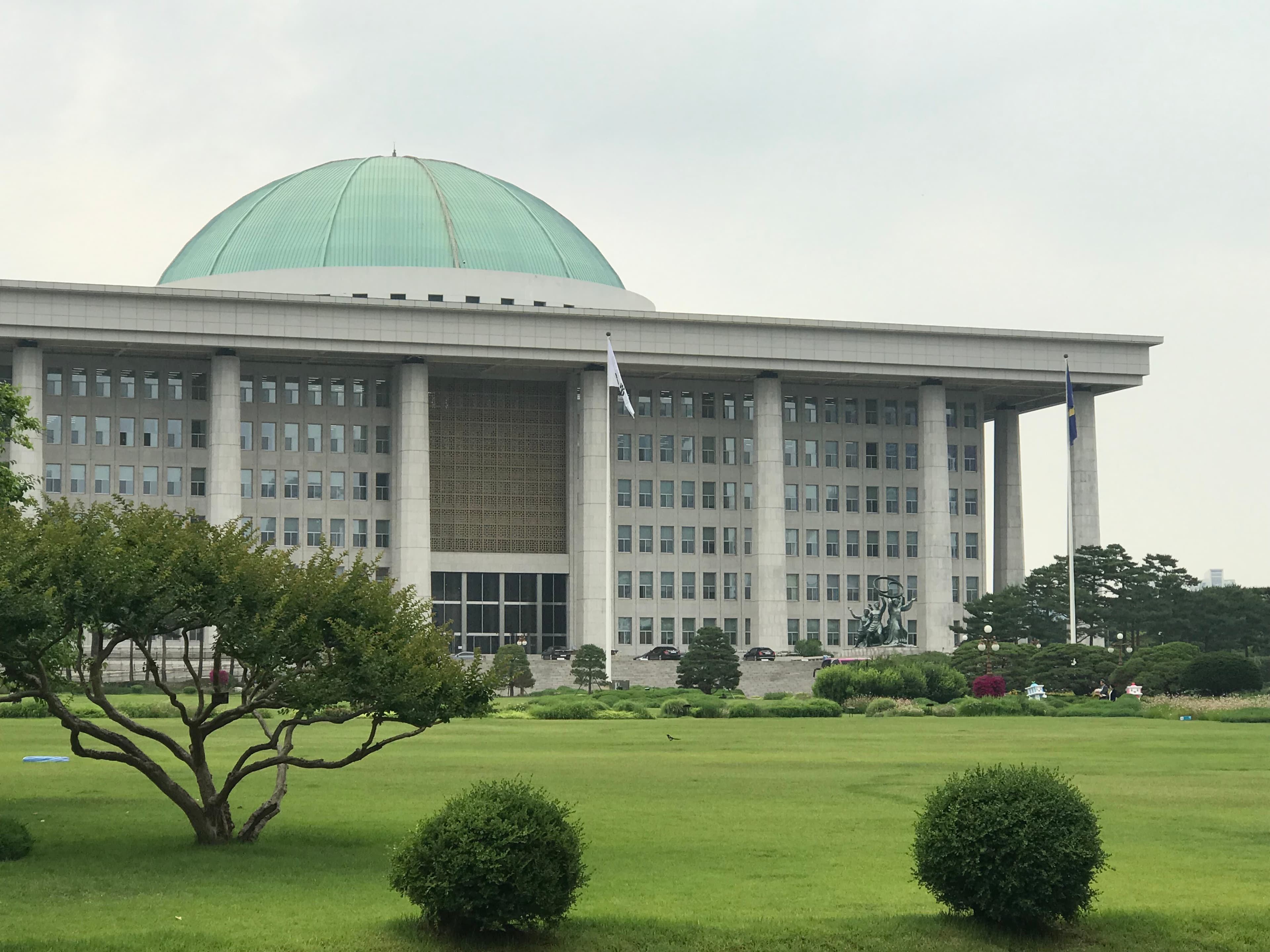
Why you need to read this now: Today (February 27), the National Assembly votes on the 'Law Distortion Crime' bill. This legislation — which would allow criminal prosecution of judges — is unprecedented in judicial history: the Supreme Court has called it a "constitutional amendment-level change," and emergency meetings of chief judges nationwide have been convened.
TL;DR
- The Democratic Party forced a vote on the Law Distortion Crime (Criminal Code Amendment) on February 27, 2026.
- If passed, judges who deliberately distort or misapply the law in trials could face up to imprisonment.
- Supreme Court Chief Justice Jo Hee-dae strongly opposed it, calling it "a constitutional amendment-level change that violates the separation of powers."
- The opposition party (People Power Party) attempted a filibuster labeling it "de facto judicial censorship" — but was blocked.
- If enacted, concerns about erosion of judicial independence and chilling effects on verdicts become reality.
📌 The Facts: What Happened
What Is the Law Distortion Crime?
Rechtsbeugung (Law Distortion Crime) is a concept originating from German criminal law. It criminalizes judicial officials — judges, prosecutors, and investigators — who deliberately distort or misapply the law during trials or investigations to reach unlawful conclusions.
The Korean version being pursued by the Democratic Party:
- Scope: Judicial officials including judges, prosecutors, and investigators
- Elements: Deliberately distorting the meaning of statutes during proceedings to reach unjust conclusions
- Penalty: Up to 7 years imprisonment
- Note: Controversy over possible retroactive application to final verdicts
Legislative Timeline
| Date | Event |
|---|---|
| 2026.02.24 | Democratic Party announces forced processing of 3 judicial reform bills (Law Distortion Crime · expansion of Supreme Court justices · constitutional complaint against rulings) |
| 2026.02.25 | Supreme Court Chief Justice Jo Hee-dae convenes emergency nationwide chief judges meeting — issues statement calling it "unconstitutional and a change of constitutional amendment magnitude" |
| 2026.02.26 | Opposition (PPP) attempts filibuster → blocked by Democratic Party (debate time limits imposed) |
| 2026.02.27 | Scheduled for passage through judiciary committee and full plenary vote |
🔥 Why It Became Explosive: The Spread Mechanism
"Punish the Judges Who Acquitted Yoon Suk-yeol"
The direct catalyst for the Law Distortion Crime legislation was court proceedings related to former President Yoon Suk-yeol in 2025–2026. When some judges issued dismissals or not-guilty rulings, opinion — concentrated among Democratic Party supporters — formed that "judges distorted the law to reach political conclusions."
- Social media spread: Posts exposing judges' names went viral on X (Twitter) and YouTube
- Petition: Over 300,000 signatures on the National Assembly petition → accelerated referral to the agenda coordination committee
- Media: Democratic Party-aligned YouTube channels repeatedly broadcast 'lists of law-distorting judges'
The Supreme Court's Fierce Response
Chief Justice Jo Hee-dae used unusually strong language at the February 25 emergency nationwide chief judges meeting:
"This is not a mere statutory amendment — it constitutes a constitutional revision that fundamentally undermines the judicial independence guaranteed by the Constitution. If judges must watch out for higher authorities — and, by extension, the political sphere — judicial independence ceases to exist."
🗺️ Context and Background: Global Comparison
Differences from Germany's Rechtsbeugung
Germany's Criminal Code §339 (Rechtsbeugung):
- Historical application: Strengthened to punish illegal rulings from the Nazi era
- Practical application: Only a handful of convictions over decades — courts interpret it very strictly
- Core requirement: Must simultaneously satisfy both 'manifest violation of law + intent'
The most significant difference with the Korean version is that the standard for proving intent is designed to be lower. Within the judiciary, concerns have arisen that "under this standard, even a judge who writes a dissenting opinion could be subject to prosecution."
History of South Korea's Judicial Independence
Since the democratization of 1987, the judiciary has secured independence from the executive branch in personnel and budget matters. However:
- In 2017, the Yang Seung-tae Supreme Court judicial manipulation scandal badly damaged public trust in the judiciary
- Judicial reform discussions have continued since, but moving as far as 'criminal prosecution of judges' is unprecedented
📊 Stakeholder Analysis
| Party | Position | Reason |
|---|---|---|
| Democratic Party | In favor · forcing through | Strengthening judicial accountability, reflecting supporter sentiment |
| People Power Party | Opposed · filibuster | Undermining separation of powers, concerns about judicial censorship |
| Supreme Court · Judges Association | Strongly opposed | Chilling effect on verdicts, potential constitutional violation |
| Prosecutors Association | Partially opposed | Concerns about chilling effect on investigations if prosecutors included |
| Civil groups (progressive) | In favor | Grounds for eliminating unlawful rulings |
| Civil groups (conservative · legal circles) | Opposed | Violation of the principle of judicial independence |
🔭 Outlook: How Far Will This Go?
Scenario A — Passes Full Plenary Vote Today
- Democratic Party unilateral passage → immediate constitutional complaint expected
- If the Constitutional Court grants an injunction to suspend effect, implementation delayed
- Immediate possibility of judges engaging in self-censorship, chilling effect on verdicts
Scenario B — Opposition Filibuster Succeeds / Delayed
- Full plenary schedule delayed → carried over to March extraordinary session
- Pressure from Democratic Party supporters continues, making eventual passage likely
Long-Term Impact
- Legal ecosystem: Chilling of independent rulings → decline in acquittal rates, concentration of appeals at higher courts
- Political exploitation: Concerns about reverse use to target opposing-camp judges after a future change of government
- Constitutional Court ruling: Decision on constitutionality expected within 6–12 months of passage
✅ Checklist: What to Watch Now
🔗 References
- Supreme Court Chief Justice's Nationwide Chief Judges Meeting Statement (2026.02.25) — Chosun Ilbo
- Law Distortion Crime Amendment Bill Full Text — National Assembly Bill Information System
- Germany's Rechtsbeugung (§339) vs. Korean Bill Comparison — Lawtimes Korea
- Democratic Party's Judicial Reform 3-Bill Progress — Hankyoreh