Semiconductor-Driven Inflation: What Korea's 5th Consecutive Month of Producer Price Increases Reveals About the New Source of 2026 Inflation
South Korea's January Producer Price Index (PPI), released by the Bank of Korea on February 24, 2026, rose for the fifth consecutive month. Semiconductor prices, including DRAM and flash memory, surged 13.6% month-on-month, driving the increase — signaling direct ripple effects on consumer prices and monetary policy.
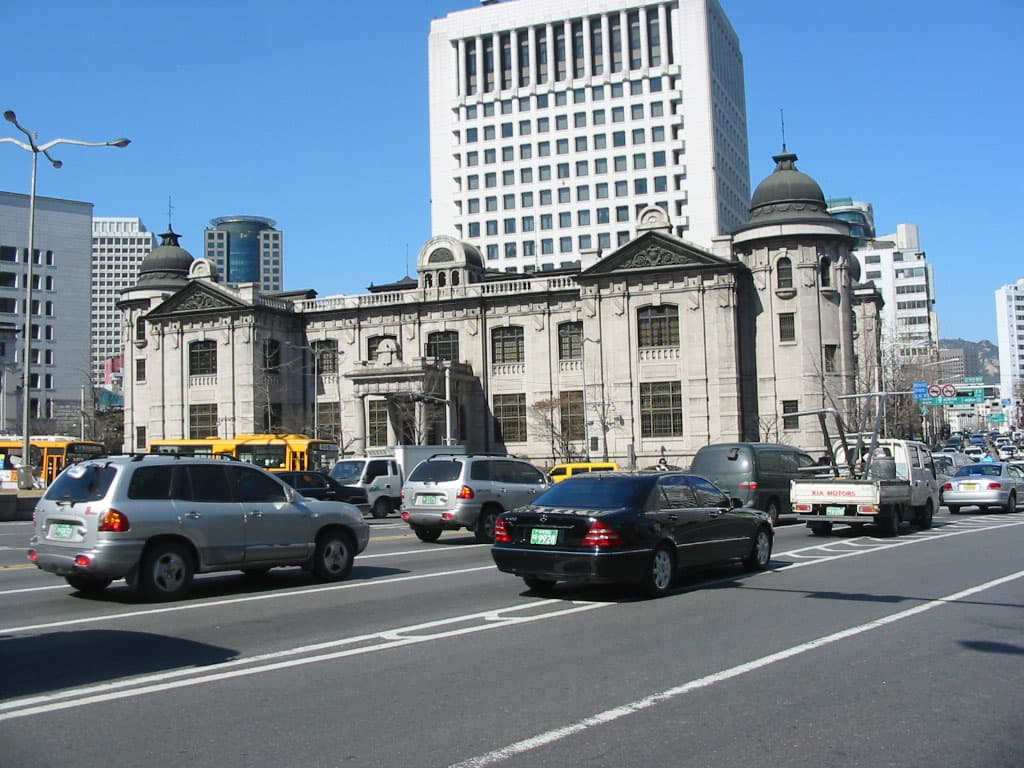
Image credit: Wikimedia Commons — Bank of Korea main building, Seoul (Public Domain)
Why this matters now: The semiconductor super-cycle has been pushing factory-gate prices higher for five straight months. When this trend reaches consumers' wallets will be the defining variable shaping South Korea's interest rate path in 2026.
TL;DR
- The Bank of Korea's January Producer Price Index (PPI), released February 24, 2026: +0.6% month-on-month, rising for 5 consecutive months
- Key drivers: Semiconductor prices +13.6% (DRAM & flash memory), agricultural products +0.7%, financial service fees up
- +1.9% year-on-year — same pace as the prior month
- Domestic supply prices (including import prices) have risen for 6 consecutive months due to prolonged high exchange rates
- Growing pressure on the Bank of Korea to keep its benchmark rate on hold
The Facts: What Is Going Up?
January PPI Breakdown
| Category | Month-on-Month Change | Key Items |
|---|---|---|
| Industrial goods (overall) | +0.6% | Semiconductors, primary metals |
| Computers, electronics & optical equipment | +1.8% | DRAM, flash memory |
| Primary metal products | +3.0% | Steel |
| Agricultural & fishery products | +0.7% | Apples, napa cabbage, etc. |
| Livestock products | Up | Impact of ASF outbreaks |
| Services | Up | Financial service fees |
Producer prices have risen without a single decline for five consecutive months since turning positive in September 2025. The +1.9% year-on-year rate remains at its highest level since July 2024 (+2.6%).
Why Semiconductors Are Driving Inflation
The Semiconductor Super-Cycle Paradox
South Korea commands roughly 70% of the global DRAM market. When semiconductor exports surge — semiconductors were up +134% in the first 20 days of February — domestic shipment prices follow suit, feeding directly into producer price statistics.
Export boom → Domestic supply scarcity → Factory-gate price increase → PPI rises
The Double Pressure of a Weak Won
With the KRW/USD exchange rate holding near multi-year highs, imported raw material costs are rising in tandem. Domestic supply prices (PPI + import prices) have already increased for 6 consecutive months. This signals growing pass-through pressure onto consumer prices in areas such as processed foods, dining out, and energy.
Simultaneous Rise in Agricultural & Livestock Prices
Wildfires in South Gyeongsang Province (Hamyang and Miryang) in February 2026 and the country's 20th confirmed case of African Swine Fever (ASF) have disrupted agricultural and livestock supply. Fresh food prices — including apples and napa cabbage — also rose from the prior month, meaning factors beyond industrial goods are compounding inflation pressures from multiple directions.
Context: How Is the Bank of Korea Responding?
When producer prices rise for five consecutive months, they are typically passed through to consumer prices with a 3–6 month lag. The Bank of Korea currently has its benchmark rate on hold; if price pressures persist, room for a rate cut narrows.
Bank of Korea Governor Lee Chang-yong stated in early February that "uncertainty around the inflation path is significant," signaling a cautious stance on further rate cuts.
Outlook: How Much Further Could Prices Rise?
Factors Supporting Further Increases
- Surging AI demand: HBM (High Bandwidth Memory) demand is expected to keep growing through 2026
- Sustained high exchange rate: If dollar strength continues, import price pressures will persist
- Trump tariffs: New U.S. tariff measures could raise global supply chain costs
Factors That Could Ease Pressure
- Expanded memory supply: Samsung and SK Hynix production increase plans could help stabilize prices in the second half of the year
- Agricultural seasonality: Fresh food prices expected to stabilize after the spring harvest season
- Weak domestic demand: Sluggish consumption limits companies' ability to pass on cost increases
Checklist: Key Indicators to Watch
Reference Links
- Sisa Journal — Producer prices rise for 5th consecutive month, led by semiconductors and agricultural goods
- Market In (Edaily) — Producer prices rise for 5th month on semiconductor and stock trading fee increases
- Yonhap Infomax — Semiconductor prices up 13.6% in January, driving 5th consecutive month of PPI gains
- JoongAng Daily — Producer prices rise for 5th consecutive month on high chip costs: BOK
Note on images: The Bank of Korea's official statistical charts are protected by copyright and cannot be directly embedded. The Bank of Korea headquarters building photograph (Wikimedia Commons CC BY-SA 3.0) has been used as the representative image.