"Permanently Excluded from the Category of Compatriots": The 9th Workers' Party Congress's Final Declaration of South Korea as 'Eternal Enemy' and the Lee Jae-myung Government's Dilemma
At the closing speech of the 9th Workers' Party Congress (Feb. 19–25), Kim Jong-un officially designated South Korea as "the most hostile entity, a thorough enemy state, and eternal enemy," warning of "complete destruction" if threatened. By leaving conditional room for dialogue with the U.S. contingent on nuclear status recognition, he openly pursued a dual strategy to drive a wedge between the South Korea–U.S. alliance.
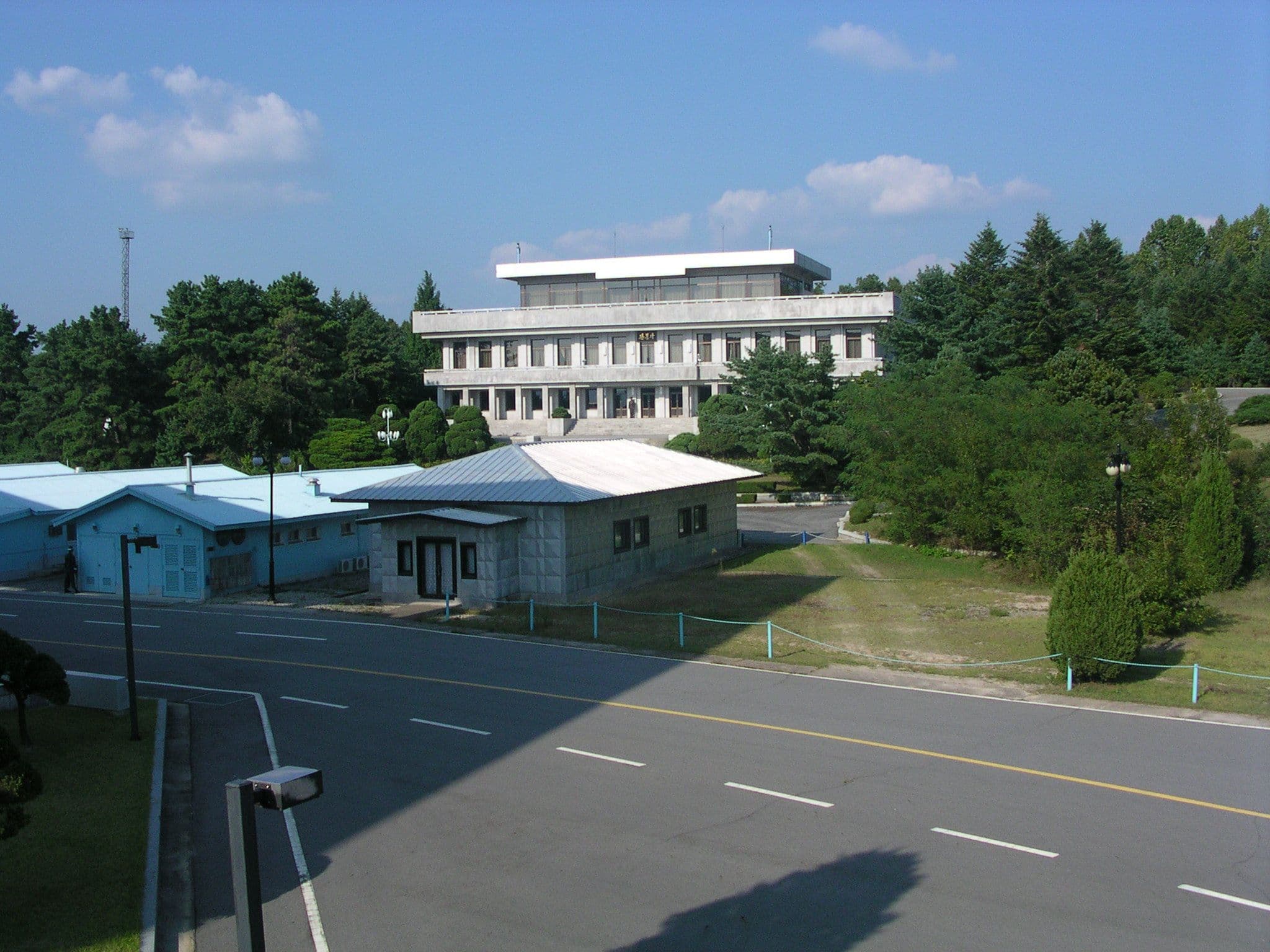
Why you should pay attention now: On February 25, 2026, North Korea's supreme political event held once every five years — the Workers' Party Congress — concluded. Kim Jong-un's declaration of South Korea as an "eternal enemy" in his closing speech is not a fleeting rhetorical flourish. It is a constitutional and institutional declaration officially enshrined as party policy.
TL;DR
- Kim Jong-un, at the closing speech of the 9th Workers' Party Congress (Feb. 19–25), designated South Korea as "the most hostile entity, a thorough enemy state, and eternal enemy"
- "Permanently excluded from the category of compatriots" — the definitive conclusion of the "Two Hostile States Theory" first introduced in January 2024
- Left conditional room for dialogue with the U.S. contingent on nuclear state recognition and withdrawal of hostile policies, blatantly revealing a strategy to separate Seoul from Washington
- President Lee Jae-myung expressed a stance of "pursuing peaceful coexistence," making Seoul's conciliatory approach toward the North far more complicated
- Experts: "This declaration is party policy, not rhetoric — the possibility of resumed dialogue is effectively eliminated"
What Happened: The Facts
North Korea held the 9th Congress of the Korean Workers' Party at the April 25 Culture Hall in Pyongyang from February 19 to 25, 2026. Held every five years, this congress is the supreme body for determining the party's policies, lines, and personnel.
In his closing speech on the 25th, General Secretary Kim Jong-un made the following statements regarding South Korea:
"The Democratic People's Republic of Korea has absolutely nothing to discuss with the Republic of Korea, the most hostile entity, and will permanently exclude Korea from the category of compatriots."
"Our resolve and will to treat South Korea as a thorough enemy state and eternal enemy is firm and conclusive."
Kim also dismissed the current Lee Jae-myung government's conciliatory attitude as "a clumsy deception and an inferior work," accusing South Korea of provoking violations of airspace with drones. He also warned that South Korea could be "completely destroyed" if threatened (reported by Fox News, NY Post, and KBS World on Feb. 26).
In contrast, regarding the United States, he left conditional room for dialogue, stating "if nuclear state status is recognized and hostile policies are withdrawn, we are prepared for peaceful coexistence."
Why It Went Viral: The Spread Mechanism
There are three reasons why this statement topped South Korea's real-time search rankings on February 26, 2026:
- Formalized as official party policy: The shock is significant because, two years after Kim Jong-un first publicly mentioned the "Two Hostile States Theory" in January 2024, the highest-authority party congress has confirmed it as an irreversible conclusion.
- First Workers' Party Congress since the Lee Jae-myung government took office: There had been expectations for the resumption of inter-Korean dialogue following the impeachment of former President Yoon Suk-yeol, making Kim Jong-un's message directly refuting this all the more striking by contrast.
- The blatant exposure of the Korea–US separation strategy: The intent to drive a wedge into the Korea–US alliance by simultaneously sending the message of "eternal enemy" to South Korea and "dialogue possible" to the US became unmistakable.
Context and Background
The Evolution of the Two Hostile States Theory
| Timeframe | Development |
|---|---|
| December 2023 | Party Plenary Session: Declared shift in North–South policy to "South Korea = hostile two-state relationship" |
| January 2024 | Supreme People's Assembly: Ordered inscription of "Republic of Korea = No. 1 enemy state, permanent principal enemy" in the constitution |
| February 2026 | 9th Workers' Party Congress: Final confirmation of "permanently excluded from compatriot category · eternal enemy" as party policy |
This declaration is not a one-off statement — it is the culmination of a three-year incremental process of hostility.
Connection to Nuclear Strategy
Kim Jong-un reaffirmed the expansion of tactical nuclear weapons and development of next-generation ICBMs at the 9th Congress. By designating South Korea as an "enemy state" rather than "compatriots," analysts suggest he has completed the legal and ideological foundation to justify threats of nuclear use against South Korea.
Stakeholder Analysis
The Lee Jae-myung Government (South Korea): Since taking office in 2025, it has consistently sent conciliatory messages toward the North. This declaration fundamentally undermines the "dialogue first, denuclearization later" policy. The Ministry of Foreign Affairs expressed "deep regret" on February 26 while maintaining its stance of "pursuing peaceful coexistence."
The United States (Trump Administration): Interestingly, President Trump recently signaled openness to dialogue with Kim Jong-un. North Korea's decision to leave conditional room for dialogue with the US reads as a strategic move to capitalize on this context.
China: While heightened tensions on the Korean Peninsula conflict with China's interests, North Korea's expanding independent military posture also has the effect of suppressing the strengthening of the Korea–US alliance, creating a complex calculus.
Outlook: How Long Will This Last?
Long-term (3+ years): Since this declaration has been confirmed as party policy, the possibility of short-term reversal is nearly nonexistent. The political cost for North Korea to show substantive policy change is too high.
Short-term derivative issues:
- Rising possibility of North Korean military provocation during the Korea–US Freedom Shield Exercise scheduled for March 9–19
- Reignition of the conflict between South Korea's hardline-versus-conciliatory approaches toward the North
- Pressure on the Lee Jae-myung government for a comprehensive review of its North Korea policy
- Possible acceleration of Korea–US extended deterrence discussions
Risk: The greatest risk factor is that the inter-Korean relationship could shift from "manageable hostility" to "uncontrollable hostility," with the possibility of unintended military confrontation increasing in the process.
Checklist: Key Points to Watch Going Forward
References
- Hankyoreh: Kim Jong-un "South Korea, eternal enemy"...Prepared for peaceful coexistence with US
- Chosun Ilbo English: Kim Jong-un Declares South Korea Eternal Enemy, Threatens Collapse
- Al Jazeera: North Korea's Kim Jong Un warns South Korea, says US should end hostility
- KBS World: Kim Jong-un Shuns Ties with South Korea But Leaves Door Open for US
- MK: Kim Jong-un "South is thorough enemy state, eternal enemy"
Image Credit
- Panmunjom Joint Security Area (JSA) photo: Wikimedia Commons, Public Domain