3.5 Months of Waiting, March 1st Return: Why the Hangang Bus Full-Route Reopening Is Changing Seoul's Water Transport Landscape
After 3.5 months of partial operation following a grounding accident last November, the Hangang Bus will resume full-route service starting March 1 (Independence Movement Day). Seoul City, having completed 38 safety measures including channel dredging and buoy replacement, has unveiled its blueprint to develop the Hangang Bus into a core urban water transport and tourism infrastructure.
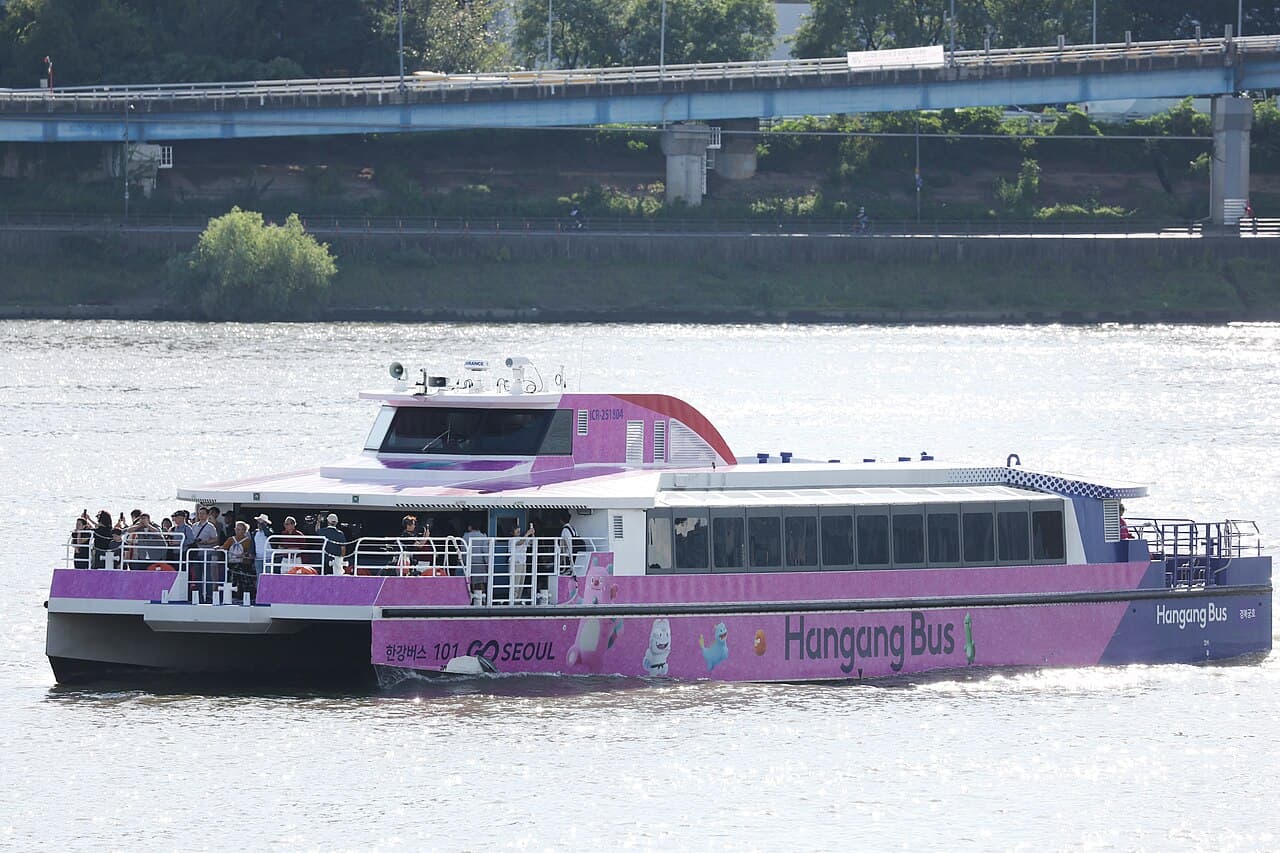
The Hangang Bus returns after 3.5 months — and we examine what its March 1st relaunch, timed with Independence Movement Day, really means.
TL;DR
- Hangang Bus suspended all routes after a grounding accident on November 15, 2025
- Seoul City officially confirmed full-route service resumption from March 1, 2026 (announced Feb. 25)
- 36 of 38 safety measures — including channel dredging and buoy replacement — have been completed; the remaining 2 are underway
- Full route from Magok to Yeouido, Jamsil, and Amsa restored; daily departures to increase
- Seoul City aims to establish water transport and tourism infrastructure in earnest as the spring tourist season begins in March
What Happened: From Accident to Resumption
The Hangang Bus is an ambitious water public transit system introduced by Seoul Mayor Oh Se-hoon under his vision of transforming the Han River from a river to "look at" into a river to "use." It officially launched in the fall of 2025, but faced difficulties almost immediately. On November 15, 2025, a Hangang Bus vessel ran aground on its route, effectively halting all-route operations. Afterward, only the Magok–Mangwon–Yeouido segment continued in limited capacity, while routes upstream of Hannam Bridge were cut off.
The Ministry of the Interior and Safety formed a joint public-private inspection team that identified a total of 120 points of concern, and Seoul City spent months working through them. Although January 2026 was originally announced as the resumption date, additional remediation demands from the ministry pushed the schedule back, and full-route resumption on March 1 was ultimately confirmed.
Why March 1?
March 1 is Independence Movement Day — a public holiday. With citizens out in force and early spring drawing people to the Han River, demand for riverside outings surges. From Seoul City's perspective, choosing March 1 was a strategic move to maximize the message of "Resumption = Opening of the Spring Han River Tourism Season."
Mayor Oh Se-hoon stated on February 23: "There were early teething problems, but the Hangang Bus, with its shortcomings addressed, will resume service in March. I am confident it will receive tremendous love from Seoul citizens."
What Changes: Safety Measures & Routes
Safety Enhancements
| Item | Details | Status |
|---|---|---|
| Channel dredging | Water depth secured in grounding zones | Completed |
| Buoy replacement | Full replacement of route-marking buoys | Completed |
| Additional pier lights installed | Enhanced safety for nighttime navigation | In progress |
| Bridge light flashing pattern changed | Improved to prevent confusion | In progress |
| Emergency response system | Passenger evacuation drills and equipment reinforcement | Completed |
Of the 120 flagged items, 89 or more — including all safety-critical ones — have been completed, with the rest to be addressed within the stipulated deadline.
Route Restoration
- Previous (limited operation): Magok ↔ Mangwon ↔ Yeouido (south of Hannam Bridge)
- After resumption (full route): Magok ↔ Mangwon ↔ Yeouido ↔ Hannam ↔ Ttukseom ↔ Jamsil ↔ Amsa — full route restored
Why It's Trending Now
- Growing interest in public transit alternatives: Worsening traffic congestion in Seoul has raised demand for alternative transportation.
- Spring outing season: The surge in Han River Park visitors from March aligns with renewed attention to the combined value of "water transit + tourism."
- Expected social media virality: Photos and videos of Hangang Bus rides already went viral at launch — social spread after resumption is widely anticipated.
- Seoul tourism content: There is potential to package the service as a "Seoul Han River boat tour" product targeting foreign visitors.
Context & Background: Why Was the Hangang Bus Created?
The Hangang Bus project was actively pursued during Mayor Oh Se-hoon's current term, beginning in 2022. As part of urban regeneration and Han River Renaissance 2.0, it aims to function not merely as water tourism but as an actual public transit route. Stops were designed to connect with existing bus and subway transfer hubs, and electric and hybrid vessels were introduced to meet climate goals.
However, practical challenges emerged — including the Han River's variable water depth, operational suspensions due to heavy rainfall and rising water levels, and lower-than-expected initial ridership — drawing criticism that the project was "too idealistic an experiment."
Outlook: The Real Test Comes After Spring
The true test for the Hangang Bus begins after the full-route resumption on March 1.
- Ridership: The key question is whether it can rebuild expectations that dipped below those at launch.
- Seasonal variables: Suspension during summer downpours and rising water levels remains uncertain.
- Fares & transfers: Whether the service is integrated into Seoul's transportation card system will significantly affect convenience.
- Tourism packaging: Seoul City is reviewing the introduction of a "Hangang Bus Tour Package" targeting foreign visitors.
Seoul City plans to gradually pursue expanded routes, nighttime service, and foreigner-exclusive tourism routes based on ridership data accumulated after March.
Checklist: What to Know Before You Board
References
- Hangang Bus to Resume Full-Route Operations from March 1 — Electronic Times (Feb. 25, 2026)
- Hangang Bus Full-Route Resumption from March 1 — Money Today (Feb. 25, 2026)
- Oh Se-hoon: 'Early setbacks aside, improved Hangang Bus to resume in March' — Herald Economy (Feb. 23, 2026)
Image Credit
- 한강버스 서울 수상버스 (Wikimedia Commons, CC BY-SA 4.0, Republic of Korea / Korea.net)