19 Years in the Making: South Korea Moves to Conditionally Approve Google's High-Precision Map Export — Naver and Kakao's Map Throne Is Shaking
After 19 years of national security-based rejections, the South Korean government is moving to conditionally approve Google's request to export high-precision map data (1:5,000 scale). Driven by U.S. pressure to dismantle non-tariff barriers, this landmark decision is poised to upend the domestic map service market long monopolized by Naver and Kakao.
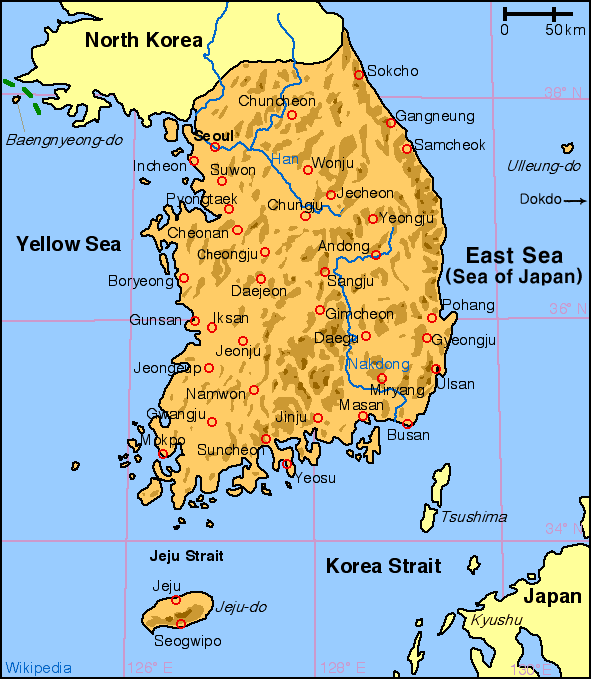
🔥 Why You Should Pay Attention Now: The 19-year battle between Google and the South Korean government over map data — which began in 2007 — is effectively coming to a close with Google on the winning side. This is a historic turning point: for the first time, the domestic map market, long dominated by Naver and Kakao, is opening up to global Big Tech.
TL;DR
- The government is moving to conditionally approve Google's request to export high-precision map data (1:5,000 scale).
- The condition: security facility masking must be performed exclusively on servers operated by domestic companies.
- This marks a major policy shift, coming 19 years after Google first made the request in 2007.
- A key catalyst: the U.S. strongly pressured Korea during bilateral tariff negotiations to remove non-tariff barriers.
- For the first time, the domestic map service market — long monopolized by Naver and Kakao — is being opened to a foreign company.
The Facts: What Happened
Closing the Book on a 19-Year Dispute
Since 2007, Google has been requesting that the South Korean government allow the export of 1:5,000 high-precision map data — a level of detail that represents 50 meters of real-world distance as 1 centimeter on a map. This precision is essential for autonomous driving, AI navigation, and AR services.
The Korean government consistently refused on national security grounds, arguing that having precise location data for military bases, the presidential residence, and key national facilities stored on foreign servers posed a security threat.
The government's previous position was straightforward: if Google built a data center in Korea, the export would be permitted. Google, however, declined to establish a Korea-dedicated data center, citing its global infrastructure policy.
The Terms of Conditional Approval
On February 26, 2026, multiple outlets including the Dong-A Ilbo, SBS, and Yonhap News TV simultaneously reported a policy reversal. Key details:
- Approval direction: Conditional permission for high-precision map export
- The compromise: Instead of requiring Google to build its own data center, security facility masking would be performed on servers operated by domestic companies (Naver, Kakao, etc.) before export
- Governing authority: Final decision to be made by an inter-ministerial consultative body led by the Ministry of Land, Infrastructure and Transport
- Presidential Office's stance: Cautious, stating the matter "should be decided through discussion among relevant ministries"
The Final Decision Is Not Yet Official
Importantly, this is not yet confirmed policy. The consultative body has not reached a final conclusion, and the Presidential Office is maintaining a cautious stance. However, multiple government sources have confirmed that the direction toward conditional approval has been set — making this effectively a done deal in all but formal announcement.
Why This Is Happening Now
U.S. Pressure on Non-Tariff Barriers
The backdrop of this decision is the Korea-U.S. trade negotiations. U.S. Trade Representative Jamieson Greer reportedly pressed Foreign Minister Cho Hyun in meetings, framing the approval of Google's precision map export as the top priority for dismantling non-tariff barriers.
With a 15% tariff under Trade Act Section 122 having taken effect following a U.S. federal court ruling on the IEEPA's unconstitutionality, the Korean government had strong incentive to offer concessions on Big Tech non-tariff barriers to secure a more favorable position in tariff negotiations.
Global AI and Autonomous Driving Competition
High-precision maps are far more than navigation tools. They are critical infrastructure for AI-based autonomous driving, smart cities, and AR/VR services. With access to precision data, Google Maps would be able to:
- Launch full car navigation and walking directions services in Korea
- Dramatically improve satellite image resolution
- Accelerate Google Street View updates
- Lay the groundwork for Waymo and other autonomous driving services to enter the Korean market
Context: Why This Issue Is So Complex
Why Google Maps Is 'Half-Functional' Only in Korea
Korea is currently one of the only countries in the world where Google Maps does not support car navigation. Paradoxically, Google Maps works for directions in North Korea, yet fails to do so in South Korea — one of the world's top 10 economies.
This has consistently been one of the top complaints from foreign tourists visiting Korea: "Google Maps doesn't work here."
Domestic Companies vs. Global Big Tech
Naver Map and Kakao Map have effectively enjoyed institutional protection from the ban on precision map exports. If Google enters on equal footing:
- Direct impact on Naver and Kakao's map service revenues
- A new phase of AI-driven map service competition
- Intensified competition in advertising revenue models
That said, some analysts argue that the practical impact will be limited, given that Korean users have already developed entrenched habits with domestic map apps.
Outlook: How Far Will This Go?
Short Term (1–3 months)
- Final announcement from the Ministry of Land inter-ministerial consultative body
- Confirmation of whether Google accepts the conditions
- Changes in Naver and Kakao stock prices and map service strategies
Medium Term (6 months–1 year)
- Significant improvements to Google Maps navigation and satellite services in Korea
- Enhanced convenience for foreign tourists
- Foreign companies in autonomous driving begin entering the Korean market in earnest
Long-Term Risks
- Questions about verification of completeness in security facility masking (who monitors this?)
- Potential for Google's AI to reverse-engineer sensitive information from exported data even after masking
- Possible reignition of sovereignty debates if the approval is seen as driven by U.S. pressure
Checklist: What to Watch
Reference Links
- Government likely to grant conditional approval of Google's precision map export — Dong-A Ilbo (2026.02.27)
- Gov't likely to approve Google's request for S. Korean map data — Korea Times (2026.02.27)
- Presidential Office: 'Precision map overseas export should be decided through inter-ministerial discussion' — Yonhap News TV
- U.S. pressures Korea to approve Google precision map export; Korea cites national security — Munhwa Ilbo (2026.02.10)
- Why doesn't Google Maps work in South Korea? — CNN Travel
- Google Maps makes another pitch for better South Korean data — The Economist (2026.02.26)
Image Credit
- Map of South Korea: Korea south map.png — Wikimedia Commons (CC BY-SA 3.0 / Kokiri)