AI Success Triggers Economic Collapse: Everything About the Citrini '2028 Global Intelligence Crisis' Report That Shook Wall Street
Citrini Research, a U.S. market analysis firm, published the '2028 Global Intelligence Crisis (GIC)' report that rattled Wall Street. The paradoxical scenario — where AI innovation success leads to employment collapse → credit crisis → financial crisis — projected an unemployment rate exceeding 10.2% and an S&P 500 decline of 38%, triggering a sharp drop in tech stocks.
Why you need to read this now: The paradoxical scenario that the more AI succeeds, the more the economy collapses has hit Wall Street hard. It's a hypothetical scenario, but the numbers are disturbingly specific.
TL;DR
- Citrini Research's "2028 Global Intelligence Crisis (GIC)" report, published on February 23, 2026, sent shockwaves through Wall Street and domestic markets.
- The report is a scenario, not a prediction, but it lays out a numbered chain: AI agent proliferation → SW company revenue collapse → employment crisis → credit/mortgage defaults → financial crisis.
- Outcome: A scenario of 10.2% unemployment and S&P 500 down 38% from its peak by June 2028.
- On February 24, 2026, New York markets experienced sharp drops in tech and software stocks before partially stabilizing following Anthropic's announcement of a software company partnership.
- The report topped Korea's major economic keywords this morning as well.
🔍 The Facts: What Report Is This?
Citrini Research is a small U.S. macro and investment analysis firm that publishes reports via Substack. The report released on February 23, 2026 — "The 2028 Global Intelligence Crisis" — used a distinctive format:
"This document is a macroeconomic memo written in June 2028, looking back over the past two years."
In other words, it is a thought experiment written from a hypothetical vantage point in 2028, looking back at the past. The authors explicitly stated "this is a scenario, not a prediction," but the simulation — complete with specific numbers and company names — shocked investors.
The Core Logic of the Scenario
The premise is simple: What if AI advances faster and more successfully than expected?
| Stage | Description | Timeline (hypothetical) |
|---|---|---|
| Stage 1 | AI agents automate SW development and IT service work at scale | 2026 |
| Stage 2 | SW company revenues collapse, employment drops, real estate demand falls | 2026–2027 |
| Stage 3 | Mortgage and private credit defaults, financial sector losses mount | 2027 |
| Stage 4 | Credit crunch and consumer spending collapse, "Ghost GDP" phenomenon | 2027–2028 |
| Final | Unemployment at 10.2%, S&P 500 down 38%, "Occupy Silicon Valley" movement | June 2028 |
Companies named in the report include food delivery app DoorDash and fintech firm Mastercard, and those stocks did in fact drop sharply.
🚀 Spread Mechanism: Why Did This Go Viral So Fast?
- Specificity: Rather than a vague "AI is dangerous" claim, it named a 2026–2028 timeline with unemployment rates, stock figures, and company names
- Paradoxical framing: The counterintuitive logic that "the better AI does, the worse the economy gets" acted as a viral catalyst
- Wall Street influence: Simultaneous coverage by Bloomberg, WSJ, The Guardian, and others → direct impact on global markets
- The Anthropic effect: Paradoxically, Anthropic's February 25 announcement of a "software company partnership" helped calm some of the panic — suggesting AI is a collaborator, not just a replacement
👥 Stakeholders: Who Is Affected?
Potentially Harmed
- Software developers and IT service workers: The most direct targets of AI agent replacement
- SW company shareholders and investors: A direct hit if revenue models collapse
- Mortgage and private credit investors: Risk of defaults through the employment crisis chain
Potentially Benefited
- Companies with core AI technology: OpenAI, Anthropic, Google DeepMind, etc.
- Nations and firms accelerating AI adoption: Growing competitive advantage from widening productivity gaps
- Hedge funds and short sellers: Profit opportunities if the scenario materializes
Korea's Position
Korea holds strengths in the semiconductor (HBM · AI chip) supply chain, positioning it to benefit from rising AI infrastructure demand. On the other hand, an industrial structure heavily weighted toward IT services and development talent is a vulnerability.
⏳ Duration: How Long Will This Issue Last?
The immediate shock from this report can be classified as a 1–3 day short-term issue, but the underlying concern — AI → employment crisis — is a long-term structural issue that will resurface repeatedly through 2026–2028.
- Short-term: Anthropic partnership announcement calms panic → tech stocks rebound
- Medium-term: Can reignite with each quarterly AI adoption data release and employment figures
- Long-term: If it coincides with the 2027–2028 economic cycle, the scenario risks being cited like a "prophecy"
⚠️ Secondary Issues and Risks
Key Derivative Points
- "Ghost GDP" phenomenon: Corporate productivity rises while workers' (the consumers') income falls → growth-consumption decoupling
- Private Credit crisis: Identified as the most vulnerable link in the scenario. Timing overlaps with the Blue Owl OBDC II redemption halt (February 24, 2026), drawing significant attention
- AI regulatory backlash: If panic spreads, governments may impose speed limits on AI adoption
Risk Assessment
- Misinformation risk: Danger that the scenario — explicitly labeled "not a prediction" — is being treated as reality
- Investment euphoria/panic: On one side, AI optimism drives overbought positions; on the other, report-driven fear creates overselling → heightened market volatility
- Incitement concern: Oversimplification into "AI is stealing all jobs" risks fueling AI hostility and neo-Luddite movements
✅ Checklist: What Investors and Workers Should Check Now
📎 References
- Citrini Research Original – The 2028 Global Intelligence Crisis
- The Guardian – 'A feedback loop with no brake'
- Yonhap News TV – AI Innovation Triggers Mass Layoffs and Financial Crisis… A Hypothetical Scenario That Shook Wall Street
- JoongAng Ilbo – AI Innovation Will Collapse Finance and Economy… The Report That Crashed New York Markets
- Daum News – The '2028 Global Crisis' Report That Shook Wall Street
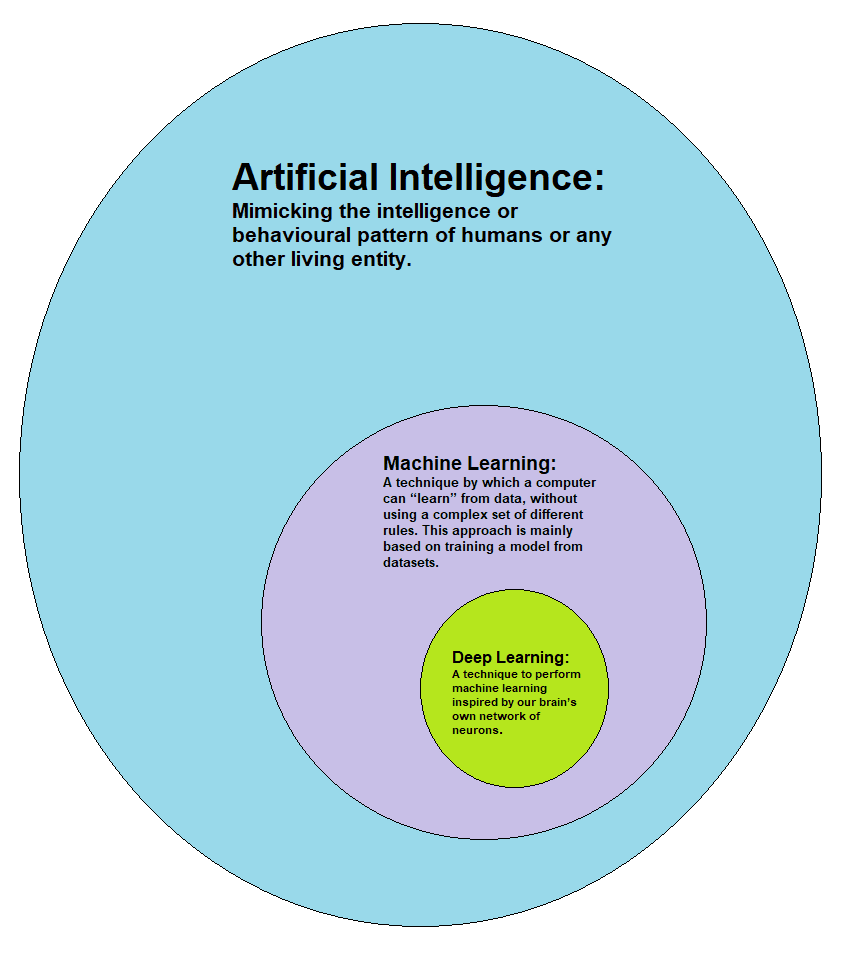
Image credit: Wikimedia Commons – Artificial Intelligence & Machine Learning (CC BY 2.0)