One Sofa Changed the World: 5 Meanings of Dr. Baek Jin-eon Solving the '60-Year Math Problem' That Even AI Couldn't Crack — Alone, in 7 Years
31-year-old Dr. Baek Jin-eon stunned the global mathematics community by solving the 58-year-old 'Moving Sofa Problem' using pure mathematical reasoning alone, without a computer. Named one of Scientific American's Top 10 Mathematical Innovations of 2025, his achievement proves that human intuition remains the ultimate weapon even in the age of AI.
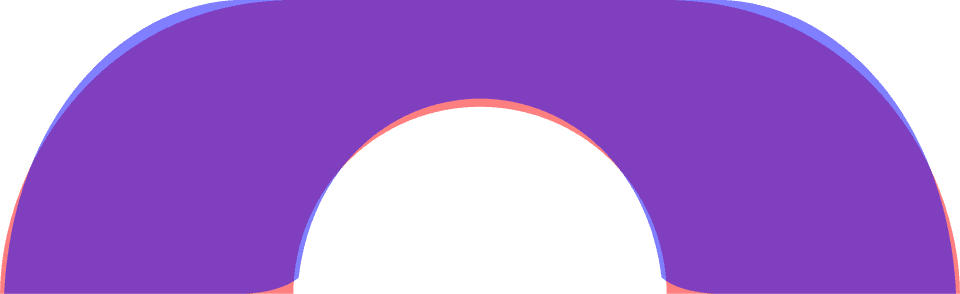

Why does this matter right now? In 2026, as fears of AI replacing human jobs reach a peak, a 31-year-old Korean mathematician just solved — entirely on his own — a math problem that even AI couldn't touch for 60 years.
TL;DR
- Dr. Baek Jin-eon (Korea Institute for Advanced Study,허준이 Mathematics Problems Research Institute) delivered the final proof of the 'Moving Sofa Problem,' first posed in 1966, using pure mathematics in December 2024
- No computers or AI involved — he confirmed Gerver's Sofa (2.2195 m²) as the optimal solution using only handwritten equations
- Selected as one of Scientific American's Top 10 Mathematical Innovations of 2025, drawing worldwide academic attention
- Major Korean broadcasters including MBC revisited the story in February 2026 — calling it "a uniquely human ability AI cannot reach"
- Secured as a Heo June-i Fellow (under 39, up to 10 years of support), ensuring continuity of research
What Is the Moving Sofa Problem?
"What is the shape and maximum area of a sofa that can be moved around a right-angle corner in a hallway 1 meter wide without tilting, standing upright, or disassembling it?"
It sounds like a moving-day headache, but since Canadian mathematician Leo Moser formally posed it in 1966, it has been one of the great unsolved problems in mathematics. The challenge: find the maximum area of a two-dimensional shape that can rotate and slide around a right-angle corner in a 1-meter-wide hallway — without tilting, standing on end, or breaking it apart.
- 1968 — British mathematician John Hammersley proposed a telephone handset–shaped figure
- 1992 — American professor Joseph Gerver proposed a shape made of 18 curves with area 2.2195 m² → the most credible answer for 30 years, yet its optimality was never mathematically proven
5 Meanings
1. Human Intuition Strikes Back in the Age of AI
MBC framed its February 22, 2026 coverage with the headline "A uniquely human ability AI cannot reach." Dr. Baek himself said, "There are only so many ways you can ask a computer to do something." At the heart of this proof is nonlinear intuition and creative leaps that AI simply cannot replicate.
2. Seven Years of Deep Work, Then a Sudden Flash of Insight
Dr. Baek started by coding his way through thousands of sofa candidates. After seven years of that process, a purely mathematical idea struck him out of nowhere — and he shut off the computer and completed the proof by hand. The paper runs 119 pages. Scientific American noted: "The fact that he relied on no computer whatsoever makes it all the more remarkable."
3. Korea's Math Ecosystem — The Heo June-i Ripple Effect
Dr. Baek is a Heo June-i Fellow — a program created by Fields Medal winner Professor Heo June-i that guarantees up to 10 years of research freedom to mathematicians under 39. Since the "Heo June-i Effect" of 2022, the infrastructure supporting young Korean mathematicians has begun producing world-class results.
4. Economic and Industrial Ripple Effects of Solving a Hard Math Problem
The Moving Sofa Problem looks simple, but it is directly connected to geometric optimization challenges like robotic arm path planning, autonomous vehicle turning radius calculations, and warehouse automation. Modern path-planning algorithms rest on exactly this kind of mathematical foundation.
5. 'Seven Years on One Problem' — The Revival of the Deep Work Model
In an academic world dominated by short-term output and publication counts, Dr. Baek's story proves that pouring seven years into a single problem still produces the highest form of innovation. His words — "It was a blessing to be able to spend years in graduate school obsessing over one problem" — resonate far beyond researchers, reaching every creative person.
Context & Background
| Year | Event |
|---|---|
| 1966 | Leo Moser formally poses the 'Moving Sofa Problem' |
| 1968 | John Hammersley proposes a handset-shaped figure |
| 1992 | Joseph Gerver proposes a 2.2195 m² shape (leading answer for decades) |
| 2017 | Baek Jin-eon begins focusing on this problem during his doctoral program |
| Dec 2024 | Baek Jin-eon publishes the final proof on arXiv |
| 2025 | Named one of Scientific American's Top 10 Mathematical Innovations of 2025 |
| Jan 2026 | Major Korean media coverage begins |
| Feb 2026 | MBC and other broadcasters spotlight the story: "A problem even AI couldn't solve" |
Outlook
Dr. Baek's methodology — systematic elimination of candidates, then a pivot to pure mathematical intuition — may offer a new standard for attacking other unsolved problems in mathematics. At the same time, AI researchers have begun attempting to reverse-engineer his proof process to help bridge the gap in AI's geometric intuition. The mathematics world is watching closely to see which problem he takes on next.
Checklist — How Can You Use This Story?
References
- Hankyoreh | 31-year-old Korean mathematician solves '60-year problem' without a computer
- MBC News | '60-year math problem' solved this time by a human (2026.02.22)
- Financial News | 31-year-old Korean mathematician solves the 60-year 'Sofa Problem'
- News1 | '60-year Moving Sofa' problem solved — achievement of a 31-year-old Korean mathematician
Image source: Wikimedia Commons — Gerver's sofa diagram by TilmannR (Public Domain)