Fake Beat Real: 5 Truths Behind Netflix's Global #1 'The Art of Sarah' — Korea's Luxury Fraud Scandal That Even Fooled Lee Jung-jae
Netflix Korean drama 'The Art of Sarah (Lady Dua)' has reached #1 in global non-English TV series, reigniting a real luxury fraud scandal from over 20 years ago. The drama dissects the full story of the fake luxury brand 'Boudoir' scam that exploited Korea's luxury consumption psychology — a real-life scheme in which actor Lee Jung-jae was reportedly among the victims.
"If you were made to believe a fake was real, you already failed to tell the difference." This line, delivered by Kim Sara in the Netflix drama The Art of Sarah, is more than mere dialogue. It is a question aimed squarely at the raw face of luxury desire that Korean society has harbored for the past two decades.
TL;DR
- Netflix's The Art of Sarah (Lady Dua) achieved #1 in global non-English TV series immediately after its release on February 13, 2026.
- The drama is inspired by a large-scale fake luxury brand fraud that actually occurred in Korea in the 2000s.
- The protagonist's 'Boudoir' bag was assembled in Korea from Chinese-made components, produced for ₩200,000 and sold for ₩100,000,000 — a 500× markup.
- Actor Lee Jung-jae (Squid Game) is reported to have been among the real-life victims of this fraud.
- The structural vulnerability of Korea's luxury market and the 'luxury goods as a social ID card' consumer mindset are identified as the core triggers.
1. The Facts: Where Does the Drama End and Reality Begin?
The Netflix original series The Art of Sarah (Korean title: Lady Dua) is an 8-episode mystery thriller starring Shin Hye-sun and Lee Joon-hyuk, released worldwide on February 13, 2026. It immediately topped Netflix's global non-English TV series rankings, and has held a position in the top 3–4 overall TV titles since.
In the drama, protagonist Kim Sara creates a fictional European luxury brand 'Boudoir', opens a flagship store in Cheongdam-dong, and sells bags assembled in Korea from Chinese-made components for ₩100,000,000 (100 million won). The actual manufacturing cost: ₩200,000 (200,000 won). A 500-fold gap from the price tag.
The real-life inspiration is a large-scale fake European luxury brand fraud that took place in Korea in the mid-2000s. The perpetrator reportedly spread false stories of royal European provenance, targeted celebrities and business elites, and swindled billions of won. In the process, actor Lee Jung-jae (Squid Game, Hunt) is said to have been victimized, drawing renewed attention to the drama's real-world connections.
2. The Spread Mechanism: Why Is It Going Viral Now?
There are three reasons this drama has become a global phenomenon beyond mere box-office success.
① Universal Relatability — The consumer psychology that 'luxury equals status' is not unique to Korea. The South China Morning Post described it as: "In Korea, luxury goods are like an ID card." Viewers across Southeast Asia and Europe overlay their own luxury consumption cultures onto the story.
② Shin Hye-sun's Commanding Performance — Playing protagonist Kim Sara, Shin Hye-sun delivers philosophically provocative lines even under police interrogation — "If you can't tell the fake from the real, that's your problem" — challenging audiences to examine the very nature of consumer desire. Reviews worldwide are flooding in with praise for her "exceptional performance."
③ Timeliness — In 2026, with Korea's KOSPI index surpassing the 6,000 mark and the premium consumer goods market expanding, the alarm this story sounds about the vulnerabilities of luxury desire rings louder than ever.
3. Context & Background: The Structural Vulnerability of Korea's Luxury Consumption
Korea ranks among the world's top per-capita luxury goods spenders. Cheongdam-dong's luxury strip is considered one of the highest-density concentrations of luxury brand flagships anywhere in the world.
Why is this consumption structure vulnerable to fraud?
- Resistance to authenticity verification — The belief that a high price tag is itself proof of authenticity
- The paradox of exclusivity — The perception that limited entry and small-batch sales enhance trustworthiness
- Viral power of rumor — Demand created solely by whispers of "a brand only the truly wealthy know about"
- Reluctance to report — Victims of luxury fraud tend to avoid filing reports out of shame
In the drama, Sara exploits this structure perfectly. She burns Boudoir products to manufacture scarcity, and deliberately circulates counterfeits to build brand awareness — tactics strikingly similar to real luxury marketing strategies.
4. Outlook: The Real Questions the Drama Is Asking
The drama's success has once again proven that Korean content generates stronger global resonance when it carries social critique beyond pure entertainment.
Key points to watch going forward:
- Season 2 — Given the mystery structure, expansion is plausible; it aligns with Netflix Korea's proven formula (Squid Game, The Glory).
- Resurfacing of real victims — If the drama prompts renewed scrutiny of the original incident's victim list, legal and ethical controversies could follow.
- Luxury market impact — The drama may spark greater interest among 20s–30s consumers in luxury authenticity verification.
5. Risk Checklist
References
- The Straits Times — How The Art Of Sarah recalls real-life luxury fraud
- Korea Times — 'The Art of Sarah' exposes Korea's luxury obsession
- SCMP — K-drama The Art of Sarah proves luxury goods are 'like an ID card'
- Netflix Tudum — The Art of Sarah
Image Credit
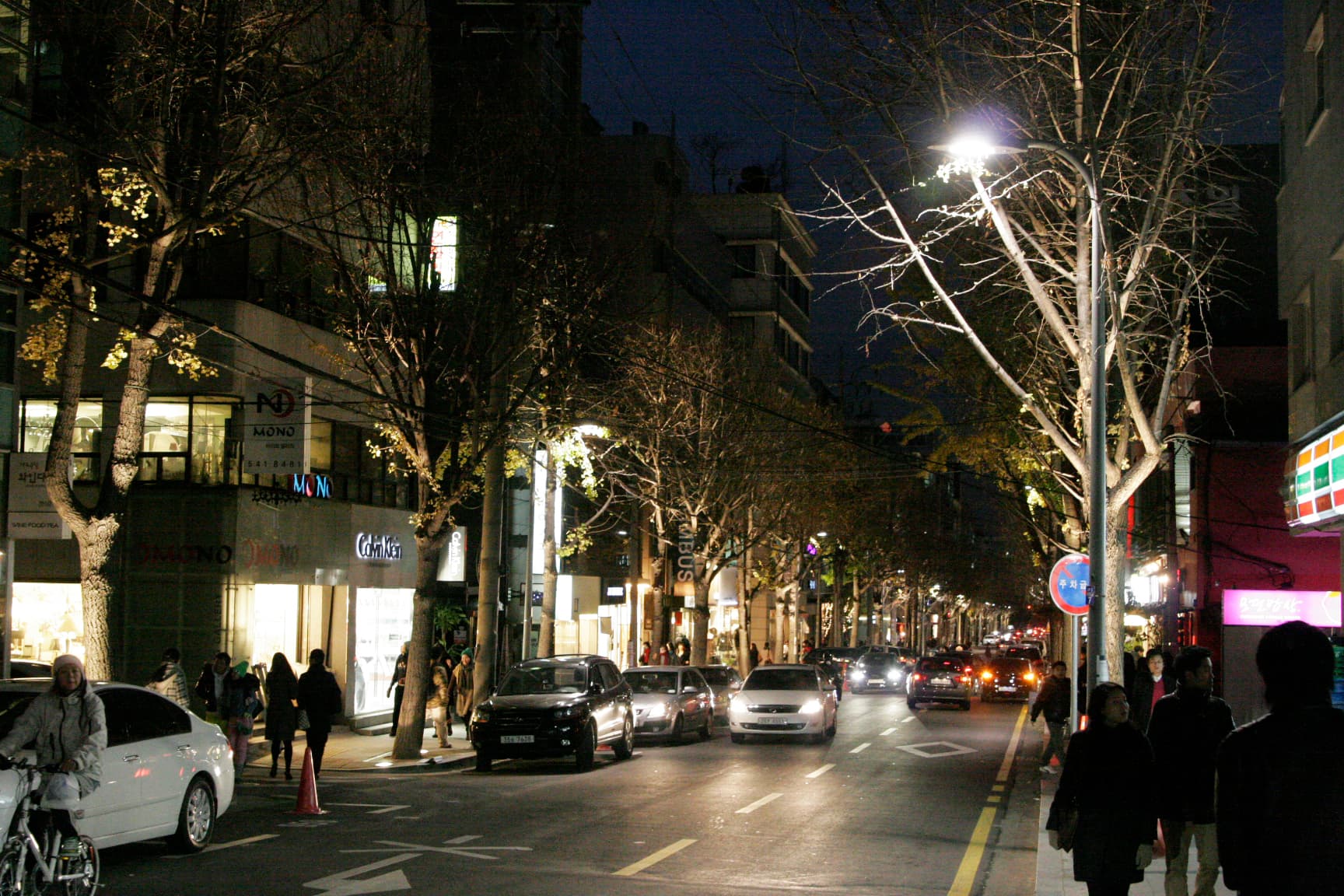
- Seoul Garosu-gil night image: Wikimedia Commons, CC BY 2.0 (sellyourseoul via Flickr)