1,000 Points in a Month: KOSPI Breaks 6,000 for the First Time in History — The Reasons Behind 'Semiconductor Korea's' ₩5,000 Trillion Market Cap Era
On February 25, 2026, KOSPI broke through the 6,000 mark for the first time in history, closing at 6,083.86. Achieved just 18 trading days after breaking 5,000, it surpassed a ₩5,000 trillion market cap, rewriting Korean stock market history.
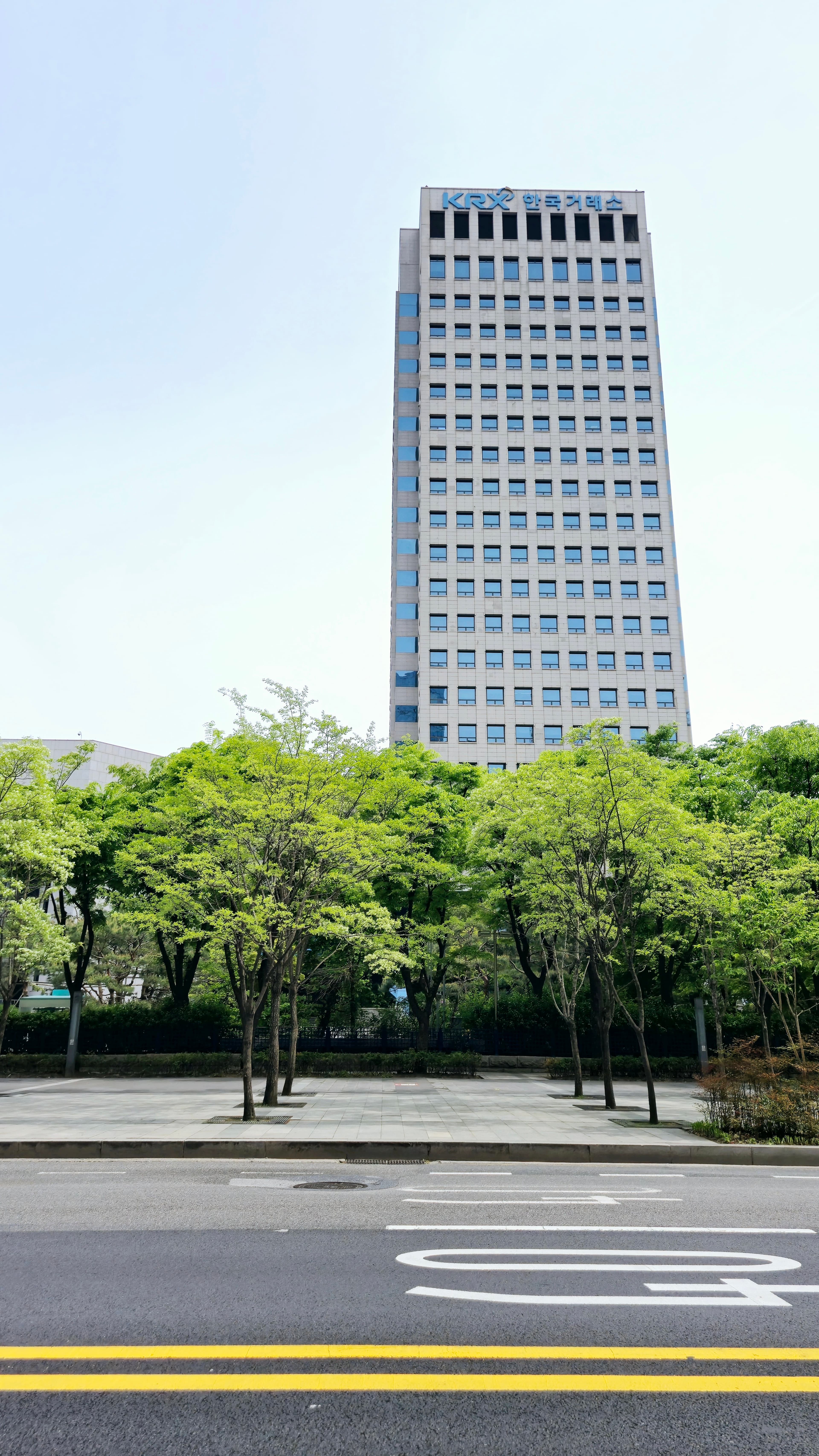
Today, the KOSPI broke through the 6,000 mark for the first time in history. Achieved just 18 trading days after breaking 5,000, this number is not merely an index gain — it is a new milestone in 70 years of Korea's capital markets.
TL;DR
- February 25, 2026: KOSPI opened at 6,022.70, crossing 6,000 for the first time ever
- Intraday high of 6,144.71, closing price 6,083.86 (+1.91% vs. prior day)
- Total market capitalization surpasses ₩5,000 trillion for the first time in history
- Achieved just 18 trading days after breaking 5,000 (January 27)
- Year-to-date return of +44% — #1 in the world
What Happened: The Facts
At 9 AM on February 25, 2026, at the Korea Exchange in Yeouido, Seoul, the KOSPI opened at 6,022.70 — up 53.06 points (0.89%) — ushering in the historic '6,000 era' for the first time ever.
After briefly dipping below 6,000 in early trading, the index bounced back and touched an intraday high of 6,144.71 points. The closing price was 6,083.86, up 114.22 points (+1.91%) from the previous day, also marking the first-ever closing above 6,000.
The total market capitalization of the Korea Exchange also broke ₩5,000 trillion, adding yet another record and signaling a full-blown 'super bull market.'
| Indicator | Value |
|---|---|
| Opening Price | 6,022.70 (+0.89%) |
| Intraday High | 6,144.71 |
| Closing Price | 6,083.86 (+1.91%) |
| Change vs. Prior Day | +114.22 points |
| Days from 5,000 to 6,000 | 18 trading days |
| Market Capitalization | Surpassed ₩5,000 trillion |
Why It Rose So Fast: The Mechanics
Semiconductor Super-Cycle as the Core Engine
At the heart of the KOSPI 6,000 era are the duo of Samsung Electronics and SK Hynix. On this day, Samsung Electronics broke through ₩200,000 and SK Hynix through ₩1,000,000, fundamentally raising the price ceiling of the Korean stock market.
The cycle of surging AI infrastructure investment → explosive demand for HBM (High Bandwidth Memory) → skyrocketing earnings at Samsung and Hynix completed a self-reinforcing loop, drawing global capital into Korea's semiconductor sector.
#1 G20 Returns for the Second Consecutive Year
- 2025: +76% gain → #1 among G20 nations
- 2026 YTD: +44% → highest growth rate in the world
- An overwhelming gap compared even to second-place Türkiye
Fund Flow Analysis
On this day, institutional investors net-bought ₩880.4 billion, leading the index higher. Retail investors also joined with net purchases of ₩232.1 billion. Foreign investors net-sold ₩1.2932 trillion, but domestic institutional and retail buying power overwhelmed these outflows.
Context and Background: Why Now?
President Lee Jae-myung's 'Shareholder Capitalism' Drive
President Lee Jae-myung, who took office in June 2025, has aggressively pushed shareholder-friendly policies based on personal experience with stock investment losses. The mandatory treasury share cancellation bill (Commercial Act amendment), which passed the legislative committee, effectively returned ₩36 trillion in treasury shares to the market, and the KOSPI Value-Up program gained full momentum.
Korea's Decoupling Becomes Complete
As of early February, while the S&P 500 fell -3%, KOSPI rose +11%, making the 'reverse decoupling' phenomenon fully apparent. While American big tech was hit by Trump tariff uncertainty, the structure solidified whereby Korean semiconductors — supporting AI infrastructure — were the direct beneficiaries.
Korea's February Export Record
Korea Customs Service announced that exports from February 1–20 grew 23.5% year-on-year to $43.5 billion. Semiconductor exports surged 134%, providing a fundamental earnings basis for the market rally.
Outlook: What Comes After '6,000'?
Market Analysts: "We'll Hit 8,000 This Year"
- Analysts at Samsung Securities and other major brokerages assess that Samsung Electronics and SK Hynix have further room to run as long as the semiconductor super-cycle continues
- The possibility of a sector rotation rally into AI infrastructure (data centers, power, cooling) has also been raised
- Some have put forward a year-end target of 8,000 points
Risk Checklist
Secondary Issues: Derivative Debates
Retail investor enthusiasm: As countless individual investors celebrated the KOSPI 6,000 milestone, debate around "when to sell" has become heated.
Role of pension funds and institutions: Policy discussions have been reignited around whether the National Pension Service should maintain or increase its equity allocation.
KOSPI vs. KOSDAQ gap: While KOSPI continues its record-breaking surge, KOSDAQ has risen relatively less, raising concerns about polarization.
Reference Links
- Yonhap News — KOSPI breaks 6,000 right at the open
- Chosun Ilbo — KOSPI breaks 6,000 for the first time, 18 trading days after hitting 5,000
- Kyunghyang Shinmun — KOSPI breaks 6,000, one month after breaking 5,000
- G-enews — KOSPI breaks 6,000 for the first time... Korea's stock market tops G20 returns for 2nd year
- investing.com — KOSPI breaks 6,000 closing price for the first time in history
Image Credit
- KRX Korea Exchange Seoul Office (76 Yeoeuinaru-ro) — Wikimedia Commons, CC BY-SA 4.0