+12: The Reality of Korea's 'Judicial Reform 3 Laws' Completed by Today's Vote on Expanding the Supreme Court from 14 to 26 Justices — and 5 Ripple Effects
The last hurdle of the three judicial reform bills championed by the Democratic Party of Korea — the Supreme Court expansion bill — goes to a vote today, February 28. This law, which increases the number of Supreme Court justices from 14 to 26, would allow President Lee Jae-myung to effectively appoint 22 justices during his term if passed, fueling an intense controversy over judicial independence.
Why you need to read this law right now: If 12 more Supreme Court justices are added, the entire power landscape of the judiciary changes. Once today's (February 28) vote is over, South Korea's judicial history could be divided into before and after.
TL;DR
- The final bill among the Judicial Reform 3 Laws led by the Democratic Party of Korea (law distortion crime · court petition system · Supreme Court expansion) — the Supreme Court Expansion Bill — is scheduled for a vote today, February 28, 2026
- Increases the current 14 justices → 26 justices (12 additional), implemented gradually at 4 justices per year starting 2 years after promulgation
- If passed, the Lee Jae-myung government can effectively appoint 22 Supreme Court justices within its term
- The People Power Party is resisting with a filibuster, calling it 'judicial destruction' and 'saving Lee Jae-myung's trial'
- The Supreme Court has also submitted official objections; constitutional law scholars are deeply divided
Facts: What Happened
On the night of February 27, the Democratic Party of Korea passed the Court Petition System bill (amendment to the Constitutional Court Act) 162 in favor : 63 opposed. That same night, the Supreme Court Expansion Bill (amendment to the Court Organization Act) was immediately put to the floor, and the People Power Party launched an immediate filibuster.
Today, February 28, a vote will be held once the 24-hour filibuster concludes. Thus, the Judicial Reform 3 Laws proceed in sequence: February 26 Law Distortion Crime Bill → February 27 Court Petition System Bill → February 28 Supreme Court Expansion Bill.
Key Contents of the Supreme Court Expansion Bill
| Item | Current | Amendment |
|---|---|---|
| Supreme Court Justice Quota | 14 justices | 26 justices |
| Expansion Method | — | 2 years after promulgation, 4 justices × 3 years |
| Law Research Officer Expansion | — | Approx. 100 additional mid-career judges converted |
| President's Appointable Justices | Via Chief Justice recommendation | Approx. 22 appointable by Lee Jae-myung government |
Why It's So Controversial
- 'Saving Lee Jae-myung's trial' framing — The opposition argues that expanding the Supreme Court would change the composition of justices presiding over trials related to President Lee Jae-myung.
- Chain effect of the Court Petition System — Combined with the Court Petition System passed the day before, concerns are spreading that both the Constitutional Court and Supreme Court could be simultaneously realigned toward a pro-ruling-party stance.
- Public fatigue from the filibuster — With the People Power Party deploying filibusters against all three bills (Law Distortion Crime, Court Petition System, Supreme Court Expansion), the debate over 'legislative recklessness vs. procedural obstruction' is heating up on social media.
- Official Supreme Court objection — The Supreme Court itself submitting a formal opposition is unprecedented, and this moment has been widely shared across media and online communities, sparking explosive interest.
Context & Background: The Full Picture of the Judicial Reform 3 Laws
Law Distortion Crime (Passed February 26)
Criminal punishment for judges and prosecutors who intentionally distort the law. Critics say it will chill judicial independence.
Court Petition System (Passed February 27)
Allows Constitutional Court petitions even against Supreme Court final rulings. Controversy over the effective introduction of a 4-tier appeals system.
Supreme Court Expansion Bill (Vote February 28)
12 additional Supreme Court justices → creates a structure where virtually all justices could be replaced within the Lee Jae-myung government's term.
The three bills work in synergy. The Constitutional Court can review rulings above the Supreme Court (court petition), the number of justices increases and their composition shifts (expansion), and a chilling effect on judges is added (law distortion crime).
Stakeholders: Who Is Involved
- Democratic Party of Korea · President Lee Jae-myung — Completing judicial reform, strengthening power to appoint Supreme Court justices
- People Power Party — Fully opposed; filibuster and constitutional petition announced
- Supreme Court (Chief Justice Jo Hee-dae) — Submitted official objection, arguing judicial independence is being undermined
- Constitutional law scholars · legal academia — Sharply divided for and against
- Former President Yoon Suk-yeol's side — Appeal trial ongoing; interpretation that changes to Supreme Court composition could affect the final outcome
- General public — Anxiety over the reliability and fairness of trial outcomes
Outlook: How Long Will This Last?
Short-term (today ~ this week): High probability of passing the vote. The ruling coalition's seats far exceed a majority. The opposition has announced it will file a Constitutional Court petition immediately after passage.
Mid-term (2–3 months): Whether the Constitutional Court grants an injunction to suspend the law's effect is the biggest variable. If unconstitutionality is declared, the law's effect could be halted.
Long-term (2 years+): With a provision that the law takes effect 2 years after promulgation, the actual expansion of Supreme Court justices won't begin until 2028. Continuous political controversy is expected until then.
Checklist: 5 Points to Watch Going Forward
Reference Links
- Court Petition System Bill passed under ruling party leadership… Supreme Court Expansion Bill vote tomorrow — Yonhap News
- '4-tier system' Court Petition Bill passed... Ruling party pushed 'Constitutional Court above Supreme Court' — Chosun Ilbo
- Following law distortion crime and court petition system, Supreme Court expansion bill goes to vote… 'Judicial Reform 3 Laws' imminent — Nate News
- With Supreme Court expansion bill, judicial reform 3 laws complete… Ruling party to continue 'emergency legislation' in March — NEWS1
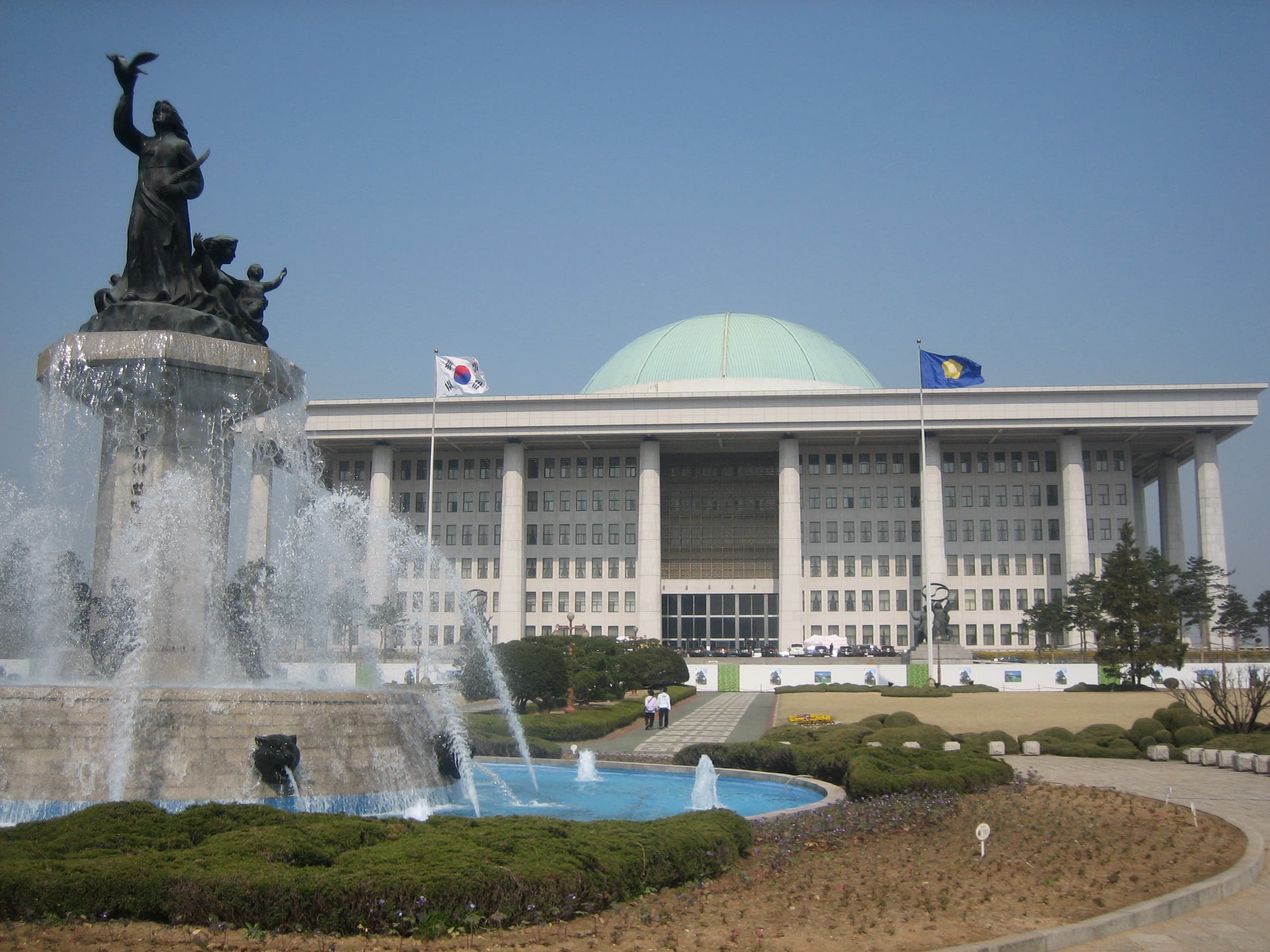
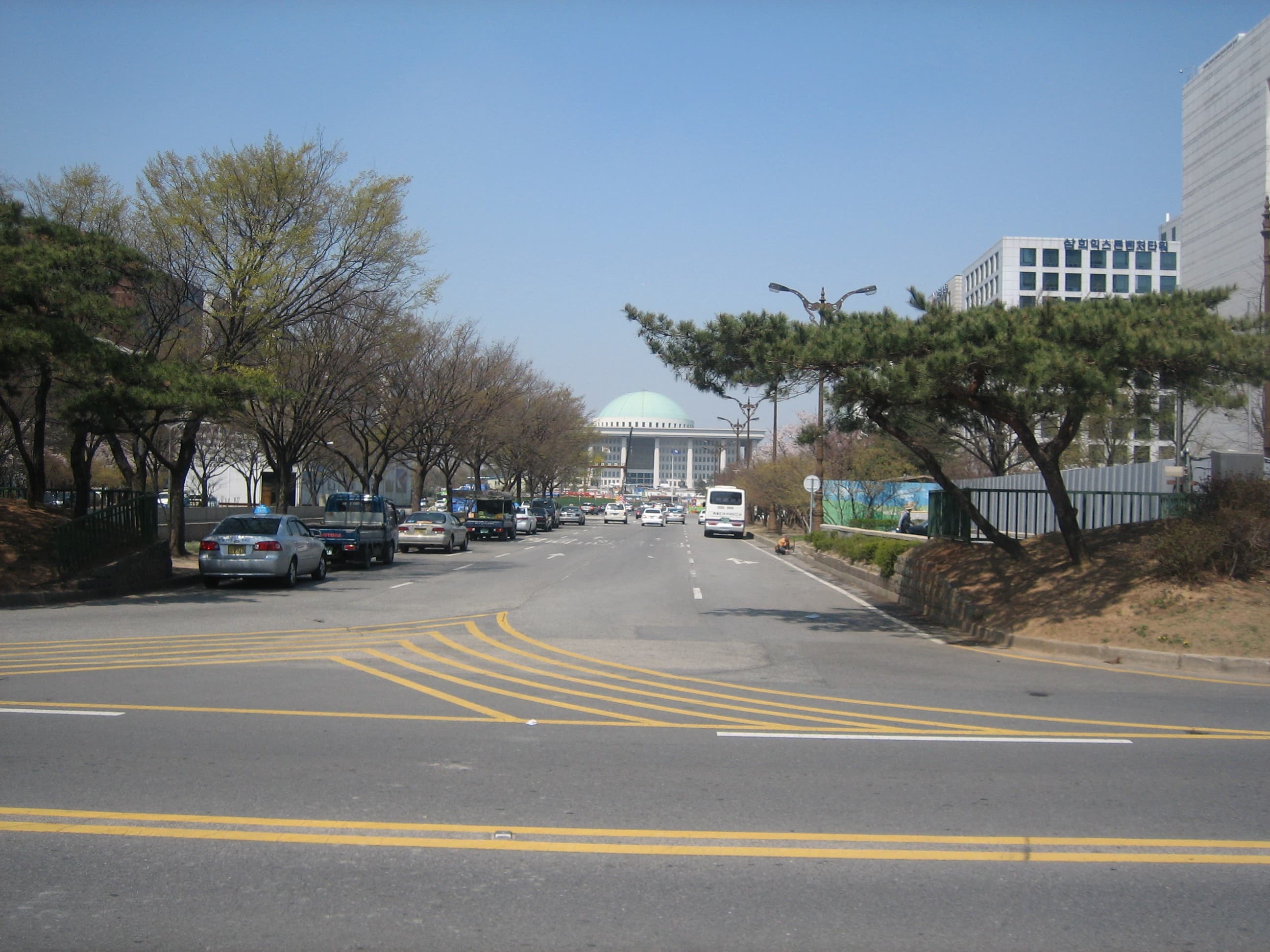
Image source: Wikimedia Commons — National Assembly Building of South Korea (CC BY-SA 3.0)