A Judicial Revolution After 39 Years: 5 Shockwaves Korea's 'Law Distortion Crime · Constitutional Appeals · 26 Supreme Court Justices' Reform Package Sends to the Korean Legal System
President Lee Jae-myung approved the promulgation of three landmark judicial reform bills at a cabinet meeting on March 5. The 'Law Distortion Crime' and the 'Constitutional Appeals on Court Rulings' provisions take effect immediately upon promulgation, marking the most sweeping overhaul of South Korea's judicial system since the 1987 constitutional revision 39 years ago.
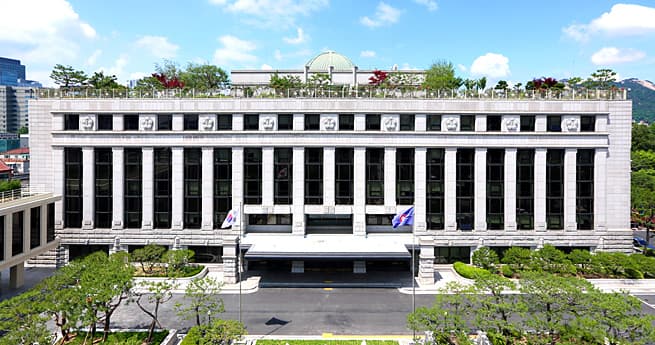
South Korea's judicial system is being overhauled for the first time in 39 years since the 1987 constitutional revision. President Lee Jae-myung approved the promulgation of the three judicial reform bills at a cabinet meeting on March 5, meaning the Law Distortion Crime and Constitutional Appeals provisions will take effect this week upon promulgation.
TL;DR
- President Lee approved the three judicial reform bills at an emergency cabinet meeting on March 5
- Law Distortion Crime (Criminal Code amendment) · Constitutional Appeals on Court Rulings (Constitutional Court Act amendment): take effect immediately upon promulgation
- Supreme Court Justice Expansion Act (Court Organization Act): gradual increase from 14 to 26 justices, starting 2028 (two years after promulgation)
- Strong opposition from the judiciary, opposition party, and parts of the legal community — criticism of "unconstitutionality and regression of rule of law" continues
- Recorded as the most sweeping judicial overhaul in 39 years since the 1987 constitutional revision
1. The Facts: What Was Passed
The 'Three Judicial Reform Bills,' which passed the National Assembly after a five-night, six-day filibuster from February 24–28 led by the Democratic Party of Korea, were finally approved at an emergency cabinet meeting chaired by President Lee Jae-myung on March 5.
① Law Distortion Crime (Criminal Code Amendment)
A new provision imposing up to 10 years imprisonment and suspension of qualifications on judges and prosecutors who willfully distort the law during trials or investigations for improper purposes. "Discretionary judgments within a reasonable scope of the law" are exempt.
② Constitutional Appeals on Court Rulings (Constitutional Court Act Amendment)
Final court rulings are now included as subjects of constitutional complaint petitions. Since parties can challenge the constitutionality of a ruling at the Constitutional Court even after a Supreme Court decision, critics argue this effectively introduces a de facto fourth-instance review. Petitions must be filed within 30 days of a ruling becoming final.
③ Supreme Court Justice Expansion Act (Court Organization Act Amendment)
The current 14 Supreme Court justices will be gradually expanded to 26, with 4 new appointments per year over 3 years starting in 2028. President Lee will be able to directly appoint 22 justices within his term.
2. Why Now: Driving Factors
The ruling party's supporters viewed these bills as an institutional corrective to the "judicial distrust during the Yoon Suk-yeol administration." Sentiment for "judicial reform" had been building up through the insurrection trial of former President Yoon and controversies over prosecutors-turned-judges indicting opposition figures.
In contrast, the People Power Party, the Chief Justice, and parts of the legal community urged the president to exercise a veto, citing "violation of judicial independence and risk of unconstitutionality" — but President Lee pushed through the approval just one day after the filibuster ended.
"The judicial system that has been maintained since the 1987 constitutional revision is being overhauled after 39 years."
— Dong-A Ilbo, March 6, 2026
3. Context: What Has Been Maintained for 39 Years
The 1987 democratization constitution explicitly excluded court rulings from the scope of constitutional complaints — a safeguard designed to prevent overreach by the Constitutional Court. The introduction of constitutional appeals on court rulings effectively neutralizes this constitutional design.
The Law Distortion Crime also faces fierce criticism from the legal community for being rooted in Nazi Germany's "punishment of judges" provisions, which critics say is ill-suited to Korean conditions. The National Conference of Chief Judges publicly objected on grounds of "damage to judicial independence."
Regarding the expansion of Supreme Court justices, there is a sharp clash between criticism that "President Lee will appoint 84% of Supreme Court justices within his term, effectively controlling the highest court" (Dong-A Ilbo) and the ruling party's argument that "the judge-to-population ratio is the lowest in the OECD and a backlog of trials must be resolved."
4. Outlook: What Changes
| Area | Effective Date | Key Impact |
|---|---|---|
| Law Distortion Crime | Immediately (this week) | Risk of prosecution for judges/prosecutors; concern over chilling effect on judiciary |
| Constitutional Appeals on Rulings | Immediately (this week) | Surge in Constitutional Court cases; concern over "litigation hell" |
| Supreme Court Justice Expansion | 2028 (2 years after promulgation) | President Lee able to appoint 22 justices within his term |
In the short term, there is a high likelihood that constitutional complaint petitions re-challenging existing final rulings will flood in. The Court Administration Office has already warned of rising litigation costs and prolonged trials due to a surge in Constitutional Court cases.
In the long term, concerns that the Supreme Court composition will rapidly skew toward pro-government views are sharply at odds with expectations that structurally unfair judicial practices will be substantively corrected. Some predict unconstitutionality lawsuits will follow.
5. Risk Checklist
References
- Kyunghyang Shinmun: Three judicial reform bills approved at cabinet meeting (Mar. 5, 2026)
- Dong-A Ilbo: 'Law Distortion Crime and Constitutional Appeals' to take effect next week — 39-year judicial system overhauled (Mar. 6, 2026)
- Yonhap Infomax: Three judicial reform bills and third Commercial Act revision approved at cabinet meeting (Mar. 5, 2026)
- Korea JoongAng Daily: President approves judicial reforms in face of opposition (Mar. 5, 2026)
- Hankook Ilbo: President Lee approves judicial reform bills including Law Distortion Crime (Mar. 5, 2026)
Image Source
- Constitutional Court of Korea building — Wikimedia Commons, Public Domain