Tonight at 8:33 PM, the Red Moon Rises: Your Complete Guide to the 36-Year Jeongwol Daeboreum Total Lunar Eclipse
On March 3, 2026 — Jeongwol Daeboreum (the first full moon of the lunar year) — a total lunar eclipse not seen in 36 years graces the Korean Peninsula sky. Tonight, totality begins at 8:04 PM, peaks as a Blood Moon at 8:33 PM, and ends at 9:03 PM — a rare chance to witness the entire event with the naked eye.
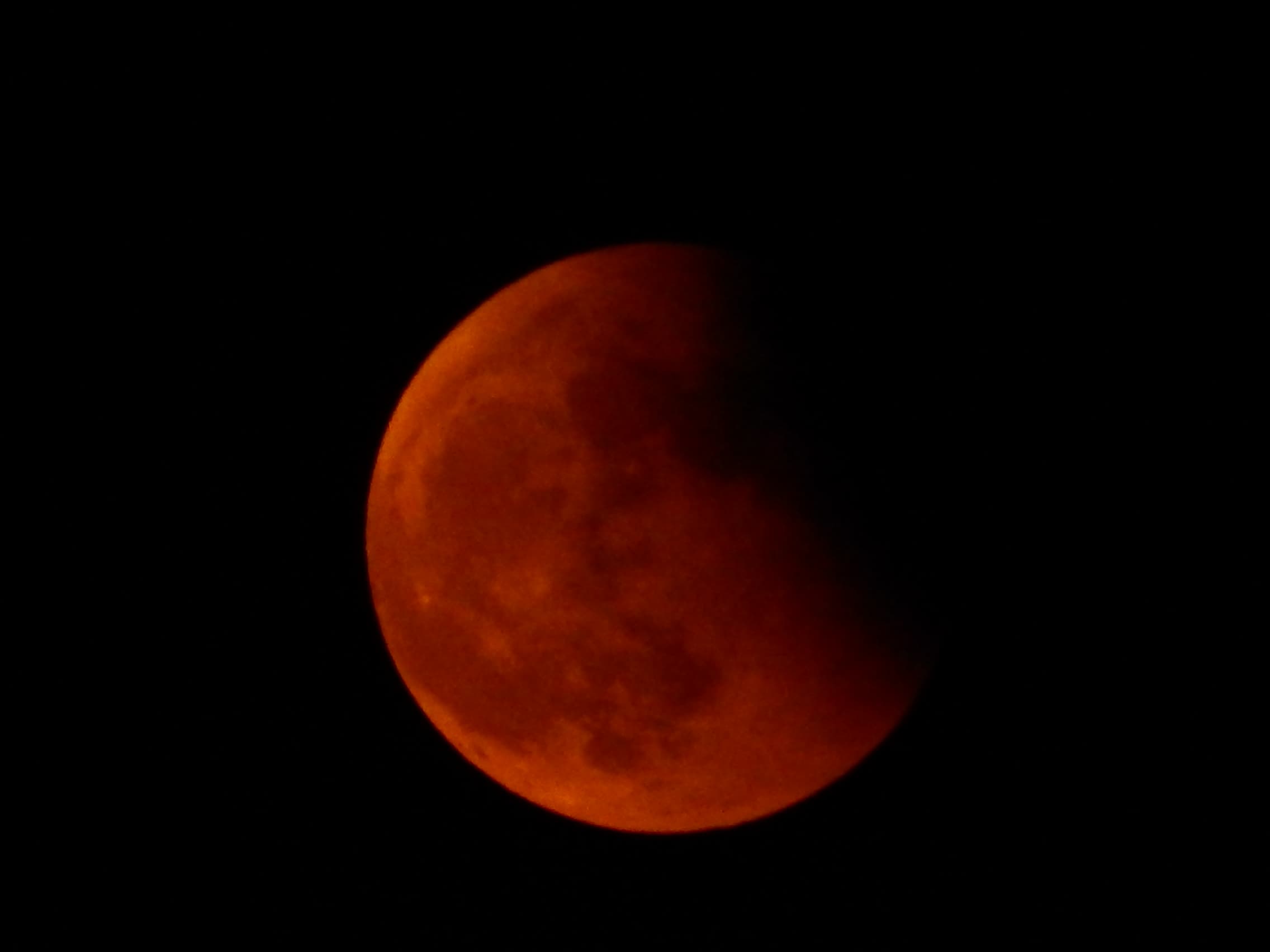
Tonight, the moon turns red. For the first time since 1990, Jeongwol Daeboreum and a total lunar eclipse fall on the same night — a once-in-36-years celestial event. Here's why you need to look out your window right now.
TL;DR
- Tonight, Tuesday, March 3, 2026: totality begins at 8:04 PM, peaks at 8:33 PM, ends at 9:03 PM
- Jeongwol Daeboreum coinciding with a total lunar eclipse is the first time since February 10, 1990 — 36 years
- The moon passes completely into Earth's umbral shadow, transforming into a red Blood Moon
- Visible with the naked eye across the entire Korean Peninsula — no telescope needed
- The next total lunar eclipse is December 31, 2028, two years and ten months away
The Facts: What's Happening Tonight
Step-by-Step Timeline (KST)
| Phase | Time | Description |
|---|---|---|
| Penumbral contact begins | 17:44 | Moon enters penumbra (barely visible to the eye) |
| Partial eclipse begins | 18:50 | Part of the moon begins to darken |
| Totality begins | 20:04 | Moon fully enters Earth's umbra; reddening starts |
| Maximum eclipse | 20:33 | Blood Moon at its deepest red |
| Totality ends | 21:03 | Moon begins to exit Earth's umbra |
| Partial eclipse ends | 22:17 | Partial phase concludes |
| Penumbral contact ends | 23:23 | Moon fully restored to normal |
Prime viewing window: 8:04 PM – 9:03 PM tonight (approx. 59 minutes)
Why Does the Moon Turn Red?
During a total lunar eclipse, the moon doesn't go fully dark — it glows red. This is because sunlight refracted through Earth's atmosphere bends around the planet and reaches the lunar surface. Earth's atmosphere scatters shorter blue wavelengths and allows only longer red wavelengths to pass through — as if the light of every sunrise and sunset on Earth were projected simultaneously onto the moon.
Why This Is Trending Right Now
- Jeongwol Daeboreum + total lunar eclipse on the same night — the overlap of a traditional seasonal holiday and an astronomical event maximizes cultural buzz
- Once in 36 years — the first occurrence since 1990, the birth year of today's 36-year-olds, creating a generational connection
- No equipment needed — completely accessible to anyone, anywhere
- Nationwide science center events — simultaneous public viewing parties at the National Gwacheon Science Museum, Suncheonman Astronomical Observatory, and others across the country
- Social media sharing instinct — a red moon is the perfect SNS content, spreading in real time
Background: The Meaning of Jeongwol Daeboreum and the Moon
Traditionally, Jeongwol Daeboreum (the 15th day of the first lunar month) is the day Koreans gaze at the year's first full moon and make wishes. Families eat ogokbap (five-grain rice) and namul (seasoned vegetables), and take part in folk customs like dal jip tae-ugi (burning moon houses), jwibul nori (field burning), and bureom kkae-gi (cracking nuts). This year, that moon of abundance will be eclipsed by Earth's shadow, turning blood red — a sight our ancestors would have regarded as a mysterious omen.
Astronomically, this eclipse is notable for:
- Totality lasting approximately 58 minutes — relatively long
- Low lunar altitude — around 20° above the horizon at maximum in Seoul; an unobstructed eastern horizon is essential
- Fine dust warning — nationwide particulate forecasts on March 3 could affect viewing conditions
Viewing Guide: How to See It Best
Observation Checklist
Nationwide Special Viewing Events
| Venue | Hours | Notes |
|---|---|---|
| National Gwacheon Science Museum | 18:00–22:00 | Free telescope viewing |
| Suncheonman National Garden Observatory | 18:40–22:00 | No reservation required |
| Science museums & observatories nationwide | Varies by venue | Check each institution's official website |
Looking Ahead: Rarity and Future Dates
- The next total lunar eclipse visible from Korea is December 31, 2028 (in the early hours — a late-night event)
- Before that, a partial lunar eclipse on July 7, 2028
- A total lunar eclipse coinciding with Jeongwol Daeboreum again is decades away
- Globally, this eclipse is the last total lunar eclipse of 2026 and the only one until 2028
Quick Action Checklist
References
- Hankyoreh — 36-Year Jeongwol Daeboreum Total Lunar Eclipse, 1 Hour Starting 8 PM on the 3rd
- Yonhap News — Total Lunar Eclipse on Jeongwol Daeboreum, March 3 — Full Event Visible
- Star Walk — March 3 Total Lunar Eclipse 2026: Blood Moon Times & Viewing Tips (Korea)
- timeanddate.com — March 3, 2026 Total Lunar Eclipse in Seoul
- NASA — March 2026 Total Lunar Eclipse: Your Questions Answered
Image Credit
- Featured image: Abhranil Kundu, Wikimedia Commons — Blood Moon (partial/total lunar eclipse), October 8, 2014 (CC BY-SA 4.0)