BLACKPINK 14.2% · K-Literature to Africa: How the Ministry of Culture's 1.5 Million Big Data Points Prove the Evolution of Hallyu in 2025
South Korea's Ministry of Culture released a report analyzing 1.5 million big data points from 30 countries on '2025 Global Hallyu Trends.' K-pop remains the heart of Hallyu, but the spread to K-literature, K-film, K-food, and tourism is accelerating—with Hallyu emerging as a core engine of national industrial competitiveness beyond a simple cultural phenomenon.

Why You Need to Read This Now: This report, officially released today (Feb. 25, 2026) by the Ministry of Culture, Sports and Tourism, is the first to use 1.5 million big data points to demonstrate that Hallyu is diversifying from K-pop dominance into literature, film, food, and tourism. Reading it alongside crisis signals like the SEAbling boycott reveals where Hallyu stands today.
TL;DR
- The Ministry of Culture and the Korea Culture Information Service analyzed 1.5 million foreign media and social data points from 30 countries (Oct. 2024–Sep. 2025)
- Hallyu coverage share: Asia 44% > Europe 20.8% > North America 16.9%
- Top individual buzz: BLACKPINK (14.2%), followed by Rosé
- Breaking free from K-pop dominance — spreading into K-literature (No. 1 in Africa), K-film (No. 1 in Oceania)
- The animated film K-POP Demon Hunters is driving demand for Korean tourism
The Facts: What Was Announced
On February 25, 2026, the Ministry of Culture, Sports and Tourism and the Korea Culture Information Service released six editions of the '2025 Global Hallyu Trend Analysis Report Based on Foreign Media and Social Data.' The dataset was approximately doubled compared to the previous year's analysis (680,000 data points).
The report covers October 2024 through September 2025, classifying 1,500,000 foreign media reports and social media data points from 30 countries using machine learning. The report is freely accessible through the 'Culture Big Data Platform.'
Country-by-Country Coverage Rankings
| Rank | Country | Main Area of Interest |
|---|---|---|
| 1 | United States | K-pop, K-drama |
| 2 | India | K-pop, K-drama |
| 3 | Argentina | K-pop |
| 4 | Vietnam | K-drama |
| — | Japan | K-literature |
| — | Brazil | K-film |
Top Artists by Individual Buzz
BLACKPINK dominated with 14.2% of global Hallyu-related social media mentions. Second place went to Rosé, who is also active as a solo artist. Anticipation for BTS's full-group comeback also registered in the top rankings.
The Spread Mechanism: Why Diversification Is Happening
1. The Industrialization of IP
The animated film K-POP Demon Hunters combined traditional folklore elements—grim reapers and goblins—with the K-pop universe to achieve global box office success. It is regarded as a textbook example of IP industrialization for creating a chain reaction that extends beyond simple music consumption into Korean tourism demand and consumer goods exports.
2. Regional Content Differentiation
- Africa: K-literature ranks No. 1. Korean novels by Son Won-pyung and Jeong Bora are posting remarkable sales figures in Amazon's Africa region.
- Oceania: K-film ranks No. 1. Netflix originals by the post-Bong Joon-ho and Park Chan-wook generation of directors maintain top positions in local streaming charts.
- Europe: K-pop remains strong, but a communal viewing culture ('K-party') around K-dramas like Ppalgan Soksadeunda is spreading.
3. The Rise of K-Food
Foreign media coverage of fermented foods (kimchi, doenjang) and Korean fine dining beyond kimbap and ramen increased 38% year-on-year. Korean restaurant reviews surging in Western media in cities like New York, London, and Paris have established K-food as an independent Hallyu category.
Context and Background: 25 Years in the Making
Twenty-five years after the government began nurturing the cultural industry as a strategic export sector following the 1997–1998 foreign exchange crisis, Hallyu has become a genuine national brand asset. According to the Korea Foundation for International Cultural Exchange (KOFICE), the number of global Hallyu fans exceeded 225 million as of 2023 (24 times the 9.26 million recorded in 2012).
The timing of this report's release is significant. It confirms with data just how resilient Hallyu's soft power is—even as the #SEAbling boycott on Southeast Asian social media targets Samsung and Olive Young.
Outlook: How Long Will It Last?
Positive Factors
- The first half of 2026—when BTS's full-group return (scheduled for March) coincides with BLACKPINK's 'DEADLINE' release (February 27)—marks the peak of the K-pop cycle
- Diversification into K-literature and K-film reduces the risk of over-dependence on K-pop
- The tourism and consumption linkage model pioneered by K-POP Demon Hunters-type IP is scaling up
Risk Factors
- The SEAbling boycott and potential backlash from linking Hallyu content to consumer goods companies
- K-literature dominance in Japan and some countries signals a relative weakening of K-pop
- Uncertainty over global streaming platforms' investment scale in Korean content
Checklist
Reference Links
- Ministry of Culture, Sports and Tourism Official Press Release — '25 Hallyu Spreads Beyond Music to Literature, Film, Tourism, and Consumer Goods
- Yonhap News — "K-pop Still Dominates Hallyu"… BLACKPINK tops with 14.2% buzz
- Korea JoongAng Daily — Korean Wave yet to crest as global attention spreads to food, literature
- The Korea Times — K-pop remains top driver of global Korean wave: report
Image Credit
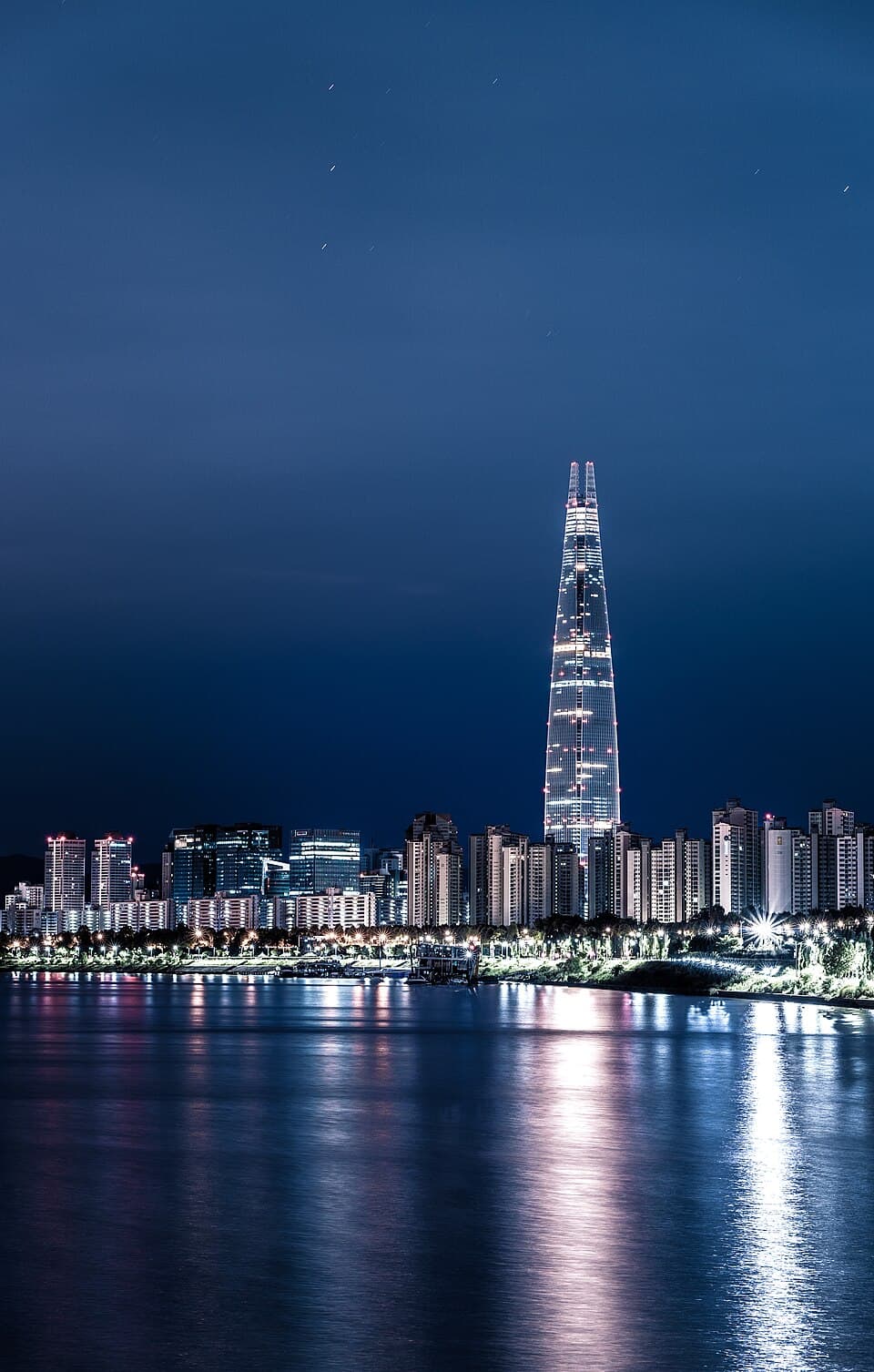
- 서울 야경 스카이라인 (롤데월드타워와 한강) — Wikimedia Commons